

























































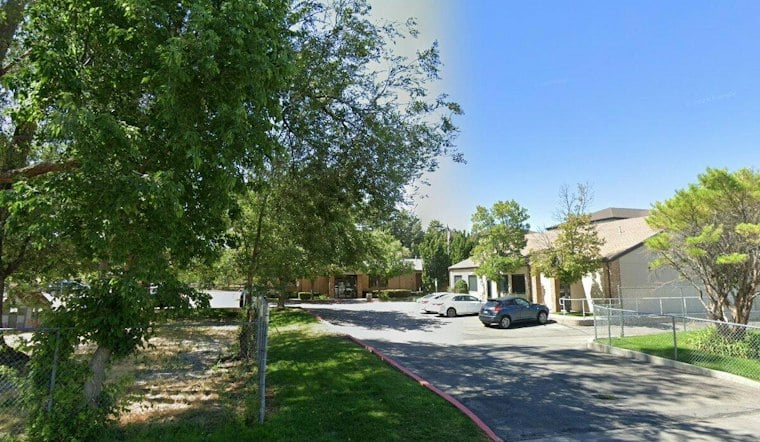
A homeowner in Salt Lake City's Dilworth neighborhood has applied to build a two-unit rental building tucked behind his existing house, using a city incentive program that lets him skip a public hearing entirely. Dale Aramaki's plan would keep his single-family home in place while adding a 2,060-square-foot structure split into two 919-square-foot, two-bedroom units in the backyard, with one of them renting below market rate.
The project, first reported by Building Salt Lake, would bring three total units to the property on just under one-third of an acre. Aramaki, who lists an address roughly a mile away on 2100 South, is relying on Salt Lake City's Affordable Housing Incentives, which allow up to four units on a single-family lot as long as one or two of them are rented or sold below market. The outlet's reporting identifies “Unit B” on the plans as the one that would be rented at that below-market rate.
How the Numbers Stack Up on the Lot
The property sits on a 13,207-square-foot lot zoned R-1/7,000, Salt Lake City's standard single-family district, which requires a minimum lot area of 7,000 square feet. According to the same report, the district's purpose statement specifically contemplates Affordable Housing Incentives developments with up to four units alongside a single-family house.
The proposed building would use just 17 percent lot coverage, well under the 40 percent cap, with a 23-foot gable height below the 28-foot limit. Side setbacks are shown at 13 feet against a 10-foot requirement, and the rear setback measures 27 feet compared with a 25-foot minimum. The plans also call for two new parking spaces, matching the incentive program's requirement of one space per unit.
No Hearing Required for the Review
Because the application is being processed administratively alongside the building permit, it will not go before the public or the Planning Commission for a vote. The outlet notes this reflects a city ordinance that established staff-level review, rather than discretionary review, for these kinds of projects. Piranha Farm LLC is listed as the architect, and Rising Sun Builders, based in Murray, is the general contractor.
A Program City Council Adopted Nearly Three Years Ago
Salt Lake City's City Council adopted the Affordable Housing Incentives in December 2023, but Building Salt Lake's reporting says the tool has seen almost no use in Sugar House's Dilworth neighborhood since then, with most projects filed under the incentives concentrated on the city's west side and in the central city. The broader numbers reported by The Salt Lake Tribune back up the thin uptake: by late July, the city had received 32 proposals filed under the incentives since they took effect in April 2024, and 13 of those had been withdrawn.
Of the 19 proposals still active as of that report, the Tribune calculated they would yield a total of 1,338 dwellings if built, with 973 of those units likely to remain more affordable. Only two of those 19 projects had actually been completed by late July, both finished in late 2025. The Tribune's count found Sugar House's District 7 accounted for about 11% of the incentive projects reported citywide, though that figure and the Dilworth-specific description from Building Salt Lake's November report are drawn from different datasets and reporting dates.
A Competing Proposal Could Complicate the Picture
Salt Lake City is also weighing a separate measure called Expanding Housing Options, which would allow small-lot dwellings in the same districts without requiring any units to be sold or rented below market. That proposal would permit small homes, duplexes, triplexes, fourplexes and townhomes on smaller lots across the city's single-family zones, and could allow up to four units on lots as small as 2,000 square feet per unit. The Salt Lake City Planning Commission has already voted unanimously to recommend the Council advance it.
Planning staff told Building Salt Lake that the two tools essentially compete with one another because the incentives limit price while small-lot dwellings limit size, and staff separately acknowledged that the incentives process can be complicated for an ordinary homeowner to navigate. That complexity may be part of why the program has drawn so few applicants in neighborhoods like Dilworth. As of Thursday, the Tribune reported that the City Council is now likely to push any vote on Expanding Housing Options well into 2027, leaving the incentive program as the main option available to homeowners like Aramaki in the meantime.
Under Salt Lake City's municipal code, the incentives remain optional, and other applicable base-zone or overlay-district rules still apply unless stated otherwise. Owners who use the program must file an annual compliance report by April 30 reflecting the property's financial status from the previous year, and the city's Director of Community and Neighborhoods must respond in writing within 30 days of receiving a complete filing. City code also specifies that affordable housing under the program must be income-restricted and, where applicable, rent-restricted.



