

























































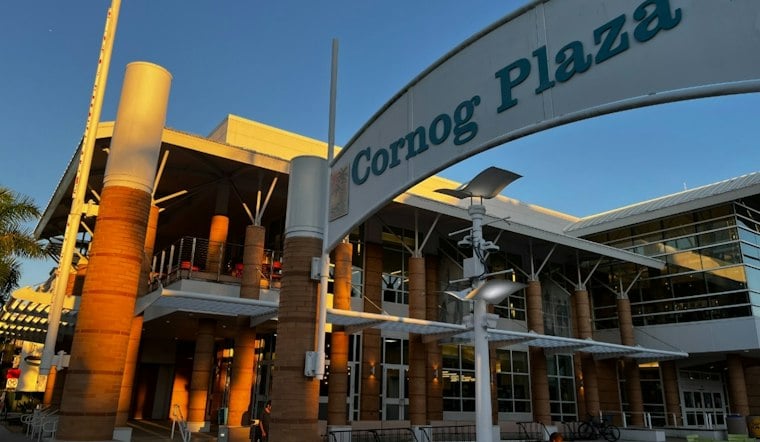
Inside the downtown Fort Myers library, free Wi-Fi, phone chargers and air conditioning have quietly become survival tools for people who have nowhere else to go during the day. For some patrons, the library isn't just a place to pass the time — it's one of the only reliable places in the city where they can cool off, charge a phone, or get online to search for work or housing.
Carelten William is one of them. He works part time, but as reported by Gulf Coast News, his income isn't enough to make ends meet, and he says he leans on the library for many of the services it offers. His situation reflects what community leaders describe as a broader trend: homelessness is growing in Fort Myers, and they point to inflation and the rising cost of living as key drivers.
One Shelter, Not Enough Beds
Bri Dodier, who lives downtown, told the outlet that the city's shelter capacity simply hasn't kept pace with need. “There's only one shelter. I feel like we need more shelters,” she said, adding that she believes the city and government should step in to provide additional options. Her comment echoes a pattern local nonprofits have been tracking for some time — more people who have never experienced homelessness before are now showing up for help.
That shift was flagged by the Southwest Florida Coalition to End Homelessness, whose executive director Michael Overway said the organization was seeing a surge of first-timers. “What we're seeing is a lot more newly homeless,” Overway said. “Individuals who have never experienced this before.” The coalition has also noted more seniors and single parents turning up in its count, and Overway identified access to affordable, sustainable housing as a major ongoing challenge, per the same account.
Hunger Is Part of the Equation
Stefani Ink, who works with Community Cooperative, said the people coming through her organization's doors aren't just looking for shelter or a charging station — many are simply hungry. “They're coming in looking for a hot meal because they really don't have the affordability other places,” Ink said. She also noted that few new organizations are stepping up to help as the community grows, leaving existing groups to absorb more demand.
Community Cooperative has been working on hunger and homelessness in Southwest Florida for four decades, according to WGCU, and the group serves roughly 120 to 150 hot lunches a day to people in need. Its CEO, Stefanie Ink-Edwards, said in that same report that she has watched demand climb steadily over the years.
What the Numbers Show — and Where They Disagree
Countywide data offers a mixed picture. The Southwest Florida Regional Coalition to End Homelessness reports that its 2026 Point in Time count recorded 838 people experiencing homelessness in Lee County, which it describes as a 5.6% decrease from a corrected 2025 total of 888 — and a continued decline from a 2024 peak of 941. A separate search snippet tied to the same coalition page lists a different 2025 figure, 734, describing it as a 22% drop from the year before; the discrepancy between the two 2025 totals has not been resolved in the available data. The coalition says its sheltered count fell 19.8% from 2025 while the unsheltered count held nearly flat, down just 0.3%. It also cautions that the annual count is only a single-night snapshot taken each January, not a full census.
Earlier reporting from Gulf Coast News found that homelessness in Lee County was nearing 1,000 people in 2024, with the coalition at the time estimating that figure captured only about a third of those actually living on the streets. A coalition gaps analysis dated September 25, 2025, pointed to a structural shortage of affordable housing paired with limited permanent supportive housing capacity across the region, noting that affordability indices have worsened in Lee, Collier and Charlotte counties alike.
City Leadership Stays Quiet
Fort Myers residents have looked to Mayor-elect Amber Ware to address the issue, but Gulf Coast News reported that Ware did not respond when the outlet reached out for her thoughts on homelessness in the city. Whether that will change once she takes office remains an open question for downtown residents like Dodier, who say the current shelter system isn't equipped to meet the need.
For now, people experiencing homelessness in Lee County can connect to services through the coalition's Coordinated Entry line, which offers access to street outreach, shelter, rapid rehousing and permanent supportive housing. The resource, listed in a directory the coalition updated in November 2025, can be reached at 239-533-7996.
A Pattern Seen Beyond Fort Myers
Libraries stepping into this gap isn't unique to Fort Myers. During an August 2026 heat wave, people experiencing homelessness in San Diego sought refuge inside the city's Central Library, according to the San Diego Union-Tribune. That report also noted a limitation familiar to many public spaces: some people couldn't use the air-conditioned library because they had nowhere secure to store their belongings. Fort Myers has seen its own temporary cooling response as well — the Salvation Army opened its Life Navigation Building on Edison Avenue as a cooling station in coordination with Lee County partner agencies, according to WINK News, though that station's current status wasn't addressed in that report.
Back at the downtown library, the daily routine continues: people plug in phones, log onto public computers, and sit in air-conditioned quiet while they figure out their next move. It's not a shelter and it's not a solution, but for residents like William, it's one of the few doors in Fort Myers that reliably stays open.





