

























































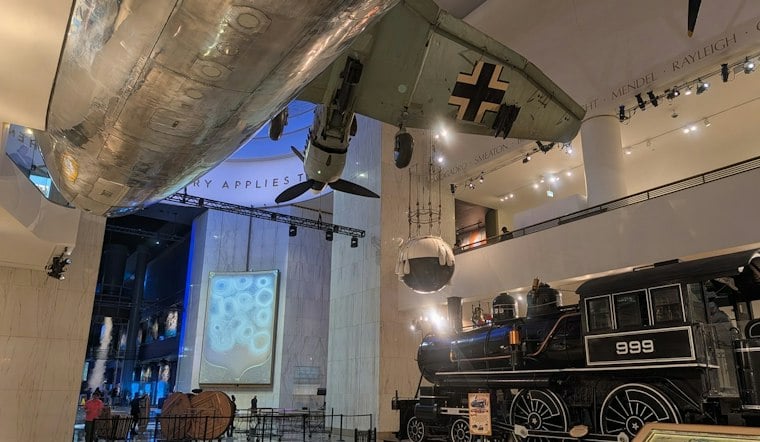
Griffin Museum of Science and Industry in Chicago is preparing to roll out one of its biggest automotive showcases in years. The museum says it is partnering with the Richard H. Driehaus Art Exhibition Lending Foundation on a new exhibition called Cars That Moved America, set to explore how automobiles have shaped the American experience, with an opening date of March 2027.
According to griffinmsi.org, the museum describes the show as a collaboration meant to dig into the cultural weight of the automobile over the last century. As reported by CBS News, the exhibition will feature more than 40 vehicles from the Richard H. Driehaus Automobile Collection, a group the museum describes as rare and meticulously restored.
Five Angles on a Century of Driving
Rather than lining up cars chronologically, the museum says the exhibition will examine vehicles through five lenses: design evolution, mass production, wartime manufacturing, the American freeway system, and competition and speed. The exhibition will extend the transportation gallery located in the east court at Griffin MSI, a space that already features the 999 Empire State Express locomotive, historical aircraft, a Piccard gondola, and a United Boeing 727 displayed cantilevered from the balcony level for the Take Flight exhibit. The Great Train Story, a longtime fixture at the museum, sits in the center of that same east court.
Griffin MSI's own holdings already include a mix of early automotive history, among them a 1911 open-top Simplex Automobile Company car, a 1929 Rolls-Royce Phantom, a Milburn Light Electric car from around 1919, and a 1914 four-seat Ford Model T. The museum, which opened in 1933, is also home to the 1993 Maize and Blue University of Michigan solar racer, a nod to automotive innovation well beyond the gas engine.
What's Rolling Into the New Exhibition
The exhibition will lean on more than historic metal to tell its story. Griffin MSI says it will include interactive technology, under-hood views, touch screens, and AI technology that will connect the cars to other items throughout the museum and answer visitor questions about each vehicle in real time.
Per theautochannel.com, the exhibition explores how 20th century vehicles have changed the way we move, live and imagine what's next. The outlet names several vehicles expected to appear, including a 1941 Chrysler Thunderbolt once dubbed “the car of the future,” a 1954 Mercury XM-800 concept car that debuted at the Detroit Auto Show and was also shown at the Chicago Auto Show, a 1957 Ford Thunderbird E Code marking the final iteration of the first-generation two-seat Thunderbird, and a 1926 Miller Locomobile that raced in the Indianapolis 500.
The seed story also points to other notable machines tied to the Driehaus collection and its era, including a 1933 Pierce-Arrow Silver Arrow Sedan displayed at Chicago's Century of Progress World's Fair, and a 1948 Tucker 48 Sedan, originally called the Tucker Torpedo, conceived by automotive entrepreneur Preston Tucker.
Museum Leadership Weighs In
Dr. Chevy Humphrey, Griffin MSI's chief executive officer and president, framed the exhibition as both a historical survey and a recruiting pitch for future engineers. “This exhibition not only charts the evolution of how America moved in the 20th century, but also provides inspiration for the next generation of automotive professionals,” Humphrey said.
Humphrey also emphasized the craftsmanship behind the collection itself. “We're thrilled to showcase this remarkable collection that highlights what's possible when human ingenuity, innovative engineering and creative design all meet,” she said, adding that the exhibition showcases human ingenuity, innovative engineering and creative design while inspiring the next generation of automotive professionals.
A Nod to the Museum's Automotive Past
Car exhibitions are not new territory for Griffin MSI. A separate 2025 report from CBS Chicago describes a space near the transportation gallery, now used for special exhibitions, that once housed a General Motors exhibit dating back to 1947. That space was known as Motorama until a revamp in the 1980s, and General Motors used the Motorama name for traveling midcentury shows that documented transportation history and imagined future travel possibilities, featuring a contemporary Main Street contrasted with Yesterday's Main Street, where antique cars were once parked. A Chicago Tribune report cited in that same CBS Chicago piece noted Motorama had 56 displays covering 11,300 square feet. The space was later dedicated as Wheels of Change in 1984 and continued into the 1990s before eventually becoming the special exhibitions area where Cars That Moved America is now set to arrive.




