

























































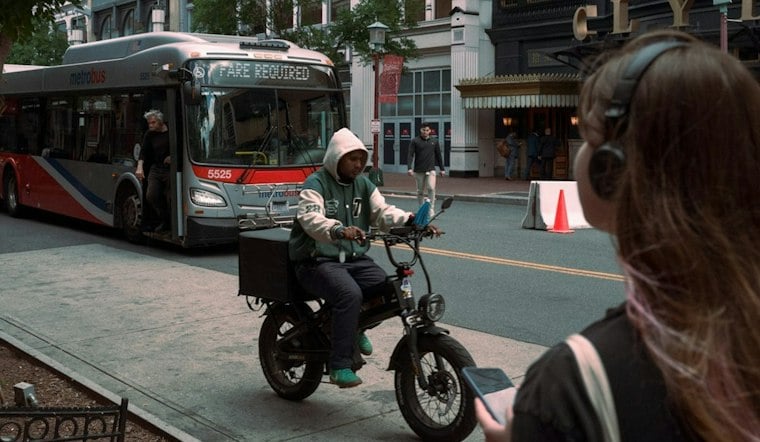
Highland Heights City Council has unanimously approved a sweeping new ordinance regulating e-bikes and e-scooters, setting speed caps, age minimums, helmet requirements and a sliding scale of fines that top out at $300 plus impoundment for repeat offenders. The legislation sorts e-bikes into three distinct classes and spells out exactly where each type can legally roll, from city streets to sidewalks to shared-use paths.
The new rules, detailed by Cleveland.com, replace previous legislation the city had on the books governing e-bikes. Council cited the increasing use of electric vehicles on city streets, sidewalks and paths, along with what the ordinance describes as immediate logistical and safety concerns, as the reasoning behind the overhaul.
How the New Classes and Speed Limits Work
Under the ordinance, Class 1 e-bikes have a pedal-assist motor that stops assisting at 20 mph, Class 2 e-bikes have a motor usable without pedaling that also cuts off at 20 mph, and Class 3 e-bikes have a pedal-assist motor that stops assisting at 28 mph, per the same report. Class 3 e-bikes are restricted to roads only — they cannot be ridden on sidewalks or paths — and must be equipped with a working speedometer.
Riders and scooters are capped at 10 mph on public sidewalks whenever motor assistance is active, and Class 1 and Class 2 e-bikes and e-scooters may use the city's shared-use paths at that same 10 mph limit. Electric scooters and permitted e-bikes are confined to roads with speed limits up to 35 mph, and operators must ride as close as possible to the right side of the road while obeying traffic control devices, the outlet reports. All e-vehicles must yield the right-of-way to pedestrians, and the ordinance defines reckless operation to include failing to yield, failing to give an audible warning before passing a pedestrian, or not maintaining continuous contact with the handlebars.
Age Limits, Helmets and Tamper-Proof Labels
The ordinance bars riders under 16 from operating Class 3 e-bikes and bars riders under 15 from riding e-scooters at all on Highland Heights public property, roads, sidewalks or shared-use paths, according to the report. Anyone under 18 must wear a properly fitted and fastened helmet while riding an e-bike or e-scooter, and each e-bike or e-scooter may carry only the rider — no passengers.
Every e-bike must carry a permanent, tamper-resistant manufacturer label identifying it as Class 1, 2 or 3, and an e-bike cannot legally be used in Highland Heights without that classification label. Vehicles also cannot be modified to exceed 750 watts or to push past their factory-set speed capabilities; a modified vehicle that tops 28 mph or 750 watts is reclassified as a motorcycle or moped and requires valid registration, the same account notes.
Fines Climb Fast for Repeat Offenders
A first offense carries a $50 fine, a second offense within a rolling 12-month period jumps to $150, and a third or subsequent offense within that same window costs $300 and triggers mandatory vehicle impoundment, per the report. Parents can be held jointly liable for fees, impoundment costs and municipal fines tied to violations they knowingly authorize or permit.
Highland Heights HHPD Chief Dennis Matejcic told Cleveland.com he modeled the legislation on laws from other communities, including Mentor-on-the-Lake and Streetsboro. The city's own police department already owns a Class 3 e-bike that it uses for patrols, according to the report.
Enforcement Timeline and a Looming State Override
Matejcic said Highland Heights expects enforcement to begin in spring, since the riding season has wound down for the year, and he noted the city had issued no citations for e-bike or e-scooter offenses since the ordinance passed. In the meantime, the city plans to roll out public education through school announcements, the city website and social media. Matejcic said a public safety announcement was drafted for the city's social media accounts and that a letter was prepared for the Mayfield school district, even though the ordinance itself applies only within Highland Heights — the district also serves Mayfield Heights, Mayfield and Gates Mills.
Looming over the local rules is the Ohio state legislature, which has bills introduced to regulate e-bikes and e-scooters statewide. If a bill like that passes, it would supersede local community ordinances like the one Highland Heights just adopted, Cleveland.com reports.
How Nearby Lake County Communities Compare
Highland Heights is not alone in tightening e-bike rules this year. In Mentor, the City Council unanimously passed three e-bike ordinances that extend helmet requirements to Class 1 and Class 2 riders — not just Class 3 — and require the motor to be turned off completely whenever an e-bike is ridden on a sidewalk, according to the City of Mentor. Mentor also limits Class 1 and Class 2 e-bikes to bike paths and shared-use paths while restricting Class 3 models to roadways, and requires an audible warning before passing a pedestrian. A first violation there can bring a fine up to $150, with repeat offenses within a year escalating to a fourth-degree misdemeanor. The City of Mentor says the ordinances were passed on September 15, 2026.
The push for tighter rules followed real concerns on Mentor streets: officials discussed reports of 11-year-olds riding scooters at roughly 30 mph on city roads. Mentor-on-the-Lake moved earlier in the year, after the city said it had received a growing number of complaints about e-bikes and scooters on roads and sidewalks.




