

























































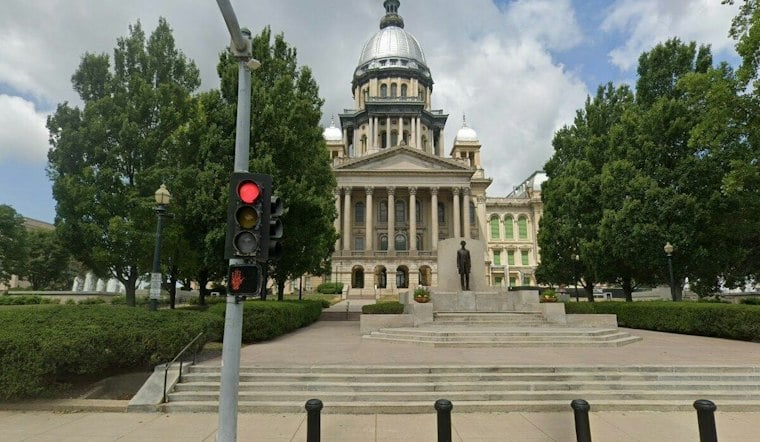
Hundreds of people packed the Illinois Capitol in Springfield on Wednesday, pressing lawmakers to pass sweeping new rules on the state's booming data center industry before time runs out this year. The crowd came by bus, car and Amtrak from around the state to back a measure known as the POWER Act, which backers say would force data centers to pay for the energy they consume, disclose their water and electricity use, and limit noise and diesel generator use near homes.
The rally coincided with a Senate Energy and Public Utilities Committee hearing on the bill, scheduled for 4:30 p.m. in Room 212 of the Capitol, according to CASRAI. That notice did not announce a vote, and lawmakers will not vote on the POWER Act this week, according to reporting from St. Louis Public Radio. Any action would have to come during the final days of the General Assembly's veto session, which concludes Dec. 3, according to Fox 2.
A 1,000-Page Bill Years in the Making
The legislation, also known as Senate Bill 4016 and House Bill 5513, runs roughly 1,000 pages, per the station's report. State Sen. Ram Villivalam, the bill's lead sponsor, who introduced SB 4016 on Feb. 6, 2026, according to the Illinois General Assembly, called it the most comprehensive data center legislation in the nation and described it as a big solution for a big problem. He told the crowd that their voices deserve to be heard when issues affect families, homes, neighbors and bills, the same account notes.
The bill failed to progress during the spring legislative session, and lawmakers have since met with environmental advocates, organized labor and data center industry representatives to negotiate details, per the same report. Advocates are hoping the measure finally clears the veto session. Beyond requiring data centers to pay for the energy they use, the POWER Act would mandate transparency around water use and ensure local community benefit agreements, the station reports. Separately, the Illinois Environmental Council said the bill would ban nondisclosure agreements and require public access to any signed agreements, according to WAND-TV.
Organizers Say Residents Are Tired of Fighting Alone
Lori McKiernan, a local Springfield community organizer and Sierra Club member, said Illinoisans are tired of fighting alone for basic protections without help from the state legislature, and said legislators must take action on data centers, according to the station's report. Cate Caldwell, an Illinois Environmental Council organizer, said big tech expects people to be intimidated by its money and overwhelmed by the fight — and said big tech should instead be intimidated by the rally crowd that showed up in Springfield.
Data centers house the servers and hardware that store data and power digital services, and hyperscale facilities consume energy comparable to that of a small city, the article reports. Those facilities have driven up energy costs for regular residents and small businesses, per the reports cited in the coverage. Environmental advocates oppose delaying Illinois climate goals to keep fossil-fuel plants running longer just to power that growth.
State Reports Weigh Delaying Plant Closures
The debate in Springfield is unfolding alongside two new state reports that found rising data-center electricity demand is making it difficult for Illinois to retire coal, gas and oil plants on schedule, according to the Chicago Sun-Times. The reports — the Resource Adequacy Mitigation Plan from the Illinois Power Agency and Illinois Environmental Protection Agency, and the Integrated Resource Plan from the Illinois Commerce Commission — recommended that 11 oil- or gas-fired peaker plants once expected to close in 2030 or 2031 instead keep running until 2033 to help prevent blackouts.
The goal of shutting down four of the seven coal plants still operating in central and southern Illinois by 2030 remains in place, the newspaper reports, and state officials said the reports do not advise building new natural gas plants. Wind and solar projects are not being built quickly enough to keep pace with the new demand, according to the same reports. A nationwide study found that 403 U.S. hyperscale data centers used between 68 and 99 terawatt-hours of electricity from May 2024 to April 2025, depending on the operating scenario, according to TIME.
Other States Are Also Moving to Rein In Data Centers
The Illinois Environmental Council has estimated that power rates could rise 24% by 2050 without some control on data-center power needs, according to Shaw Local. Advocates have said data centers haven't been held accountable for their impact on grid reliability and energy costs, according to WAND-TV's report. Nationally, TIME reported that voters approved measures to limit or prevent data-center development in 40 of 41 local ballot initiatives across the country in November.
Illinois isn't alone in considering guardrails. North Carolina regulators recently established a separate electricity rate schedule for data centers with power demands of at least 50 megawatts, requiring qualifying facilities to pay demand charges based on at least 75% of their contracted power even if they use less, and set minimum contract terms of 10 years — or at least 15 years for facilities requiring 100 megawatts or more — according to WRAL. At the federal level, a permitting bill would charge data centers extra for access to the electric grid, according to The New York Times. Closer to home, one Crystal Lake resident told Shaw Local that Aurora had imposed a data-center moratorium and has since adopted its own regulations, pointing to local action already underway in Illinois even as the statewide bill awaits its fate before the veto session ends.





