

























































A 39-year-old Chicago Ridge, Illinois man who owns a local grocery store has been indicted on six felony charges after federal investigators say he used his store's SNAP authorization to run a card-cloning scheme that drained benefits from victims as far away as Kansas. A federal grand jury indicted Mohammad Aqilan, who owns Windy City Food Market, on charges that include theft of public money, aggravated identity theft, access device fraud and three counts of food stamp fraud.
According to Tampa Free Press, prosecutors allege Aqilan obtained legitimate SNAP account numbers and used that data to create counterfeit electronic benefits transfer cards. Investigators say he then allegedly conducted bogus grocery purchases at his own store using the cloned cards, a tactic that drained accounts belonging to unsuspecting beneficiaries, per investigators. The U.S. Department of Agriculture had authorized Windy City Food Market to accept SNAP payments in 2024.
Digital records reviewed in the case reportedly showed that several victims were physically located in Kansas and other states at the same moments their cards were being used inside the Illinois store, a detail that helped tie the alleged fraud to a multi-state reach rather than a single local scheme. Prosecutors allege Aqilan used the store's SNAP authorization specifically to commit the fraud. Christopher Oakley is the assistant U.S. attorney handling the case for the government, per the Tampa Free Press report.
How Investigators Traced the Paper Trail
Special agents from the USDA Office of Inspector General and Homeland Security Investigations tracked the paper trail back to Aqilan's store, according to the same account. The case lands amid a broader federal push: the Department of Justice stood up its National Fraud Enforcement Division on April 7, 2026, a unit tasked with investigating scams targeting public programs. That division is supported by President Trump's Task Force to Eliminate Fraud, which is chaired by Vice President J.D. Vance and aims to stamp out waste and abuse across federal aid systems.
Card cloning cases like this one tap into a vulnerability that fraud investigators and consumer advocates have flagged repeatedly. SNAP EBT cards still rely on magnetic-stripe technology that skimmers can easily read, unlike the chip and tap-to-pay protections now standard on most credit and debit cards, according to ProPublica. More than 36 million people received SNAP benefits in July 2026, and most recipients remained dependent on those magnetic-stripe cards, Newsweek reports.
A Pattern of Electronic Theft Nationwide
The scale of SNAP-related theft has drawn increasing scrutiny. ProPublica reported that electronic theft took $470 million from SNAP beneficiaries in 2025, affecting more than 990,000 food-assistance households, citing data supplied by Propel; in a separate article, the outlet put the same figure as more than $470 million stolen from SNAP recipients by card scammers, affecting about 990,000 households. By contrast, confirmed intentional program violations committed by SNAP recipients themselves account for just $64 million a year, or about 0.08% of all benefits issued annually, per the latest 50-state reports compiled by USDA and cited by the same outlet.
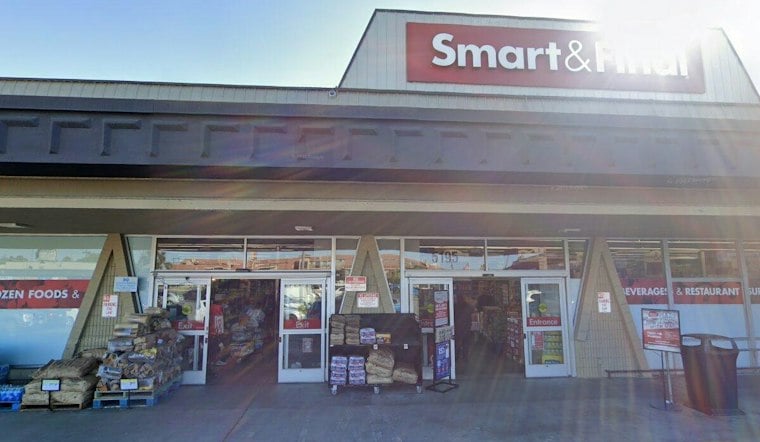
Other cases around the country illustrate how cloned SNAP data has been exploited. In October 2022, four people used 25 cloned cards to buy $10,747.05 worth of energy drinks, including 3,960 cans of Red Bull and 720 cans of Monster Energy, at a Smart and Final in San Diego, the report notes. Separately, from September through November 2022, a Romanian-based criminal syndicate bought at least $305,274.52 in energy drinks using SNAP account information and PINs stolen from at least 174 victims nationwide, according to court documents and federal investigators cited in the same reporting. The outlet has also reported that some corner-store owners collaborate with scammers directly, ringing up fake grocery purchases in exchange for cash.
A separate case out of New York, reported by The New York Times, described a group that used stolen SNAP-linked information to create clones of EBT cards, echoing the tactic alleged against Aqilan in Illinois.
What Beneficiaries Can Do to Protect Their Accounts
Federal data from USDA's Food and Nutrition Service shows trafficking concerns are not new to the SNAP system. For 2015 through 2017, USDA estimated that about 2.0% of total SNAP benefits were trafficked under its current definition, with an annual value of $1.271 billion, and that roughly 14.3% of all authorized SNAP stores engaged in trafficking during that period. The agency also found the trafficking rate climbed from 1.5% in 2012-2014 to that 2.0% level in 2015-2017.
Consumer advocates note that beneficiaries have some tools available to limit exposure. Card-management apps may let SNAP recipients monitor transactions, lock their cards, change their PIN, and block out-of-state or online transactions, ProPublica notes. Still, the Food Research and Action Center has cautioned that approved replacement claims do not capture the full scope of theft and likely understate the true losses, according to Newsweek.




