

























































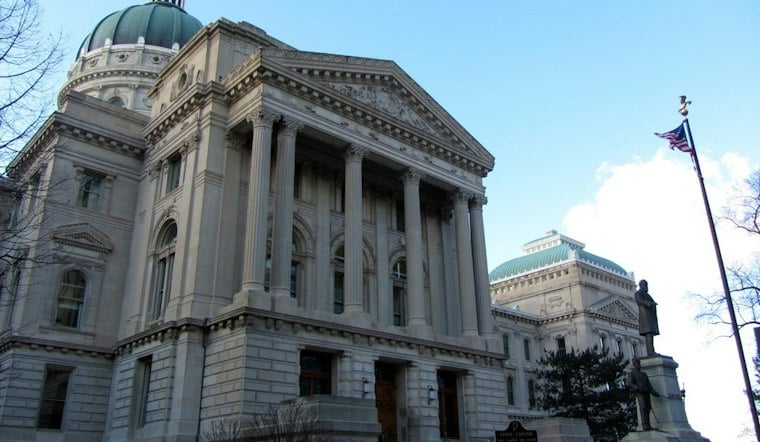
Indiana voters head to the polls Tuesday to decide who oversees how the state accounts for, disburses and reports on $26 billion in annual general fund revenue, and the race for comptroller has turned into a referendum on how easy — or hard — it is for ordinary Hoosiers to track where that money goes. Republican incumbent Elise Nieshalla faces Democratic nominee Jessica Bailey and Libertarian John Schick on the Nov. 3 ballot, with both challengers arguing the state's Transparency Portal needs an overhaul.
The comptroller's office, which the Indiana General Assembly renamed in 2023 from state auditor to state comptroller, manages Indiana's finances, ensures state employees are paid and distributes tax dollars, according to ipm.org. Nieshalla has held the seat since Dec. 1, 2023, after then-Gov. Eric Holcomb appointed her that November, as idsnews.com reported — meaning Tuesday marks her first bid to win the office outright rather than hold it by appointment, according to the Chicago Tribune.
A Portal Both Challengers Call Confusing
Bailey and Schick each told ipm.org they want to make the Transparency Portal more user-friendly for the average Hoosier. Bailey has proposed making the site easier to search, written in plain language and kept current, according to her campaign at baileyforindiana.com. She told the Indianapolis Recorder she plans to make the portal easier to use so residents can see how state money is spent, and per the Chicago Tribune, she wants it to become a genuinely usable tool for Hoosiers, with search functions improved and information explained in plain language.
Schick has gone further, saying he would “completely” rework the site and issue regular press releases about state spending if elected, per ipm.org. The Chicago Tribune reports Schick said he would issue more press releases to explain how the comptroller's office assists the public. Schick pointed to his own search of Porter County financial information, telling ipm.org that around 60% of spending there appeared under a single account labeled settlements with little specificity — a finding also noted in the Chicago Tribune's reporting, which added that Schick said county account structures aren't comparable to one another, citing LaPorte County as an example.
Bailey Wants More Scrutiny on State Board of Finance
Bailey has also zeroed in on the State Board of Finance, a three-member panel that supervises state funds and oversees the movement of millions of dollars between state accounts, according to ipm.org and the Chicago Tribune. She said she'd like to see the board engage in more public discussion about its decisions, per ipm.org. Her website goes further, stating that board meetings currently last about three minutes with little discussion and that no money should move without independent oversight, according to the Chicago Tribune's review of baileyforindiana.com.
Bailey said she would pursue that oversight by asking questions, requesting documentation and ensuring review is recorded before money moves, per her website. The Chicago Tribune also reported on an unattributed observation that the comptroller's office may not be incentivized to bring more transparency when the officeholder shares a party with the majority in the Indiana General Assembly — a dynamic that underscores why the portal and board oversight have become central issues in this race.
The Candidates' Backgrounds
Bailey is wrapping up her second term as Porter County clerk of courts, a role in which she has helped run elections, provide public-record access and manage payroll, according to the Chicago Tribune. She has served nearly eight years as Porter County clerk and, in that role, handles payroll for poll workers and funding details related to the courts, per indianacitizen.org, which also reported that she was officially chosen as the Democratic nominee at the party's state convention on June 6, 2026, after running unopposed. The Porter County elections office under her watch won a national Clearinghouse Award from the U.S. Election Assistance Commission, the Chicago Tribune reported, and Bailey was named Clerk of the Year by the Association of Indiana Counties in 2023 and Election Board Member of the Year in 2021.
Schick, a Chesterton management consultant, holds a master's degree in business administration from Indiana University and is making his fourth run for state comptroller, according to the Chicago Tribune. He has argued that growing polarization is souring voters on both major parties, the Tribune reported, a point consistent with his pitch as the Libertarian alternative in the race.
Nieshalla's Record and Priorities
Nieshalla, who lives in Zionsville, spent two decades working in real estate, including with the Indiana Economic Development Corporation on economic development and real estate acquisition, before serving as president of the Boone County Council, according to idsnews.com and the Chicago Tribune. During her time as comptroller she has served on the Indiana Public Retirement System board and chaired the Indiana Deferred Compensation Committee, per the Chicago Tribune, and she has said her leadership is rooted in faith, family, fiscal responsibility and freedom.
On transparency, Nieshalla has pointed to her own dashboard dedicated to federal expenditures in Indiana, which she launched in May, according to ipm.org. The Chicago Tribune reported she wants to include more data on federal grant money flowing into the state and that she has worked to remove state investments from funds tied to entities aligned with the Chinese Communist Party, as well as funds focused on environmental, social and governance factors. She has also chaired a national debt crisis task force for the State Financial Officers Foundation and advocated for leaders in Washington, D.C. to restore the country's fiscal stability, per the Tribune.
The stakes around transparency have grown alongside the dollar figures involved. Federal funding to Indiana surged from an average of $12 billion to $14 billion annually to $26 billion at the peak of the coronavirus pandemic and has remained elevated since, according to ipm.org — a jump that helps explain why all three candidates are making the state's spending portal, and the public's ability to make sense of it, a central issue heading into Tuesday's election.




