

























































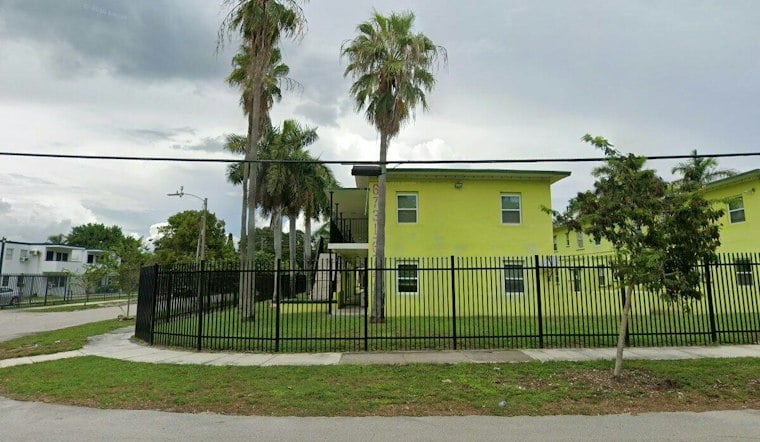
City and county leaders broke ground on a new townhome development in Miami's Little Haiti neighborhood this week, bringing 13 permanently affordable homes to a corner lot along Northeast 67th Street. The project, called Place Louverture, is built on a shared-equity model designed to let working-class buyers own a home even as property values around them climb out of reach.
Under the arrangement, buyers purchase the townhome itself at a reduced price while a nonprofit called the South Florida Community Land Trust retains permanent ownership of the land beneath it, according to CBS News. The Broward-based nonprofit says it exists to help first-time homebuyers and families displaced by South Florida's soaring housing costs, and Place Louverture marks its first project in Miami-Dade County. The land trust's own project page had said the development would be completed in 2025, a timeline that does not match this week's groundbreaking, and it is not clear what caused the delay. That page also said the trust acquired the property from the Haitian American Community Development Corporation back in July 2018.
Longtime Owners Feel the Squeeze
The project arrives as rising property taxes and living expenses weigh heavily on longtime residents in Little Haiti, a historically working-class neighborhood. Sampson Lisca, who bought his home in the neighborhood roughly 20 years ago, around 2006, said escalating costs are making it increasingly difficult to hold onto his property. “I just paid $5,200 for taxes,” he said, according to the station's report, adding that a neighbor recently lost their house.
Lisca also raised questions about the land trust model itself, wondering whether buyers who don't own the land under their homes can count on guaranteed long-term stability. It's a concern that echoes broader numbers from the neighborhood: per the same report, a strategic plan cited by the Miami Herald found that 50% of Little Haiti homeowners and 63% of renters are cost-burdened, spending more than 30% of their income on housing. The same plan found that just 736 of the neighborhood's 7,269 dwelling units were homesteaded, putting the owner-occupancy rate at around 10%, and that 37% of properties purchased in the area since 2019 went to outside investors.
Officials Defend the Legal Protections
Miami-Dade County Mayor Daniella Levine Cava said strict legal covenants govern community land trust properties and that she does not expect those protections to disappear, framing the model as a durable tool rather than a temporary fix. City of Miami Commissioner Christine King, who represents the district, said local leaders must ensure longtime community members are not priced out of the neighborhood they helped build.
The land trust model is structured so qualifying families can pass the properties down for generations, and a project representative said homebuyers can also pass the shared-ownership opportunity forward to another buyer rather than selling into the open market. County staff are working with dozens of public and private funding partners to launch additional affordable housing projects across Miami-Dade, and officials have said Place Louverture will not be the last community land trust development in the county.
A Pattern of Displacement Across South Florida
The stakes behind that promise show up elsewhere in South Florida, where other long-running housing arrangements have unraveled. In Overtown, dozens of shareholders in the Town Park Village cooperative, which opened in the 1970s, have faced eviction proceedings decades after buying into the property. Residents there buy shares in the building and pay monthly charges covering mortgage payments, taxes, and maintenance, according to WLRN's 2024 reporting, which found an $18 million rehabilitation grant meant to fix up the crumbling complex had nearly dried up.
In Sweetwater, mobile home owners who rented the land beneath their residences were evicted last year after developers purchased the Li'l Abner Mobile Home Park, which had housed families for more than 50 years. WLRN reported that roughly 210 former residents filed a class action lawsuit alleging the landlord failed to offer them the chance to buy the park before selling to developers, an allegation the landlords denied. The outlet has also noted that affordable mobile home parks are being demolished across South Florida for new developments, leaving displaced residents with few reasonably priced options left.
Against that backdrop, Place Louverture's bet is that locking the land itself out of the speculative market can keep a foothold in Little Haiti within reach for families like Lisca's neighbors, even as the broader market around them keeps climbing.





