

























































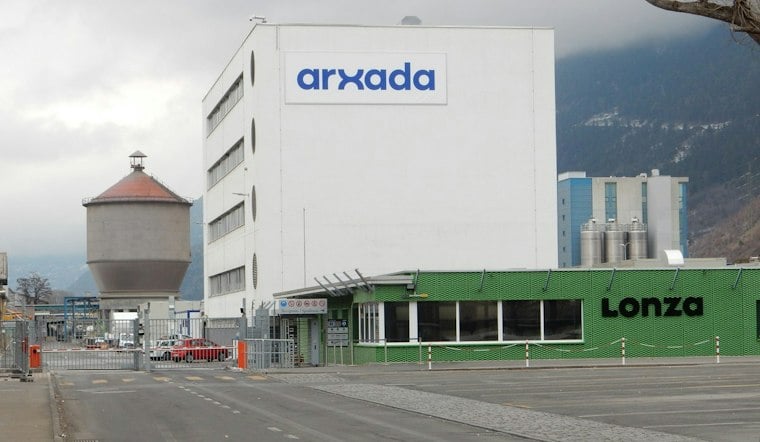
Lonza has signed a definitive agreement to acquire five U.S. contract manufacturing sites from Merck KGaA, a deal that will shift roughly 1,100 employees onto Lonza's payroll and nearly double its domestic manufacturing footprint. The sites sit in Carlsbad, California; Madison and Verona, Wisconsin; St. Louis, Missouri; and Indianapolis, Indiana, and together they handle some of the most technically demanding work in biologic drug production. The transaction is not yet final, with both companies pointing to a mid-2027 closing date.
According to Lonza, the company announced it had signed the agreement to acquire the five CDMO manufacturing sites in the US. The purchase will expand Lonza's U.S. CDMO network from four sites to nine and push its American workforce past 6,000 employees, according to Contract Pharma. Merck, for its part, confirmed in a statement that it has signed a binding agreement to sell its Life Science division's CDMO business to Lonza, as first detailed by CHEManager.
What the Plants Actually Make
The acquired operations aren't generic pill factories. Per Contract Pharma, the sites provide capabilities in bioconjugates, viral vectors, high-potency payload-linkers, lipid nanoparticles, liposomes and PEGylated proteins — the kind of specialized chemistry increasingly used in cancer therapies, gene therapies and next-generation vaccines. Four of the five facilities trace back to Sigma-Aldrich and its CDMO division SAFC, which Merck folded into its portfolio after acquiring Sigma-Aldrich in 2015, expanding its contract manufacturing reach through that production network. The Indianapolis site came later, added to Merck's portfolio through its 2022 acquisition of Exelead.
One asset is explicitly staying put. BioReliance Contract Testing Services is not included in the transaction and will remain an important part of Merck's Life Science portfolio, the company said in its statement. Until the sale closes, the CDMO business will continue to operate as part of Merck's Life Science business sector.
A Number That Depends on Which Company You Ask
Exactly how much Lonza is paying depends on who's describing the deal. Merck said Lonza will acquire the business for a mid-triple-digit million-euro amount. Lonza, meanwhile, pegged the transaction at a total enterprise valuation in the low- to mid-triple-digit millions of Swiss francs — a different currency and a different framing that leaves the precise price ambiguous. Lonza does offer one forward-looking figure: it expects the acquired sites to contribute around CHF 250 million in sales in full-year 2028, at a core EBITDA margin below Lonza's own average.
Merck chairman and group CEO Kai Beckmann framed the sale as part of a broader portfolio reset the company announced in May 2026, saying Merck is aligning its portfolio with innovation-driven businesses that build on core competencies and strengthen its long-term competitive position. Beckmann also said the move is about connecting capabilities across the company to strengthen its position as an integrated science and technology company. Merck has described the divestment as part of its strategy of focusing its portfolio on innovation-driven businesses with strong value-creation potential.
Lonza's Side of the Bet
Lonza CEO Wolfgang Wienand said integrating Merck's CDMO business will give Lonza customers broader services and additional U.S. production capacity. Lonza has signaled it considers the United States an important market, and this deal is its biggest lever yet for growing there — nearly doubling its domestic site count in one move. The company plans to fold the acquired operations into an organization focused on contract development and manufacturing.
Part of a Busier CDMO Market
The Merck-Lonza deal lands amid a wave of consolidation across contract drug manufacturing. Peptides were again a focal point of several moves by CDMOs in 2026, according to DCAT Value Chain Insights, which also noted that several CDMOs of sterile manufacturing and aseptic fill-finish services advanced large capital expansions this year. Samsung Biologics has a pending $1.8 billion acquisition of peptide-API maker PolyPeptide Group expected to close toward the end of 2026, the same report notes, while CordenPharma added to its peptide position by acquiring AmbioPharm, and Bachem is sinking more than CHF 500 million into a new Swiss peptide facility targeted for 2030 production.
Merck itself isn't new to CDMO dealmaking — its MilliporeSigma unit previously closed a roughly $780 million cash acquisition of Exelead, a move aimed at expanding CDMO services across the mRNA value chain, according to Contract Pharma. A separate report from Manufacturing Digital cited McKinsey research projecting pharmaceutical R&D outsourcing spend will reach double its 2014 rate by 2029, underscoring why companies like Lonza are racing to add capacity. Manufacturing Chemist has also pointed to firms including Agilent Technologies, Celltrion and Catalent building scale in manufacturing capacity as the broader industry consolidates.
For now, the Merck-Lonza transaction remains pending, subject to customary regulatory approvals and other closing conditions, with both companies pointing to a mid-2027 completion date. Until then, the business keeps operating under Merck's Life Science banner, leaving the roughly 1,100 affected employees and four states' worth of manufacturing operations in a holding pattern ahead of the handover.





