

























































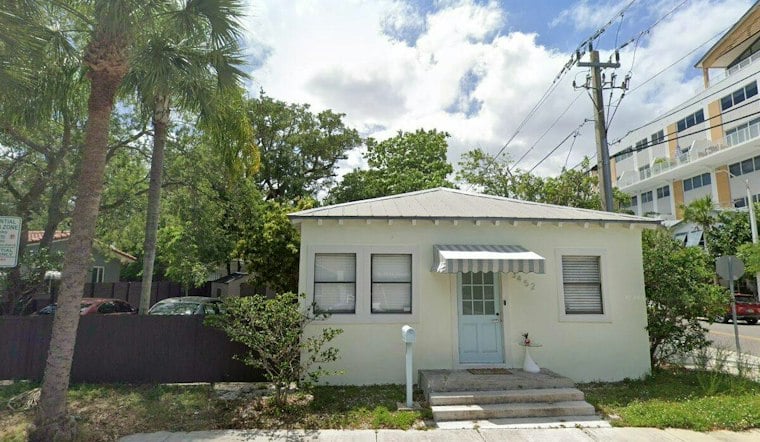
A tiny single-family lot on Margaret Street and a parking lot tucked behind a North Grove office tower have become the go-to examples in a Miami zoning fight that reaches the City Commission on Thursday. At issue is a set of changes to Miami 21, the city's rulebook for development and land use, that would make it easier for owners of small residential properties to seek higher-density zoning simply because their land sits next to a more intensely zoned parcel.
What the Amendment Would Actually Change
Under the proposal, property owners could apply for upzoning to T4 even if their lot falls far short of the size usually required to request a rezoning, according to The Miami Times. Existing rules generally require at least 40,000 square feet of land or 200 feet of street frontage to file a rezoning application, though an exception already exists for proposals that extend an existing zoning district boundary. The new language would let smaller properties skip that threshold entirely as long as they border a higher-density parcel.
The amendment would also scrap the city's twice-a-year filing calendar, letting owners submit private rezoning applications year-round instead of only in March and September. And it would loosen the paperwork burden: applicants would no longer have to justify why their existing zoning is inappropriate, though they would still need to explain how the requested change meets Miami 21's broader objectives. Taken together, the changes alter one step in the rezoning process and, on their own, would not automatically authorize more intensive construction — eligibility to apply is not the same as approval.
T4, formally the General Urban zone, is not a high-rise designation: Miami 21 sets a three-story maximum for principal buildings and caps residential density at 36 dwelling units per acre. The code also sets limits for lot coverage, green space and setbacks. Those standards would still govern any later project; the proposed change would let owners seek T4 zoning, not bypass the rules for building on a rezoned lot. Miami 21’s T4 standards spell out those limits.
Two Properties Already Flagged as Test Cases
The clearest illustration sits at 3452 Margaret St. in West Grove, a 1948 single-family house on a 4,725-square-foot corner lot currently zoned for low-density residential use. RE1 Properties LLC bought the house for $890,000 in 2025, and nearby properties along Thomas Avenue are already zoned T5-R, a designation permitting five-story buildings and, in some cases, seven stories. Because the Margaret Street lot borders that denser zoning, it would qualify to seek upzoning to T4 under the proposed rule — a designation that allows townhouses, small apartment buildings and, in some versions, taller structures with commercial uses.
A second example sits across town in North Grove: a parking lot at 2961 Aviation Ave. that serves an adjacent five-story office building. That lot also borders three single-family homes zoned T3, and it too would become eligible to apply for T4 status. The pairing of a quiet residential lot and a working parking lot shows how differently the same rule change could play out depending on which block it touches.
A Planner's Warning About 'One Lot at a Time'
The proposal narrowly advanced out of the Planning, Zoning and Appeals Board in June, but it has drawn pushback from residents who worry about cumulative effects. George Da Guia, a Coconut Grove resident and licensed urban planner, raised the concern in written comments submitted last June, warning of a domino effect in which successive rezonings creep deeper into established residential blocks. “One lot at a time,” Da Guia wrote, “each one too small to trigger the normal scrutiny.” Critics more broadly have echoed that fear, warning that the changes could gradually push higher-density zoning further into neighborhoods that were never meant to absorb it.
The West Grove setting carries a history beyond the parcels under debate. The neighborhood was historically majority-Black and has Bahamian roots; it is also known as Little Bahamas. Decades of redevelopment and gentrification have displaced residents and diminished cultural landmarks, adding a broader community dimension to disputes over how land-use rules may shape future development. West Grove’s history and Bahamian roots have been documented by the Associated Press.
City officials counter that the revisions are meant to make zoning procedures more efficient, transparent and predictable while still preserving neighborhood character. The changes would apply citywide, not just in Coconut Grove, giving the debate stakes well beyond the two example properties already in the spotlight.
What Happens at City Hall Thursday
The Miami City Commission is scheduled to take up the proposed changes at its meeting Thursday, which begins at 9 a.m. at City Hall in Coconut Grove. Thursday's vote is a first reading only; if commissioners approve the amendment, it would still need a second commission vote before becoming law. Nothing in the proposal would immediately change the zoning of the Margaret Street or Aviation Avenue properties — it would only open the door for their owners, or others like them, to apply.
The reporting was produced by Coconut Grove Spotlight, a nonprofit newsroom covering Coconut Grove and Miami City Hall, in partnership with The Florida Trib, with support from the Miami Foundation, the John S. and James L. Knight Foundation, and Report for America. The story was written by David Villano.





