

























































The Howick, a 150-unit affordable-housing complex that opened in Millcreek in February, adds new homes to a state facing a much larger shortage. Utah entered 2026 short 44,097 homes for extremely low-income households, according to the National Low Income Housing Coalition, while the state was expected to add only a few hundred low-income units this year. One resident, disabled veteran Floyd Butterfield, pays $200 a month, with U.S. Department of Veterans Affairs housing vouchers covering the rest of his rent.
A Veteran Finds Stability After Decades of Service
Butterfield served in the U.S. Army starting in 1977 and continued until December 1996, according to KUTV. He told the station that moving into The Howick gave him an opportunity to start again. The complex, built by the Community Development Corporation of Utah, offers 41 one-bedroom, 40 two-bedroom, 41 three-bedroom and 28 four-bedroom units, according to a blog post from the Community Development Corporation of Utah.
Eligibility at The Howick is tied to area median income, with individuals qualifying at incomes as low as $25,770 a year and a family of four qualifying at $36,810, figures the developer's website provided to the station. Eleven units are specifically set aside for people transitioning out of homelessness, with case management support from First Step House, per the nonprofit's blog post. The project drew support from a mix of public, private and nonprofit partners, including Salt Lake County, Utah Housing Corporation and the Olene Walker Housing Trust Fund.
Financing Affordable Units Takes a Patchwork of Programs
Todd Reeder, CEO of the Community Development Corporation of Utah, said low-income housing typically relies on a mix of local, state and federal taxpayer programs pieced together project by project. Claudia O'Grady, a vice president at Utah Housing Corp. — the state agency that helps finance homes — explained that assistance to builders and developers leaves less of a loan to repay and less rent that needs to be charged. She added that the projects are deed-restricted for 50 years, meaning they will always remain affordable.
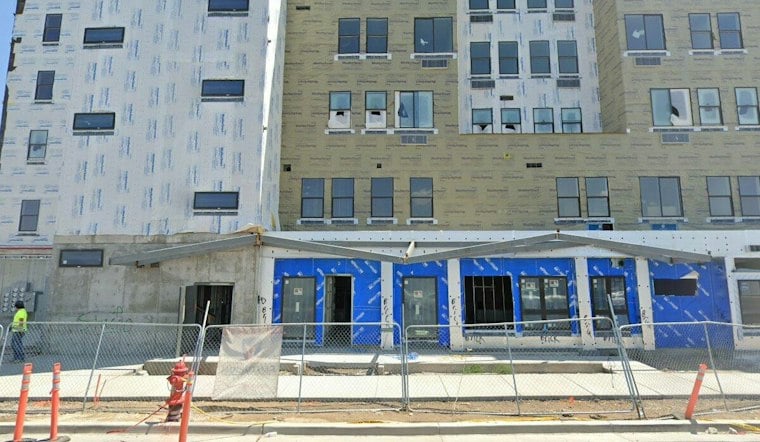
Down the street from The Howick, a senior apartment complex is under construction, with units expected to rent for as low as $500 a month. The Community Development Corporation of Utah purchased the land for that project back in 2019, but the estimated cost has climbed from $20 million to $30 million over the seven years since, the station reported. Reeder said plenty of projects across the state have not been able to reach completion, a sign of how rising costs squeeze affordable housing even when land and sponsors are already lined up.
A Statewide Gap That Dwarfs New Construction
The National Low Income Housing Coalition's estimate underscores the scale of the gap: Utah needed 44,097 more homes for extremely low-income households as it entered 2026, while only a few hundred low-income units were expected to be added this year. The Utah Legislature has increased assistance and incentives for building low-income housing in recent years, and the federal government has also helped fund construction in the state, but the expected additions remain far below the estimated need.
Funding, Local Policy and Affordability Terms
The funding pipeline is not the same as completed construction: Utah Housing Corporation reported to a legislative interim committee that it financed 1,714 affordable rental units in fiscal year 2024. In a September 2025 update to the Millcreek City Council, the planning director said that since adopting its 2023 Moderate Income Housing Plan, the city had rezoned for higher density, eased accessory dwelling unit rules, reduced parking requirements and streamlined multifamily and infill approvals, according to City Council meeting minutes. Publicly supported housing can also carry long-term affordability requirements, though terms vary by program. Salt Lake City's Community Reinvestment Agency says affordability restrictions in its programs are typically monitored for 30 to 50 years; that guidance does not establish the terms for every Utah development.
Other parts of the Salt Lake Valley show a mixed picture on affordability. In Salt Lake City, an increase in vacant apartments has helped push rents down somewhat, according to Tauni Barker, who was quoted by KSL. The city also launched an $8 million loan program expected to give nearly 600 families access to affordable housing in new developments planned for the Fairpark, Ballpark, 900 South and Main Street, and North Temple neighborhoods, the outlet reported.
Comparable Projects Show Both Vacancy and Expansion
Not every new affordable complex has filled up quickly. The 144 South affordable project, which opened in early 2025, was around 15% vacant a month after opening, according to Building Salt Lake. At the time, it advertised studios starting at $999 a month and one-bedroom units starting at $1,250, along with four weeks of free rent. The same outlet noted that the Community Development Corporation of Utah has also planned the 135-unit Emeril Apartments, aimed at households earning from below 30% up to 80% of area median income.
The Howick shows what a completed affordable-housing project can provide to a resident relying on fixed income and veteran benefits. But Utah’s shortage remains measured in tens of thousands of homes, while only a few hundred low-income units are expected this year, leaving substantial work ahead for officials and developers.





