

























































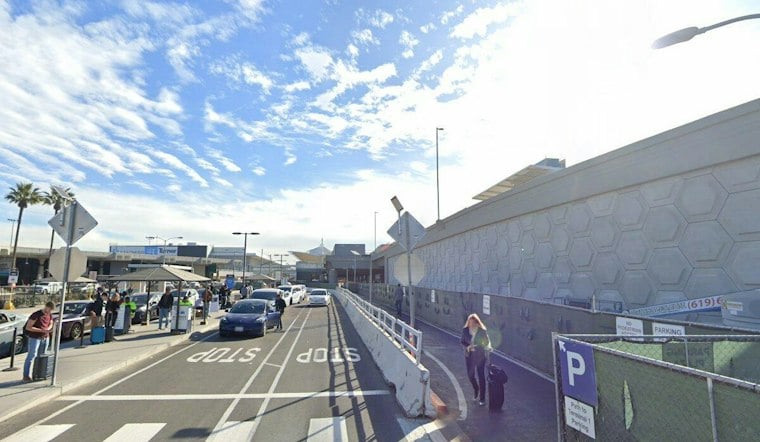
A new $5 fee per airport pick-up or drop-off from the San Diego County Regional Airport Authority is squeezing drivers who ferry passengers in Uber Black and Lyft Black vehicles, with one driver saying he took home less than $200 for all of October after accounting for the charge. Operators are invoiced monthly based on their airport activity. The fee change, which began in October 2026, has shifted charter operators from an annual vehicle fee to a trip-based structure, and some drivers say the math no longer works in their favor.
Aws Hamzah, who has driven for Uber Black and Lyft Black since 2025, told FOX 5 San Diego & KUSI News that he was invoiced more than $1,000 for October alone, on top of nearly $5,000 in expenses he said he had already paid. He said he spent 76 hours online and ready to work that month but took home less than $200 once costs were tallied. Hamzah said he left other jobs after a decade, hoping to support his family and his daughter by driving premium rides.
Drivers Rejecting Low-Paying Trips
Hamzah said he rejected roughly 400 airport rides in the previous month because the math stopped making sense: a ride from the airport to downtown costs riders at least $70, he said, while he receives no less than $30. He said lower-priced rides are no longer affordable or worthwhile for him under the new fee structure, and he hopes conditions change or he will need to find another way to earn a living. Other rideshare drivers described similar experiences and voiced concerns about possible retaliation from the rideshare companies they drive for, according to the same report.
Under the new structure, charter operators pay $5 per airport pick-up or drop-off instead of an annual $220 vehicle fee, per the outlet's reporting. Some Uber Black drivers consider the new fee unfair, and premium rideshare drivers face permitting and commercial transportation requirements that do not apply to standard rideshare drivers. The California Public Utilities Commission regulates rideshare drivers alongside the airport authority, Uber, and Lyft, according to the report.
Airport Says Billing Structure Now Matches Taxis and Standard Rideshares
An airport authority spokesperson said the change is meant to create an equal billing structure, since standard Uber and Lyft rides and taxis have already paid per-trip fees since July, per the same account. The authority said charter operators are invoiced based on their actual airport activity, and it issued its first monthly invoices for October trips during the first week of November. It also said any operator application fee is applied as a credit against trip fees owed, up to the amount of the application fee, and that it conducted communications and educational outreach to vehicle operator permit holders before the monthly fees began.
San Diego International Airport's own commercial vehicle program materials describe a broader goal behind such charges, saying the program seeks financial sustainability through cost recovery for operations and infrastructure while providing economic value to transportation providers. The airport also warns that commercial vehicle operations follow strict rules and that unlicensed operators face fines and removal. Separately, the airport lists Uber, Lyft, Wingz and PrimeTime as its authorized rideshare operators, and it advises passengers to check that a limousine or luxury-sedan provider is licensed to pick up passengers at the airport and to refuse rides from operators who cannot show valid permits or who solicit business.
Uber Points to a Billing Error
Uber told the outlet it had identified a configuration error affecting collection of the $5 commercial trip fee at San Diego International Airport, according to an Uber spokesperson. The company said it is correcting the error so the fee is collected from riders and remitted to drivers or fleets on commercial airport trips. Uber also said it will review commercial trips made since the airport's updated fees took effect and will issue payments to affected drivers or fleets to reimburse applicable airport fees, the spokesperson said. Lyft did not respond in time for the original report.
How San Diego's Fee Shift Compares
San Diego's current changes follow a history of adjustments to airport ground-transportation charges. Airport board members voted unanimously in January 2017 to lower the Uber and Lyft trip fee from $4.06 to $3.86, a fee that Uber and Lyft passed along to customers, according to the San Diego Union-Tribune. At the time, the airport said the reduced surcharge would match the fee charged for taxi rides, though cab customers were not charged it separately, and the paper reported that the airport's incentive-based program had generated almost $5 million in revenue in fiscal year 2016, more than a third of it collected from ride-hailing companies. The airport's fee schedule lists TNC fees of $4.25 per pickup and drop-off.
San Diego's airport framework also calls for exploring whether to limit the number of TNC vehicles allowed to access the airport altogether, weighing the feasibility, pros and cons of such a cap. Los Angeles International Airport, meanwhile, recently took a different approach: its Board of Airport Commissioners approved higher rideshare access fees, the first change to its ground-transportation access fees in more than a decade, according to LAX's own announcement. Under that new structure, rideshare companies will be charged $12 for direct terminal access and $6 for pickups and drop-offs at LAX's new Ground Transport Center, with the airport saying the changes are meant to ease congestion and will take effect alongside the activation of its SkyLink automated people mover.





