

























































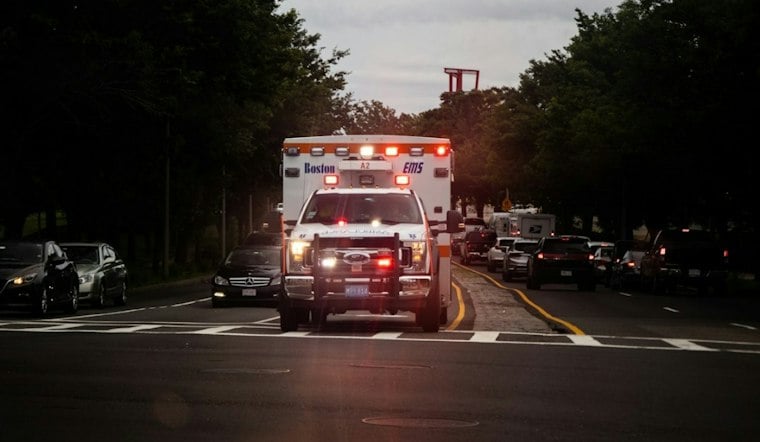
Opioid overdoses almost never call for a defibrillator — but across the country, local governments have poured millions of settlement dollars meant to fight the opioid crisis into exactly that kind of equipment. Dalton Barrett, a paramedic in Edgecombe County, North Carolina, who leads the county's post-overdose response team and oversees its share of the settlement money, says the mismatch is real and worth questioning.
Barrett said automated external defibrillators, or AEDs, are built for cardiac emergencies, working only when a machine detects a shockable heart rhythm — a scenario that's uncommon among overdose victims. People experiencing an opioid overdose typically need oxygen or naloxone, the medication that can reverse an overdose, according to Truthout. Barrett said he'd rather see the money hire follow-up workers who connect overdose survivors with treatment, housing, or other resources once they're stabilized.
A $60 Billion Pool With Local Control
The scale of the spending question is enormous. Opioid settlement funds are expected to total about $60 billion over nearly two decades, split among state governments, counties, cities and specially created opioid settlement councils, per Michigan Advance. The money comes from companies sued for aggressively pushing painkillers and fueling the opioid crisis, and county and municipal decision-makers control nearly half of it, according to OpioidSettlementTracker.com data cited in the Truthout report.
That local control has produced a wide range of purchases. A yearlong investigation by KFF Health News, conducted with Johns Hopkins Bloomberg School of Public Health and the nonprofit Shatterproof, examined roughly 17,500 opioid-settlement expenditures and compiled what organizers describe as the most comprehensive national database documenting how the money was used, or left unspent, in 2025. KFF Health News found that state and local governments spent about $3.7 billion in opioid settlement funds that year.
Roughly 100 localities across 20 states committed $3.7 million of that total to AEDs, cardiac monitors and related accessories last year, the investigation found. In Southfield, Michigan, the city purchased six Lifepak cardiac monitors and related supplies for about $350,000, according to Michigan Advance. Southfield Mayor Kenson Siver said mixed opioid and stimulant use is making overdose response more complex, a dynamic city officials pointed to in defending the purchase.
Street Lights, Camera Systems and Pickleball Courts
Cardiac equipment isn't the only item drawing scrutiny. Camden, New Jersey, spent $150,000 in settlement funds on street lighting, while Carmel, Indiana, put $130,000 toward Flock surveillance cameras, both cited in the Truthout investigation. Mullens, West Virginia, spent at least $84,000 on city insurance, building utilities, vehicle repairs and other standard municipal expenses, and Gilmer County, West Virginia, spent $36,200 on a pickleball court.
Camden's own 2025 strategic plan, filed with New Jersey's state opioid funds office, shows the city had received approximately $3.4 million in settlement funds as of August 24, 2025, according to the city's filing with the New Jersey Department of Human Services. That office collects county and city opioid spending reports, though a bill that would require the department to actually review those reports and require repayment of misused funds has been proposed.
In Iowa, Van Buren County used $1,000 in opioid funds to help build a recreational site featuring pickleball, bocce and tennis courts, saying the project would give young people a youth-focused activity and help prevent opioid misuse. County auditor Lisa Plecker said the spending was reported to the state attorney general's office as required and its justification was never questioned. Jen Green of that office said it collects and holds county reports but does not approve or evaluate county spending decisions.
Guidance Without Teeth
The oversight gap isn't limited to Iowa. Indiana listed AEDs as an unallowable opioid-fund expense, yet Spencer County spent about $16,700 on eight AEDs for its sheriff's department anyway. The Indiana Commission to Combat Substance Use Disorder said its unallowable list was only guidance, and Shelby Thomas said state statute grants no enforcement authority over how local governments actually spend the money.
A University of Tennessee initiative funded by the state's opioid abatement council tries to steer local governments toward sounder choices, but executive director Jennifer Tourville said her team cannot tell counties what they can and cannot buy. Some states have issued lists of items opioid funds should not fund, including law-enforcement tools and general emergency medical supplies, though enforcement of those lists varies widely.
Philip Rutherford, who leads substance use strategy at the National Council for Mental Wellbeing, said no allocation model for this kind of money is likely to work flawlessly. Elizabeth Burke Beaty, executive director of the Sea Change Recovery Community and Harm Reduction Center in Ocean County, New Jersey, argues people directly affected by the opioid crisis understand the gaps in community care systems better than anyone and should have more say over how the funds are spent.
Echoes Of The Tobacco Settlement
Critics have drawn a pointed comparison to the 1998 tobacco Master Settlement Agreement, noting that less than 3% of tobacco settlement and tax-related revenue went to anti-smoking programs over the following 20 years. The parallel looms over opioid settlement spending as advocates warn history could repeat itself at an even larger scale.
The pattern shows up well beyond the examples already documented. In Louisiana, 38 sheriffs reported spending more than $8.1 million in opioid settlement funds, and a three-person review panel deemed $5.4 million of that — about 66% — inappropriate, according to STAT. Nearly $4.7 million went to items or services that other states explicitly bar from opioid funding, including AEDs, while 20 sheriffs never disclosed their expenditures at all, leaving roughly $10.7 million allotted to their offices hidden from public view.
For paramedics like Barrett, the stakes come down to what actually helps someone survive an overdose and stay in recovery afterward. Until states build real enforcement mechanisms, the decision over whether that money buys naloxone and follow-up care, or a defibrillator unlikely to ever be used on an overdose patient, remains almost entirely a local call.





