

























































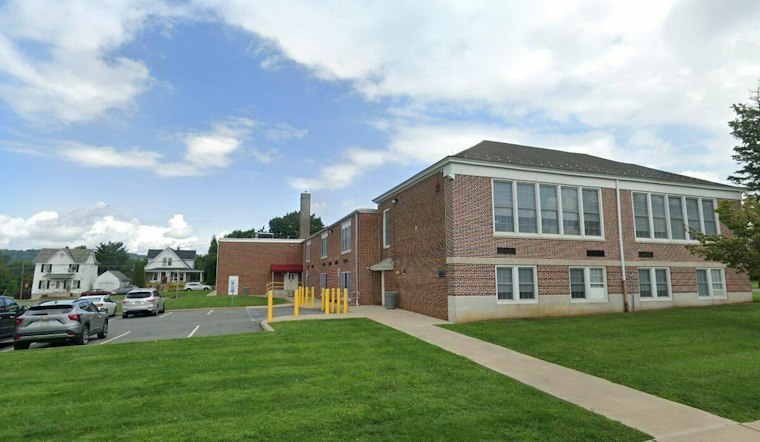
A former Phillipsburg Board of Education member stood before the board this week and asked members to reconsider how the district handles student restroom access, telling them that parents have raised concerns about students using the girls' restrooms and that some female freshmen, sophomores and juniors feel uneasy doing so. The district's superintendent responded that students may use whichever restroom they choose, pointing to a policy that has been in place for roughly a decade.
Former Board Member Raises Alarm at Meeting
Alan Amey, a former school board member and Phillipsburg resident, made the request during a board meeting on Monday, as reported by TAPinto Phillipsburg. Amey said some students fear retaliation for raising restroom concerns and alleged, according to his own account, that some students have been yelled at in restrooms. Board member Rosemarie Person asked Amey to clarify his remarks during the meeting, the outlet reported.
Superintendent Gregory Troxell told the board that students may use whichever restroom they choose, and noted that separate restroom facilities are available in the high school for students who want them. The district's underlying policy, Policy 5756, was adopted in 2015 and revised in February 2019, according to the same report. The policy is governed by New Jersey Department of Education guidelines and the state's Law Against Discrimination, and it requires the district to enforce state harassment, intimidation and bullying laws and investigate reports of harassment in school facilities.
What State Law Actually Requires
Under New Jersey law, students are entitled to use restrooms, locker rooms and changing facilities corresponding to their asserted gender identity, and the Law Against Discrimination prohibits excluding transgender or non-binary students from multi-stall restrooms matching that identity. Phillipsburg's policy allows any student who is uncomfortable in a multi-stall restroom to use a private single-stall facility instead, but the district cannot require transgender or non-binary students to use a single-stall restroom.
That framework traces back to a 2017 state law, P.L. 2017, c.137, which directs the Commissioner of Education to develop and distribute guidelines to help districts build supportive, nondiscriminatory environments for transgender students. The statute specifically addresses restroom and locker-room use, stating the goal of not requiring a transgender student to use a restroom or locker room that conflicts with the student's gender identity, according to the New Jersey Legislature. The law also calls for reasonable alternative arrangements to be made available if needed to ensure a student's safety and comfort.
Other NJ Districts Have Wrestled With the Same Policy
Phillipsburg is not the only New Jersey district where Policy 5756 has become a flashpoint. The Edison Board of Education voted 5-3 to repeal the policy in 2024, while the Sparta Board of Education approved a first reading of a proposal to abolish it the same year, per TAPinto's reporting. The Sparta controversy prompted community backlash and formal complaints to the New Jersey School Ethics Commission, which received formal complaints under docket no. C25-24 in 2025.
More recently, residents in Chatham urged their board to reconsider its policy on transgender and gender-expansive students in 2026, and South Brunswick's school board tabled a proposal to abolish Policy 5756 in August as its teachers union raised concerns about staff guidance and student protection, according to TAPinto South Brunswick. New Jersey courts have affirmed that local boards retain the procedural authority to revise or rescind Policy 5756, even as state guidelines continue to shape what any replacement policy can require.
A Broader National Backdrop
The Phillipsburg debate unfolds against a wider national conversation about parental notification and gender identity in schools. The U.S. Supreme Court ruled 6-3 this year to block California school policies that barred parental notification of a student's gender transition without consent, a case known as Mirabelli v. Bonta that concerned California school policies limiting such notification. That ruling does not directly govern New Jersey's restroom policies, but it reflects how contentious the broader issue of student gender identity in schools has become across the country.
For now, Phillipsburg's policy remains unchanged, and district incidents are directed to a student's building principal for reporting, per the district's own HIB information page. Whether the board takes further action on Amey's request was not addressed in the meeting coverage, leaving the question open for a community still divided over where to draw the line between student privacy, safety and choice.





