

























































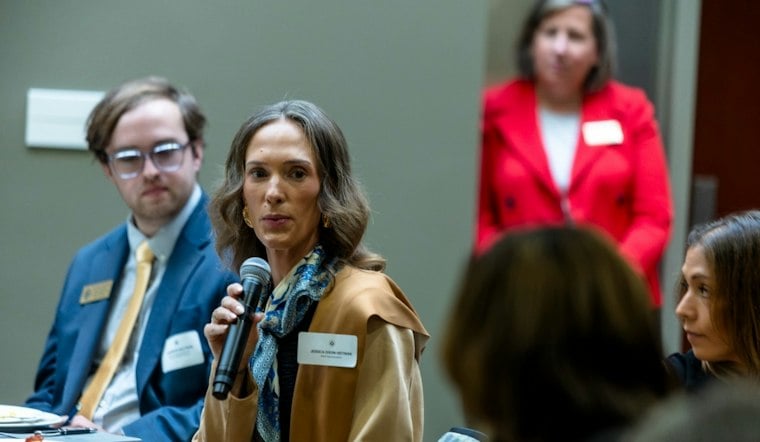
Jessica Dixon Heitman has won a full term representing Illinois' 97th House District, holding onto the suburban Chicago seat she inherited earlier this year after her predecessor resigned amid a sexual harassment scandal. The Associated Press called the race for the Plainfield Democrat, who faced Republican nominee Gabby Shanahan of Joliet in a district long considered one of the state's few genuine toss-ups.
Early returns showed Dixon Heitman with a commanding lead, though the exact margin varied by outlet. According to Patch, she had captured 21,494 votes, or 61.1%, to Shanahan's 13,711 votes, or 38.9%, with the Associated Press having counted about 82% of expected votes. The Chicago Tribune, meanwhile, put the unofficial tally at 61.7% to 38.3% with 78% of estimated votes counted. Both outlets stressed the results remained unofficial pending certification by election authorities, and Shanahan conceded the race just after 10 p.m.
Dixon Heitman was appointed to the seat in July after then-state Rep. Harry Benton resigned amid misconduct allegations made by three women, and Tuesday's win means she will now serve a full two-year term beginning in January, as the Chicago Sun-Times reported. She is a granddaughter of former U.S. Sen. Alan Dixon, a detail that has followed her into the office. In a statement captured by the Sun-Times, she said she had to prove herself from the beginning and was excited to continue working for the district.
A District Shaped by Benton's Downfall
The 97th District spans most of Plainfield, part of Joliet, and smaller portions of Aurora, Naperville, Bolingbrook, Oswego and Shorewood, a sprawling suburban footprint that has made it genuinely competitive in recent cycles. Benton himself won his two prior races against Republicans by margins under five percentage points, a fact that underscored just how closely this seat has been watched for years.
Benton's exit followed a legislative watchdog's report detailing a third woman's complaint, which prompted him to step down even as he denied wrongdoing. House Speaker Chris Welch had removed Benton from the Democratic caucus in February 2026, and Welch's office was reportedly aware of allegations surfacing from Benton's office well before that. Welch later apologized for messages he sent to one of Benton's complainants that had left her uncomfortable, and he maintained he had no choice but to keep backing Benton absent a formal complaint to spur a formal investigation.
Dixon Heitman herself had a brush with that history: she saw red flags in Benton's office during a brief stint there as a contract employee but filed no formal complaint, saying she respected a young complainant's wish not to file a report of her own.
Welch's Spending and Shanahan's Pledge Demand
Money flowed heavily into the race on Dixon Heitman's behalf. The Democrats for the Illinois House political committee spent more than $1.6 million supporting her campaign, according to WBEZ. That followed Welch directing $1.4 million to Benton's own 2024 campaign, spending that drew renewed scrutiny given the scandal that eventually unseated him.
Shanahan tried to make Welch's handling of the Benton affair a central issue, calling on Dixon Heitman to pledge she would not vote for Welch as speaker. The same WBEZ report noted that no Democratic representatives had publicly called for Welch to give up his post, even as state Rep. Kelly Cassidy criticized him over the case and several representatives declined to join a sexual harassment working group Welch had assembled. Welch became speaker after former House Speaker Michael Madigan's downfall, and Madigan himself had faced scrutiny nearly a decade earlier over his handling of harassment allegations within his 13th Ward political organization, according to the Sun-Times.
Dixon Heitman has said she has not yet considered who should be speaker. She has instead framed her candidacy around transparency, honesty and availability to the community, themes she said guided her campaign from the start.
Cost of Living Outweighed Scandal for Voters
Despite the scandal's shadow over the race, both candidates agreed it was not the top issue motivating voters. The rapidly rising cost of living was the more pressing concern, both told WBEZ, a sentiment that echoed broader anxieties playing out across suburban districts this cycle.
This was not the first close contest between the two women. Shanahan previously ran against Benton in 2024 and lost by about 2,300 votes — a margin the Tribune separately described as fewer than 2,400 votes out of more than 52,700 ballots cast, or roughly four percentage points. Despite falling short again, Shanahan said her commitment to improving the community remained strong regardless of the outcome.



