

























































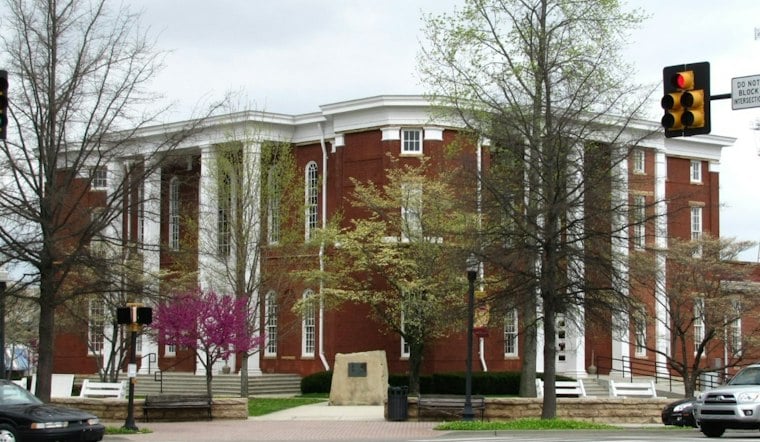
Putnam County commissioners voted 21-2 against a resolution Monday that would have urged Tennessee lawmakers to eliminate the state's sales tax on groceries, with most members citing fears over lost revenue for roads, schools and first responders. The lopsided vote highlights a growing statewide divide over whether grocery tax relief is worth the hole it could leave in government budgets.
Tennessee currently taxes groceries at 4%, and local governments are permitted to tack on up to another 2.75%, according to WSMV. Commissioner Shayne Bilbrey, one of the resolution's most vocal opponents, told fellow commissioners that those taxes are needed to fund things like roads, schools and the salaries of first responders. Bilbrey pointed to the fiscal note attached to HB0002, a statehouse bill aimed at eliminating the tax, which he said would cost the state $823 million and local governments another $525 million.
A Fiscally Responsible Approach, Bilbrey Says
Bilbrey argued that any move to strip away the grocery tax needs to be done in a fiscally responsible way, rather than simply cutting revenue without a plan to replace it. He also said Tennessee's tax revenue growth is driven mainly by inflation, not organic economic gains, a distinction he used to caution against assuming the state could easily absorb the lost income.
Only two commissioners broke from the majority. Brendan Laney was one of the two who supported the resolution, and he pushed back on the idea that the state couldn't find the money elsewhere. Laney noted Tennessee taxes sports betting at just 1.85% of every dollar wagered, and said a modest increase there could bring in tens of millions more a year. He also pointed to the 2024 change to the state's business franchise tax, which he said cut state costs by roughly $400 million a year on top of about $1.5 billion in refunds that went out to businesses.
Dueling Dollar Estimates From Commissioners
The debate also turned personal for Putnam County taxpayers. Commissioner Stacye Choate estimated the resolution could save the average Putnam County household approximately $384 annually, as reported by the Upper Cumberland News. Choate said the measure specifically targeted the state's portion of the grocery tax while seeking to preserve local tax revenue, an effort to separate the county's own finances from the state-level cut.
But Commissioner Gene Mullins offered a starkly different number, warning the proposal could mean more than $6 million in lost revenue for Putnam County, with either a 14-cent property tax increase or cuts to county services as possible responses, according to the same Upper Cumberland News account. The commission rejected the resolution outright.
A Statewide Standoff Over Replacement Funding
The Putnam County vote mirrors a broader fight playing out in Nashville. Both Democrats and Republicans filed bills to eliminate the grocery tax during the 2025-2026 legislative session, per WSMV, but neither party's bill passed. The sticking point, as the station put it, is over how or whether to make up for the funding gap it would create.
Republicans did not include a specific replacement fund in their proposals, while Democrats proposed funding the tax cut by closing corporate loopholes. State Rep. Aftyn Behn has said worldwide combined reporting and a corporate minimum tax could pay for grocery tax elimination, telling The Tennessean that a Tennessee family would save $400 a year if the 4% tax were eliminated. The grocery tax generates approximately $800 million in revenue for the state per year, the paper reports.
A Narrower Fix Headed To Next Session
Rather than full elimination, House Speaker Cameron Sexton has proposed exempting just milk, eggs and bread from the grocery tax ahead of the 2026-2027 legislative session, according to WSMV. The proposal, House Bill 6, would exempt retail sales of those specific items from the food sales tax. Tennessee lawmakers are expected to consider broader grocery sales tax cuts again in 2027, per the Tennessee Lookout, with economists and state officials forecasting state revenue growth of 3.5% to 4.5% that could factor into the debate.
Nashville has already moved on its own timeline. The city's grocery tax rate dropped from 2.25% to 1.75% at the beginning of November, effectively canceling out a separate 0.5% Davidson County charge tied to the Choose How You Move initiative, WSMV reported. That reduction applies to food and food ingredients but excludes alcoholic beverages, tobacco, candy, dietary supplements and prepared food. Under the state notice, food and food ingredients in Davidson County are now taxed at the 4% state rate plus the reduced 1.75% local rate, according to the Tennessee Department of Revenue.
For now, Putnam County's commissioners have made clear they aren't ready to gamble local revenue on a statewide tax cut without firmer answers on how it would be replaced. The resolution's failure leaves Tennessee's broader grocery tax debate unresolved heading into the next legislative session, with county officials across the state likely watching how Nashville's smaller-scale cut plays out.



