

























































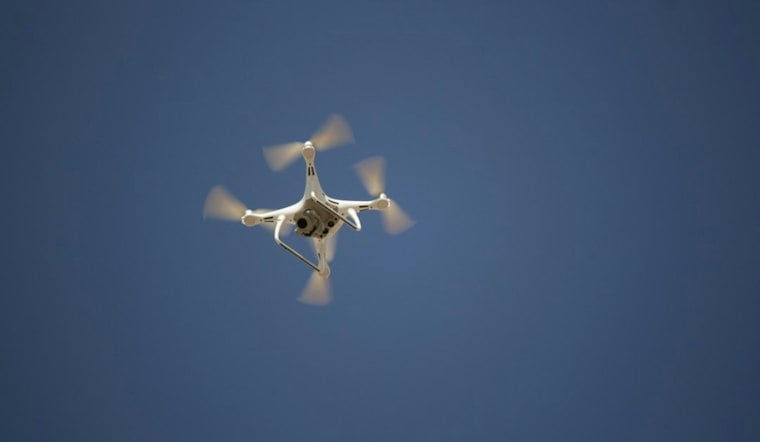
Two people accused of stealing from a Salt Lake City Target ran when officers on the ground moved in, and they did not even run the same way. A police drone still had them.
KUTV reported Monday that officers responded and found the two suspects, and that the department's drone unit located them quickly once officers were in the area. The Salt Lake City Police Department's accompanying line left little poetry in a foot race: "You can run. You can split up. But you can't outrun our drones and our officers. If you run, we will catch you."
A Split That Didn't Help
ABC4 reported that the two allegedly stole from Target and then tried to run from department officers. The drone spotted them in the area. After officers on the ground moved in, the suspects went different directions. Both were eventually cornered and taken into custody, with the drone helping officers track their movements and close the stop safely.
The department told ABC4 its unit "gives officers another set of eyes in the sky, helping them track suspects, coordinate responses and bring pursuits to a safe conclusion." The suspects have not been named in that reporting, and the accounts do not say what was taken or what, if anything, they were later charged with. Allegations are not a finding that they stole.
Seconds to Launch
This stop sits inside a program that has been flying a lot. The Salt Lake Tribune reported in October that officer-pilots can launch a drone in about five seconds from five dock clusters around the city, and that the aircraft fly on hundreds of calls a month. The Tribune described those drones as usually arriving in a matter of seconds.
The department's own arrival window, given to KJZZ, is a little less instant: first-responder drones often reach a scene in 30 seconds to two minutes because they can fly straight there and skip traffic. KJZZ also reported that seven drone first responders are positioned at launch points across the city. Five docks, seven aircraft, a five-second launch, and then up to a couple of minutes in the air. The slogan is cleaner than the timetable.
Hit the Button, or Delete It
KJZZ reported that first-responder drones begin recording when they launch. Police told KJZZ that footage with no reason to keep is not sitting in a drawer: "If there is zero reason for us to retain that footage, it's getting deleted."
The department's 2026 annual report, as described by KJZZ, says the drones are not used for proactive patrol or to monitor First Amendment-protected activities. Since tracking began in July 2023, that same report counted 4,381 flights, more than 1,000 hours in the air and 5,508 miles. That is a busy response tool. It is not, in the department's own paperwork, a standing watch over a parking lot.
Most Flights Are Not Arrests
The August snapshot in the Tribune makes the catch-you line look more selective than the press statement. Over three weeks, statistics covered 391 flights. Drones were first on scene in 70 percent of those incidents. On 88 flights, a trained pilot back at headquarters decided a patrol officer was not needed. On 24, a drone helped spot and surveil suspects who were later arrested by responding officers.
Twenty-four arrests out of 391 flights is a real result. It is also a long way from an airborne guarantee. The Target stop, as police described it, belongs in that smaller bucket: a drone already overhead, or close enough to get there, tracking people who had already decided to run.
It is not the first time a Salt Lake City drone team has shortened that decision. FOX 13 reported that the FALCON 2 Drone Team, in a separate case, located a man suspected of stealing a cell phone from an apartment complex within minutes of a dispatch call, tracked him, and arrested him as he stood outside on a city sidewalk.
In the Target case, the practical ending is narrower than the slogan. Two people accused of a theft split up, a drone kept the split from working, and officers took both into custody. The department's pitch is that running is a bad plan. Its written limits say the camera stays off until someone hits the button, and the footage goes away unless there is a reason to keep it.



