

























































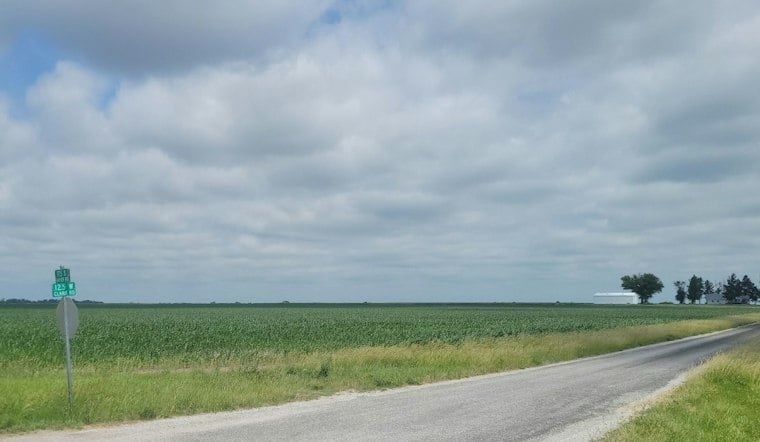
A Sangamon County judge said Friday he would take under advisement a lawsuit that could unravel county approval of a $500 million data center planned for farmland near Waverly, leaving residents who live within a mile of the site waiting to find out whether the project's permit survives. Circuit Judge Adam Giganti heard arguments from both sides before announcing he was going to take the matter under advisement and will render a decision as soon as possible.
The case traces back to April 7, when the Sangamon County Board approved a conditional-use permit allowing CyrusOne to build the data center on 280 acres of farmland by a vote of 17-10, with one member abstaining, according to Illinois Times. Residents filed suit on July 6 against Sangamon County and the County Board, seeking to reverse that approval. The plaintiffs claim procedural violations and unchecked environmental concerns, including the absence of a noise study and broader pollution worries.
Utility Letters Didn't Match the Project
At the center of the dispute is a requirement, per Illinois Times, that the petition for a conditional permitted use for a data center shall include letters from the serving utility companies indicating the availability and adequacy of utility services. The electricity will-serve letter submitted with the petition, dated Aug. 26, 2025, from the Rural Electric Convenience Cooperative, made no mention of CyrusOne at all — it offered electricity service for the Diamond Core Data Center, a substantially smaller project. Separately, a Jan. 29 letter from the Apple Creek Water Cooperative stated that the utility was still reviewing CyrusOne's application when it was included in the zoning petition.
Illinois Times reported it sought updated will-serve utility letters from both utilities, as well as REC president and CEO Sean Middleton, calling and emailing over three weeks before publication, but received no response. Apple Creek Water Cooperative referred the outlet to its attorney at Rammelkamp Bradney, and attorney Bradley Wilson did not return multiple voicemails.
Competing Legal Arguments Before the Judge
Lawyers for Sangamon County, from the Champaign firm Webber & Thies, argued the permit was conditionally approved pending future submission of updated materials, essentially telling the judge the board knew the documentation would be finalized later. Attorney Daniel Thies, representing the county, argued the residents' complaint really reflected dissatisfaction with the April vote and that the case should be terminated, adding that the ordinary citizen's remedy for disagreement with elected representatives' decisions is political, not judicial.
Thies also argued that the county's elected legislative body may prioritize economic development over potential pollution, and said a data center could actually increase nearby property values, with neighboring data center development potentially contributing to those increases. Plaintiffs' attorney Chloe Russell, a Plainfield lawyer representing members of the Caruthers family, pushed back directly, arguing the ordinance says the petition shall include complete utility documentation before the board acts. Russell contended the conditions requiring updated, definitive utility letters before a building permit is issued actually support the plaintiffs' argument that the original letters were inadequate from the start.
Family Has Farmed the Area for Generations
The Caruthers family has farmed land in southwest Sangamon County for close to two centuries, according to the filing described by Illinois Times. Another plaintiff named in coverage, Cathy Bettis, owns Joette Kennel near the proposed site. Plaintiffs generally live approximately a mile or less from where the six-building CyrusOne campus would rise, according to Illinois Times.
Nadav Shoked, a Northwestern University professor who teaches local, property and regulatory law, told Illinois Times the county board appeared to approve a petition without realizing it was incomplete. Shoked said the word shall requires compliance rather than making compliance optional, and he noted that project opponents could use the litigation to delay approval while required reports are awaited — meaning opponents may obtain a temporary delay whether the judge allows the case to proceed or dismisses it outright.
What's at Stake Financially
The project, first detailed as it moved through county government, calls for roughly 280 acres of current farmland adjacent to the Double Black Diamond Solar Farm, with six large buildings constructed in phases, according to NPR Illinois. CyrusOne officials have said the facility would rely on a closed-loop cooling system to limit water consumption. The station's report also noted the board initially voted 15-13 to table the zoning request in March before later approving it in April.
Financially, the stakes are considerable. A county staff report projected about $71 million in property tax revenue over 20 years for three taxing bodies based in Macoupin County, plus roughly $27 million for six Sangamon County-based taxing districts over the same period, with Sangamon County itself potentially receiving just over $445,000 annually for 20 years, per Illinois Times. The anticipated $500 million investment will carry no state or local sales tax, after CyrusOne secured the tax break before Gov. JB Pritzker's executive order pausing a state developer incentive program took effect.
Part of a Broader Illinois Pattern
Sangamon County's fight is unfolding as other Illinois communities wrestle with similar data center proposals. The Logan County Board recently passed a 60-day moratorium on data center applications while a project near Latham remained pending, and Pekin turned down a proposed data center project in March, as reported by NPR Illinois. Residents at the March Sangamon County board meeting had raised concerns ranging from pollution and taking farmland out of production to strain on resources such as electricity, concerns that echo through the ongoing litigation.
For now, the county retains policy authority to make its own development decisions through its elected legislative body, but the outcome of Giganti's ruling will determine whether that April approval stands as written or has to be redone with updated utility documentation. No timeline for the decision was given beyond Giganti's statement that he would rule as soon as possible.




