

























































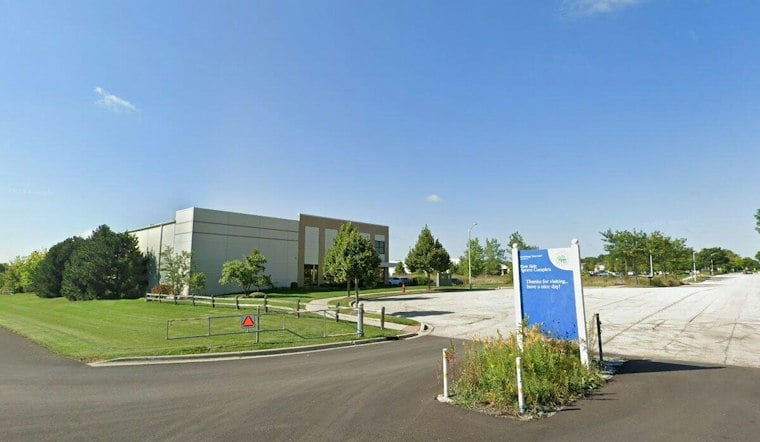
St. Charles is in line to become the site of the Illinois Municipal Electric Agency's first-ever battery energy storage pilot, after the agency passed over Naperville in favor of a substation near the city's solar field. The St. Charles City Council indicated unanimous support for the idea on Nov. 16, and a final decision on the pilot is expected around March 2027.
Two Cities Competed, St. Charles Won
According to the Chicago Tribune, IMEA received responses from both Naperville and St. Charles, but St. Charles was ultimately selected as the agency's preferred location for the pilot. The proposed system would run between 1 and 5 megawatts, with roughly four hours' worth of stored energy — enough, per the same report, to be charged when electricity is cheapest and discharged back to the grid when demand and prices spike.
The likely site is a substation next to IMEA's existing solar field, between South Kirk Road and the East Side Sports Complex, assuming the project wins final approval, according to Shaw Local's Kane County Chronicle. St. Charles currently carries a peak electricity load of around 125 megawatts, spread across nine electrical circuits citywide, and the battery's backup-generator capability would only serve the single circuit it's connected to.
No Upfront Cost — For Now
City officials have stressed that joining the pilot wouldn't cost St. Charles anything immediately. Public Works Director Peter Suhr said the program would come at no initial cost to the city, with IMEA covering pilot costs including roughly $25,000 for initial analysis of the designated site, per the Kane County Chronicle. The resolution moving through the council authorizes initial analysis and a vendor solicitation but does not commit the city to actually building a facility, as CitizenPortal.ai reported.
Suhr said participation would give the city hands-on experience with battery storage technology and let officials evaluate operational and financial benefits, manage peak demand, improve system flexibility, and better manage power supply costs. He added that it would also give St. Charles more options when negotiating future electricity purchases.
The Long-Term Price Tag
The arrangement gets more complicated years down the line. IMEA would handle construction and maintenance, and the city wouldn't face direct costs until at least 2035 — when its current contract with IMEA expires — according to the Chicago Tribune's reporting. If St. Charles were to leave IMEA at that point, the city would take ownership of the battery system itself.
That ownership could come with a real bill. The system has an expected lifespan of 20 years and is projected for decommissioning around 2047; if St. Charles leaves IMEA when its current contract expires in 2035, the city could be on the hook for costs estimated at $100,000 to $200,000 annually until decommissioning, according to the DuPage Policy Journal. For context, Suhr said the city's annual IMEA bill currently runs around $50 million.
St. Charles would enter a three-way contract involving the city, IMEA, and a battery developer, and the agency has said it will lay out details on costs, investment returns, energy data, safety and fire protocols, facility maintenance, and decommissioning before presenting that contract. An official agreement is expected to return to the City Council for approval around March 2027, per the Kane County Chronicle's reporting.
Part of a Bigger Clean-Energy Push
The pilot fits into IMEA's broader sustainability plan, which aims to reduce the power supplied to member municipalities to net-zero carbon emissions by 2050, and the agency has said it plans to scale up battery designs if this first project succeeds. It wouldn't be IMEA's first renewable experiment in St. Charles — the agency installed its first solar plant in the city back in 2017, a facility that produces half a megawatt of electricity under a contract running through 2036.
Illinois has been pushing to expand battery storage statewide, though reported figures on how much capacity currently exists vary. The Chicago Tribune reported the state had just 102 megawatts of installed utility-scale battery storage as of Oct. 14, while Capitol News Illinois put the figure at 141 megawatts in a report from mid-September. Capitol News Illinois also reported that the state's first battery-storage procurement is expected to bring another 600 megawatts of new utility-scale storage online by 2030, part of a push to secure at least 3,000 megawatts of energy storage statewide by the end of that year.
Elsewhere in the region, Richardson Electronics has planned a 5-megawatt battery at its La Fox site at an estimated cost of about $3 million, which company officials say would be the largest battery ever connected to the grid by an Illinois company, according to the Chicago Tribune. For St. Charles, the City Council's final decision on the measure is expected around March 2027.




