

























































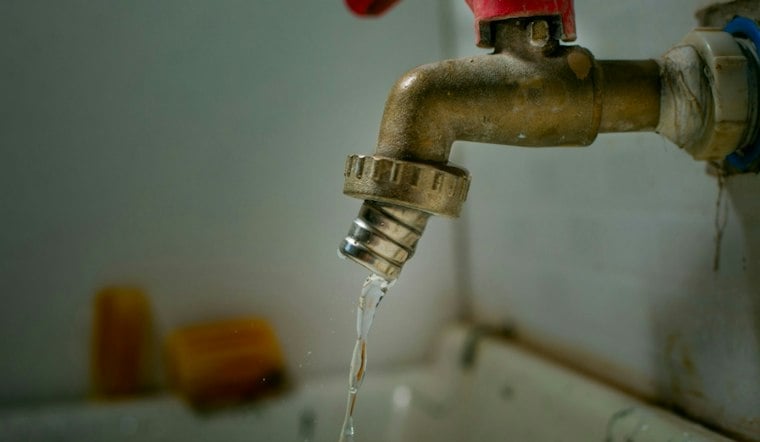
Yellow and orange water keeps showing up in sinks, washing machines and toilets across Steger, Illinois, and residents say the staining on their clothes, fixtures and plumbing has become an ongoing problem in their homes. Village officials maintain the water meets state drinking water standards, but that has done little to ease the frustration of families who say they no longer trust what comes out of their taps.
Jessica McManimen told ABC7 Chicago that she cannot drink her town's water despite paying for it, and she now gives her 7-year-old son, Declan, only bottled water. She said yellow water comes from her faucets and toilets and discolors clothes washed in her home. Michelle Hubbartt said she avoids drinking the water altogether, using it only for laundry, and buys an additional chemical to try to cut down on yellowing and rust — though she still won't use it to brush her teeth.
Loren Harn displayed jars of water she collected from different parts of town to illustrate the variation in color and clarity. She said she installed a filtration system at her dance studio but believes it has limited effectiveness, and the ongoing situation has left her feeling that residents are not worth the trouble. Jessica Raymond described feeling worried, sad, helpless and powerless about the situation. Residents say the water is not always discolored, but when it turns yellow or orange, it becomes a major inconvenience — and some say their water bills are increasing, with certain residents potentially facing significantly higher costs.
What The State And Village Are Saying
Steger provided recent water test samples that it said show the village is in compliance with Illinois EPA drinking water standards, according to the same ABC7 report. The Illinois Environmental Protection Agency said iron is causing the discoloration and reported that iron levels are below the state's maximum contaminant level, meaning the agency said it cannot require additional iron filtration by the community water system. The agency has contacted the village to gather more information about residents' complaints and directed the water operator to flush the system to address the discoloration.
Steger Village President and Mayor William Joyce acknowledged residents' concerns despite the test results, telling the outlet he personally would not drink yellow water. Joyce said the discoloration is not coming from the village's wells and may instead be related to aging infrastructure, pointing to water mains or pipes inside individual homes as possible sources. He said iron particles have built up in his own mother's home over 30 years, and that the village has had no significant water infrastructure changes since 1908.
A $46 Million Fix Years Away
Joyce said a three-phase, $46 million infrastructure project is already underway and should help address the problem over the next eight to 12 years. The project includes installing miles of new water main and replacing mains that are in bad condition or need repair, with the village replacing old iron pipes with plastic ones. In the meantime, Joyce said residents can purchase filters, flush their home plumbing systems, and save discolored water samples for the village to test.
Steger's own 2021 Consumer Confidence Report shows the scale of the iron issue is not new: that year's testing recorded an iron level of 0.739 parts per million, within a detected range of 0.53 to 0.739 ppm, according to the Village of Steger's 2021 Consumer Confidence Report. Iron is not regulated by the federal EPA, but the report notes the state sets a maximum contaminant level of 1.0 ppm, and no violation was recorded that year. Under federal rules, the U.S. Environmental Protection Agency treats standards like these as non-enforceable guidelines — the agency recommends them to water systems but does not require compliance, according to the U.S. Environmental Protection Agency.
Aging Mains Behind The Scenes
The scope of Steger's underlying pipe problems has been documented well beyond the recent complaints. Village Administrator Joseph Wiszowaty said the village logged 126 water-main breaks in a single recent year, prompting trustees to approve a Robinson Engineering contract, not to exceed $2,500, to map those breaks using GIS mapping, as reported by Citizen Portal. The mapping project is meant to help prioritize future replacements and will fold in break records dating back to 2018.
Separately, Steger's ad hoc water committee has proposed eight projects to connect roughly 6,000 feet of water main at an estimated cost of $1.5 million, the same outlet reported. Trustee Steve Thurmond has said the village has roughly 35 miles of water main in moderate-to-poor condition, with full reconstruction estimated at around $1 million per mile. Thurmond also pointed to a previously approved $750,000 renovation of well tower No. 3, which was slated to begin that spring.
Not The Only Illinois Town With This Problem
Steger is not alone among small Illinois communities grappling with discolored tap water. In Beaverville, residents first reported dark, smelly water coming from their faucets in November 2025, and the Illinois EPA later said too much manganese was the cause, with filter or infrastructure problems also potentially involved, per ABC7's earlier reporting. The U.S. EPA dispatched inspectors to Beaverville and said it was working to address potential drinking water violations there. Despite the village saying a replaced filter corrected the issue, residents Kathleen Butron and Tonja Galderio said they were still dealing with dark water.
For now, Steger residents are left weighing bottled water costs, filtration systems and jars of discolored samples against a village timeline that stretches nearly a decade into the future. Joyce's message to residents experiencing yellow or orange water remains the same: flush your pipes, consider a filter, and send samples to the village for testing while the broader infrastructure project moves forward.





