

























































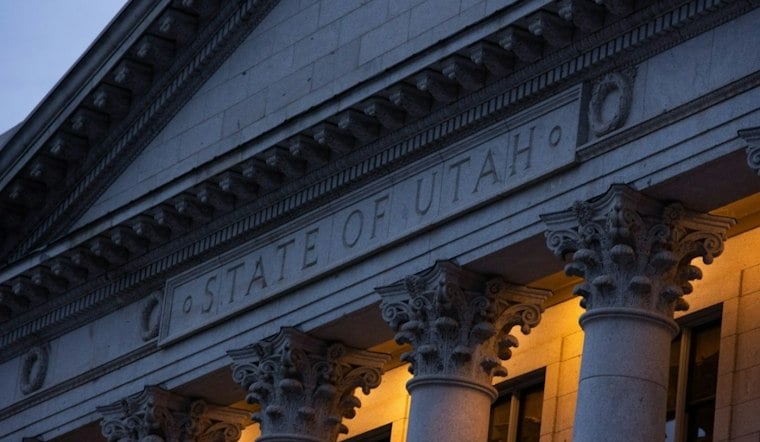
Utah's Medicaid program is short $175 million, with another $242 million in additional ongoing costs looming, and state lawmakers now have until their session starts in January to figure out how to close the gap. The shortfall, revealed through a mix of rising health care costs, forecasting failures and outright accounting errors, has left legislators scrambling to patch a budget hole that one of their own fiscal analysts says caught the state off guard.
According to Utah News Dispatch, fiscal analysts estimate lawmakers will need to set aside about $346 million in one-time money to cover last year's $175 million deficit, finish out the current fiscal year, and build in a buffer. On top of that, analysts say the state will need to find $242 million in ongoing funding to keep pace with future Medicaid costs. Utah's Medicaid program serves more than 300,000 enrollees, and the dollars at stake touch a program that leans heavily on federal matching funds.
The state does have some cushion. Utah has about $107 million in rainy-day funds set aside specifically for Medicaid, and legislative fiscal analyst Jonathan Ball told lawmakers those reserves, combined with existing buffers, can cover all of last year's deficit and a little more than half of this year's costs — but not the rest.
A System Switch Muddied the Numbers
Part of the mess traces back to a technology transition. The state health department rolled out PRISM, a new system for provider enrollment, claims payments and prior authorizations, and the changeover temporarily disrupted many of those functions, leading to muddled data just as costs were shifting underneath the program. That made it harder for officials to see emerging spending patterns in real time.
Compounding the problem, Utah's Medicaid forecasting had relied on a complex spreadsheet that, as described in the reporting, was not built to handle this level of program volatility. Legislative fiscal staff have since said they have totally rewritten how they do the estimates going forward.
Then there were the accounting errors. House Majority Whip Candice Pierucci, a Republican representative for Herriman, said the mistakes were especially concerning because they obscured both the final deficit amount and failed to account for ongoing costs and accruals from previous years. The Executive Appropriations Committee heard details of the full scope of the problem on November 18, after the Health and Human Services Interim Committee was first briefed on the budget issue in August.
Why Costs Climbed Faster Than Expected
Some of the pressure is tied to who is left on Medicaid's rolls. About 200,000 people were removed from Utah Medicaid during the post-pandemic unwinding of continuous eligibility, but the people who stayed on had more acute, and therefore more expensive, medical needs than forecasters anticipated. Nationwide health care inflation piled on top of that, pushing the cost per member per month up faster than what had been built into the state's projections.
Utah Department of Health and Human Services Commissioner Tracy Gruber said the state is far from alone in this. About two-thirds of the nation's states have a similar deficit in the Medicaid program, she said. That national strain shows up in the numbers: Medicaid accounted for 31% of total state spending in fiscal year 2025 and 57% of all expenditures from federal funds, according to KFF. Nationally, estimated state revenue growth slowed to just 2% in fiscal year 2026, down from 5% the year before, and five states had to enact mid-year budget cuts to avoid shortfalls — the most since fiscal year 2021, KFF reported.
Neighboring Colorado offers a stark comparison. The Colorado Sun reported that the state's Medicaid enrollment dropped 31% since 2023 even as costs rose 92% over the same stretch, with spending growing 13.6% a year — nearly double the growth rate of the state's overall budget. Colorado overspent its healthcare budget by $213 million in the fiscal year that ended June 30, and analysts there now project a $1.6 billion statewide deficit next fiscal year, driven partly by rising use of long-term care and behavioral health services.
Federal Changes Add Another Layer of Risk
Congress passed HR1 last year, imposing tighter federal eligibility requirements for Medicaid. State officials estimate that between 32,700 and 44,700 Utahns may lose coverage as a result, though federal law requires time before such cuts can take effect. Utah Medicaid Director Julie Ewing has said that cutting state matching dollars could cost the state between $1.61 and $9 in forgone federal matching funds for every dollar trimmed, underscoring how entangled the state and federal pieces of the program are. The KFF analysis notes the 2025 reconciliation law's federal Medicaid cuts may increase the likelihood of states enacting their own restrictions.
Gruber said her department is doing a deep dive in all of its Medicaid finance procedures and operations, reviewing both processes and staff competencies. The department is also working with an outside consultant on an end-to-end review of Utah's Medicaid program, and its plan includes an independent operational review of major cost drivers. DHHS leaders are requesting $2.1 million and 21 full-time employees for cost-containment skills and anti-fraud technology tools, as part of an effort to rebuild Medicaid finance operations, staffing capacity and technology from the ground up.
Lawmakers Weigh Fixes Before the Session Starts
Rep. Ray Ward, a Republican from Bountiful, is working on a bill aimed at finding Medicaid efficiencies and preventing overpayments, though he does not expect it to cover the full budget shortfall on its own. Senate Minority Leader Luz Escamilla, a Democrat representing Salt Lake City, is among the lawmakers who will help shape the response when the session opens in January. Utah lawmakers may need to cut services if they cannot find enough revenue to cover the higher Medicaid costs.
Nate Crippes, with the Disability Law Center, urged lawmakers not to jump to service cuts as a first response to the shortfall. With the rainy-day funds and buffers only covering part of the gap, the coming session will test how much of the remaining hundreds of millions lawmakers can find through revenue, efficiencies, or some combination of both.





