

























































Wallburg has quietly become the owner of 173.3 acres of forest sitting right next to its elementary school, and town leaders say they have no fixed plan yet for what comes next. Wallburg Town Manager Mark Swain said the town purchased the tract at 8487 N.C. 109, bringing the town's combined landholdings in that area to 183 acres.
A $4.18 Million Deal Years in the Making
The town paid $4.18 million for the property, drawing on general funds rather than a dedicated bond or grant program, according to Greensboro News and Record. The seller was Baptist Children's Homes of North Carolina, which had owned the land for decades. The tract sits beside Wallburg Elementary School, with town-owned property on the other side of the tract.
Swain was careful to temper expectations about speed. He said there is no immediate timeframe for moving forward with any development or formal designation of the land, even as residents begin weighing in. What he did offer were possibilities rather than promises: a walking trail and greenway could help preserve the wooded property, he suggested, and the land's frontage along N.C. 109 could become an economic piece of the puzzle if that is what the community wants.
From Working Farm to Timber Tract
The property carries a layered history that predates the town itself. The George W. Wall family, for whom Wallburg was named, owned the land before giving it to a nonprofit in 1939. Before that gift, the site operated for years as the Baptist Orphanage Farm, a working farm where teenagers lived onsite with house parents while attending local schools.
That farming era ended well before the town's purchase; the land had not functioned as a working farm for close to 40 years. Its most recent use was forestry, with timber harvested for furniture manufacturers in Lexington and High Point. Local farmers purchased the lumber, which was converted into planks, wooden boxes and finished products such as couch frames.
The Wall family's imprint on Wallburg runs deeper than the land deal itself. Charles Moses and George founded their own firm, the Wall Lumber Co., in the late 1880s. After that partnership dissolved in 1918, George W. Wall kept operating the Wall Lumber Company in town on a reduced scale, running it until 1933. Photographer Woody Marshall documented the former farm site this week, capturing images of the property, a marker commemorating the Baptist Orphanage Farm, and a cemetery still located on the grounds.
Residents Get a Say Starting Next Year
Wallburg plans to hold community meetings early in 2027 to gather residents' preferences for how the property should ultimately be used, giving the town time to weigh options before committing to a direction. That approach mirrors how other North Carolina municipalities have handled similarly significant land acquisitions in recent years.
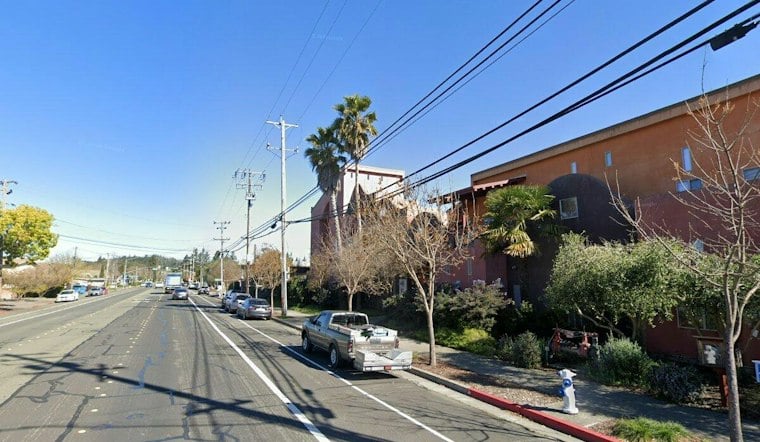
In Garner, the town partnered with The Conservation Fund to purchase 86.5 acres of undeveloped wetlands and open space, buying six parcels from a single seller, Kay Boling Singletary, according to The Conservation Fund. That deal, funded through Raleigh's Watershed Protection Program, the Wake County Open Space Bond Program and the Town of Garner itself, was framed around future public access and protecting drinking water resources, and officials said it could eventually extend Garner's greenway system with new trails linking existing parks and schools across southern Wake County.
Santa Rosa, California offers another model further along in the process. The city finalized its purchase of 49 acres for what became the Southeast Greenway in October 2024, paying $1.8 million, and has since moved into active planning. In June, Santa Rosa awarded a $2.67 million contract to CMG Landscape Architecture to help shape a long-term vision for the site, and the city is now collecting public input through an online survey and in-person workshops this month, according to the Press Democrat. That effort is expected to produce a draft park masterplan by next summer.
Whether the newly acquired forest becomes a park, a greenway, an economic development site, or something else entirely remains an open question Swain says the town is in no rush to answer.





