
























































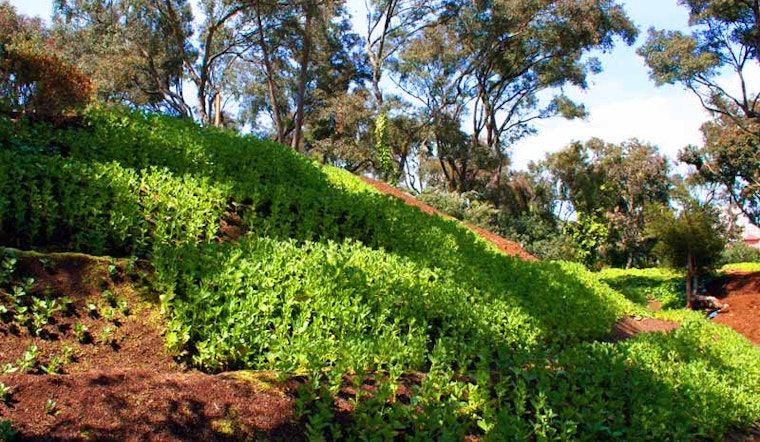
Regardless of how you felt about Hayes Valley Farm, you have to admit it was an innovative repurposing of an otherwise dormant piece of property.
Phil Ting, who represents the western half of San Francisco in the California Assembly, would like to see other vacant city lots turned into urban farms, and he has introduced legislation to encourage it.
Ting's office submitted the following op-ed piece to us yesterday explaining his proposal.
Urban Gardens and Farms Turn Blight into Bounty Ask any San Franciscan if they would rather have a vacant, blighted piece of land in their neighborhood, or a beautiful, open space where produce and plants are grown, and the answer is a no-brainer. Urban farms and gardens are a desirable addition to any community, and they are a valued source of locally-grown, organic produce that tastes better, is healthier for you, and better for the environment than regular grocery store fruits and vegetables. This summer I had the pleasure of visiting several local urban farms and community gardens. I saw firsthand the difference they are making in our quality of life across San Francisco – turning neighborhood eyesores into treasured sources of delicious edibles that can be sold at our fabulous neighborhood Farmer’s Markets or elsewhere in the City. Here’s a recap of some of the innovative things going on at just a few of our existing urban farms. Volunteers at Alemany Farm teach students everything from irrigation to growing food to planting trees, and the farm even has a small-scale, mini-vineyard. At the volunteer-based Free Farm, the community has transformed a vacant corner lot into a thriving plot of locally grown vegetables, herbs and fruits that are given away to anyone who can use them. The Treasure Island Urban Farm teaches students about sustainable farm-to-table products and practices that can set them on a path to culinary and hospitality careers, or simply to be healthy eaters. These farm visits were inspiring to me, and reinforced my commitment to helping create even more of these wonderful community assets in San Francisco but and in urban areas statewide. I have been working closely with San Francisco’s urban agriculture advocates on state legislation to help turn more of the vacant, blighted properties in our city into productive urban farms. I've authored Assembly Bill 551, a bill that will provide a financial incentive to owners of vacant property to allow urban farming to take place on it. The concept is very straightforward; the legislation authorizes cities and counties to lower the property taxes on a piece of land when the landowner enters a five-year contract with the local government to allow small-scale farming to take place. Because the bill allows the reduced taxes only on land that is vacant, blighted or unimproved, it is not expected to deprive local government of resources they need for other priorities. And in fact, as the former San Francisco Assessor, I maintain that these gardens will increase property values in the neighborhoods where the gardens are located, and lead to greater property tax revenues in the future when those homes are sold, that can be used for important local priorities. I’ve enjoyed working on the legislation with the good people at San Francisco Planning and Urban Research (SPUR). According to the experts at SPUR, property taxes are often too expensive to make farming on an urban lot viable – even if the property is vacant. And the main obstacle any proposed urban agricultural project faces is that the cost of land is prohibitive. Urban agricultural zones will help bridge this gap by encouraging property owners to lease their otherwise vacant property for urban agricultural purposes. AB 551 has passed the state Assembly, and if approved by the state Senate, it will go to the governor who has until October 13 to decide whether he will sign it into law. If you support getting more slow, local food sources in our community, while turning blighted properties into community assets, please let the governor know you support AB 551 – the Urban Agriculture Incentive Act. Just go to www.governor.ca.gov and click on “Contact” to send him a message. Thank you for your support! Assemblymember Philip Y. Ting represents San Francisco's 19th Assembly District. He is chair of the Assembly Democratic Caucus and the Select Committee on Asia/ California Trade and Investment Promotion. For more information, go to www.asmdc.org/ting.
Urban Gardens and Farms Turn Blight into Bounty Ask any San Franciscan if they would rather have a vacant, blighted piece of land in their neighborhood, or a beautiful, open space where produce and plants are grown, and the answer is a no-brainer. Urban farms and gardens are a desirable addition to any community, and they are a valued source of locally-grown, organic produce that tastes better, is healthier for you, and better for the environment than regular grocery store fruits and vegetables. This summer I had the pleasure of visiting several local urban farms and community gardens. I saw firsthand the difference they are making in our quality of life across San Francisco – turning neighborhood eyesores into treasured sources of delicious edibles that can be sold at our fabulous neighborhood Farmer’s Markets or elsewhere in the City. Here’s a recap of some of the innovative things going on at just a few of our existing urban farms. Volunteers at Alemany Farm teach students everything from irrigation to growing food to planting trees, and the farm even has a small-scale, mini-vineyard. At the volunteer-based Free Farm, the community has transformed a vacant corner lot into a thriving plot of locally grown vegetables, herbs and fruits that are given away to anyone who can use them. The Treasure Island Urban Farm teaches students about sustainable farm-to-table products and practices that can set them on a path to culinary and hospitality careers, or simply to be healthy eaters. These farm visits were inspiring to me, and reinforced my commitment to helping create even more of these wonderful community assets in San Francisco but and in urban areas statewide. I have been working closely with San Francisco’s urban agriculture advocates on state legislation to help turn more of the vacant, blighted properties in our city into productive urban farms. I've authored Assembly Bill 551, a bill that will provide a financial incentive to owners of vacant property to allow urban farming to take place on it. The concept is very straightforward; the legislation authorizes cities and counties to lower the property taxes on a piece of land when the landowner enters a five-year contract with the local government to allow small-scale farming to take place. Because the bill allows the reduced taxes only on land that is vacant, blighted or unimproved, it is not expected to deprive local government of resources they need for other priorities. And in fact, as the former San Francisco Assessor, I maintain that these gardens will increase property values in the neighborhoods where the gardens are located, and lead to greater property tax revenues in the future when those homes are sold, that can be used for important local priorities. I’ve enjoyed working on the legislation with the good people at San Francisco Planning and Urban Research (SPUR). According to the experts at SPUR, property taxes are often too expensive to make farming on an urban lot viable – even if the property is vacant. And the main obstacle any proposed urban agricultural project faces is that the cost of land is prohibitive. Urban agricultural zones will help bridge this gap by encouraging property owners to lease their otherwise vacant property for urban agricultural purposes. AB 551 has passed the state Assembly, and if approved by the state Senate, it will go to the governor who has until October 13 to decide whether he will sign it into law. If you support getting more slow, local food sources in our community, while turning blighted properties into community assets, please let the governor know you support AB 551 – the Urban Agriculture Incentive Act. Just go to www.governor.ca.gov and click on “Contact” to send him a message. Thank you for your support! Assemblymember Philip Y. Ting represents San Francisco's 19th Assembly District. He is chair of the Assembly Democratic Caucus and the Select Committee on Asia/ California Trade and Investment Promotion. For more information, go to www.asmdc.org/ting.


