

























































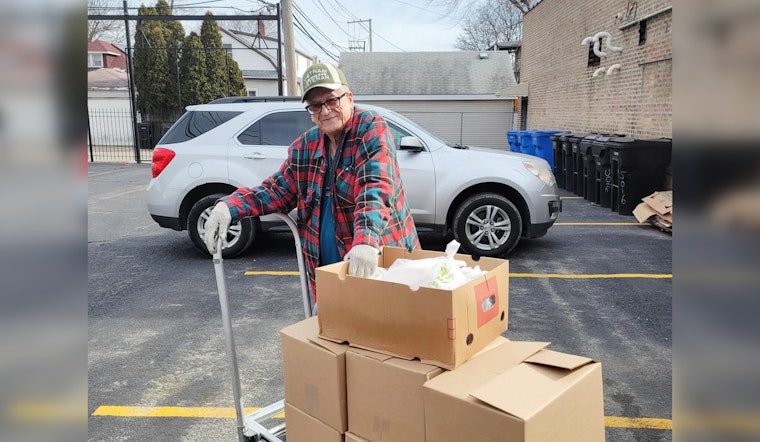
In a world where access to fresh and affordable food can be a challenge for those with disabilities, a pilot program in Chicago’s Austin neighborhood is making strides in the battle against food insecurity. Launched in February this year and bolstered by its remarkable success, organizers are now eyeing an expansion—their goal is to serve 10 times as many clients in Austin and five other Chicago neighborhoods reports the Chicago Tribune.
The food delivery program is an initiative designed to assist the disabled community, a group which often faces significant obstacles in accessing food pantries. Teaming up with the Vivery Idea Lab, the Community Safety Coordination Center, and the Greater Chicago Food Depository, the Mayor's Office for People with Disabilities began this pilot program to provide in-home delivery of pantry staples and produce for 100 Austin residents. According to the Chicago Tribune, the program has already distributed over 27,000 pounds of food, with plans to increase that number significantly as they expand.
The Austin Weekly News states that the pilot program has now been extended an additional six months, as organizers work to bring the service to 1,000 people within the disabled community in other Chicago neighborhoods. Unlike other food pantry programs, this initiative addresses three major barriers residents face: mobility, wait times, and transportation. By delivering the food directly to clients' homes, these challenges are surmounted, and the residents are given a much-needed lifeline.
Customized food packages, consisting of pantry staples, produce, and dietary-specific options, are delivered to each participant by drivers hired from within the Austin and Garfield Park communities. As highlighted in a recent Chicago Tribune article, the program not only aims to alleviate food insecurity but also creates jobs within the very communities it serves. Residents have come to recognize and trust the delivery crew, cementing a sense of community and connection.
Participant feedback has revealed just how valuable this program is—a survey conducted by Vivery found that 85% of clients are women with no children in their home, and the average age of participants is 56 years. Rachel Arfa, commissioner for the Mayor's Office for People with Disabilities, shared her insight into the challenges faced at many food pantries, where access through stairs, communication difficulties, or vision impairment created additional hurdles for disabled individuals.
The pandemic exposed the widening gap in access to resources for vulnerable populations. As Arfa explained to the Chicago Tribune, technology played an essential role in making the routing infrastructure more efficient for food pantries and food banks during these challenging times. Now more than ever, innovative solutions like the pilot program in Austin prove that food insecurity can be addressed through community collaboration and smart use of technology, offering hope to many who desperately need it.
As organizers and community leaders work together to expand the program, the partnership sends a clear message that united efforts can make a difference. The Reverend Steve Epting of Hope Community Church, who has been actively involved in the program since its conception, stressed the importance of collaboration: "Having food access, having delivery, having people to sort and serve — all of those things don’t come from one place, one source…It’s a collective partnership agreement that we have, and we depend on each other to serve our community."



