

























































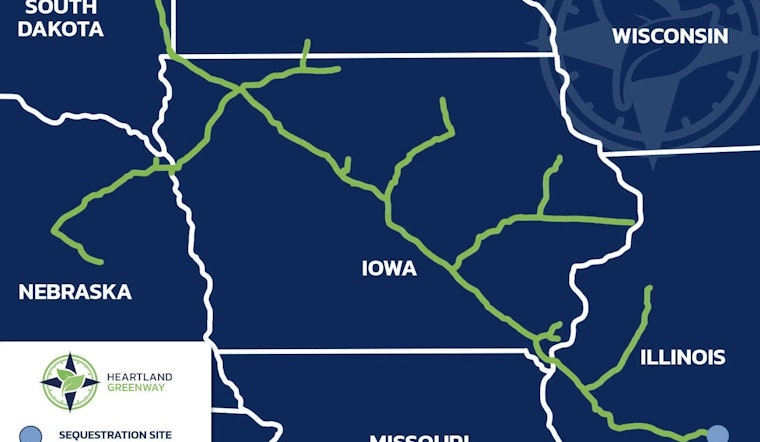
Illinois farmers and environmentalists have successfully thwarted the $3.4 billion CO2 pipeline project led by Navigator CO2. The Chicago Tribune reported that BlackRock-backed, Omaha-based company, Navigator, has decided to abandon the pipeline.
The purpose of the project was to combat climate change by capturing carbon dioxide emissions from ethanol plants across the Midwest. The captured emissions were to be transported via an extensive pipeline and stored underground in Central Illinois. An annual influx of up to $1.3 billion in federal tax credits from President Biden's Inflation Reduction Act drove the proposal.
Concerns about potential environmental and safety hazards surrounding the pipeline were raised. The opposition cited a 2020 CO2 pipeline rupture in Mississippi, which resulted in respiratory problems, disorientation, unconsciousness, and 45 hospitalizations as the Chicago Tribune reported.
The vehement opposition from several fronts resulted in calls for a moratorium on all new carbon pipelines. The Chicago Tribune reported that Navigator CO2 faced significant resistance from farmers in the affected states and state regulators, which led to the project's downfall.
While celebrating this hard-earned victory, locals and environmentalists now focus on the future challenges. Other corporations, including Wolf Carbon Solutions and Summit Carbon Solutions, have proposed similar large-scale projects in the Midwest, meaning the fight isn't over.
Navigator CO2, despite its setback, continues to advocate for a $350 million carbon storage project in Central Illinois. Having acquired rights to store carbon underneath thousands of acres of land, Navigator plans to sell these rights or form a partnership with another pipeline project, according to the Chicago Tribune.
In light of the safety and regulatory concerns brought about by the 2020 Mississippi pipeline rupture, federal regulators are due to update safety regulations for pipelines. Advocates for such measures emphasize the importance of implementing stricter standards, such as setting specific limits on potentially corrosive impurities in pipelines, adding an odorant to carbon dioxide to indicate potential dangers, and delaying project approvals until the new standards are in place in 2024.
Amid this unfolding conflict surrounding carbon capture and ethanol pipelines, one question arises: is carbon capture the best solution given the rapid progression of electric vehicle technology? Ethanol production is currently prominent throughout the United States, and billions of dollars in federal tax credits are available for carbon capture under the Inflation Reduction Act. But a long-term solution may require a balance between investing in carbon capture and the electric vehicle market advancements.
For now, Illinois farmers and environmentalists have cause to celebrate their grassroots victory over Navigator CO2's $3+ billion pipeline project. As Steve Hess, a local farmer, was quoted by the Chicago Tribune, "We have won this battle, but we have not won the war, and the war is far from over."




