

























































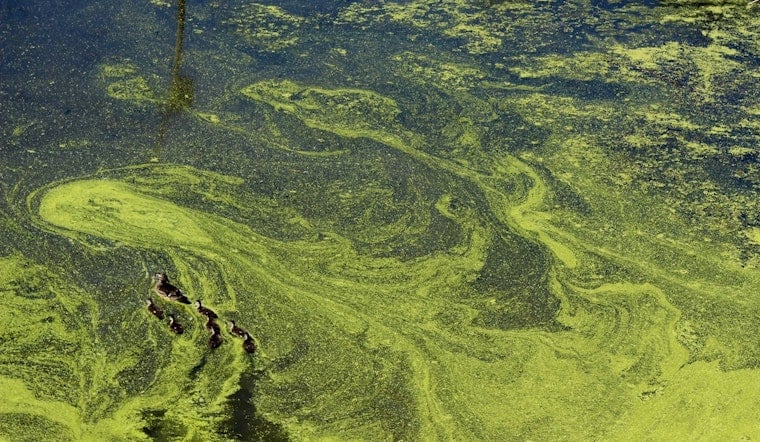
DuPage County’s popular off-leash training pond at East Branch Forest Preserve is off limits for now after officials confirmed an algae bloom on Wednesday, July 22, and told dog owners to keep pets out of the water. Staff have put up warning signs around the off-leash dog area and are keeping a close eye on the pond.
On the Forest Preserve District of DuPage County website, the East Branch notice is blunt: “Keep dogs out of the training pond at the East Branch off-leash dog area until further notice.” The post says staff have “observed conditions that could indicate a potentially harmful algal bloom” and that crews will keep checking water conditions and share updates.
Health Risks And Signs To Watch For
Blue-green algae, also known as cyanobacteria, can release toxins that make pets, children and people with weakened immune systems seriously sick, according to the CDC. Symptoms can include skin irritation, headaches, vomiting, difficulty breathing, diarrhea and neurological problems.
Harmful blooms often collect in scums or mats and can sometimes “look like spilled blue, brown or green paint” floating on the surface. The catch, as CBS Chicago notes, is that you cannot tell just by looking whether a given bloom is producing toxins.
What The District Is Doing
District crews have posted warning signs around the training pond and say they will continue inspecting conditions and updating the public as needed. The East Branch online information includes maps that show the off-leash dog area on the west side of Swift Road, about a mile north of North Avenue, and it also points out that fishing is not allowed inside the dog area.
How To Protect Pets And Visitors
Visitors are urged to steer clear of discolored water or any piles or clumps of algae and to prevent dogs from drinking or swimming in it. If skin or fur does come into contact with the water, rinse off with fresh, clean water as soon as possible and keep pets on dry ground until the warning signs are taken down.
If a pet starts vomiting, stumbling, having trouble breathing, drooling unusually or showing other signs that could suggest exposure, call a veterinarian right away. The Illinois Department of Public Health also advises residents to report suspected harmful algal blooms to state authorities.
Why Blooms Happen And How Long They Last
Warm weather combined with nutrient runoff can fuel these blooms, and their lifespan depends heavily on environmental conditions. Officials say there is no clear timeline for this one and that blooms can stick around for extended periods during hot, stagnant spells, according to CBS Chicago.
Before heading to East Branch with your dog, check the Forest Preserve District of DuPage County for the latest updates, and keep pets out of the training pond until the warning signs come down. This story will be updated if the district releases new information.




