

























































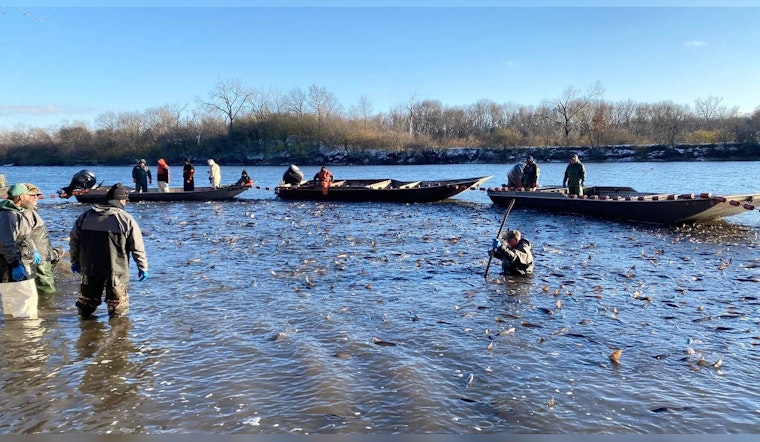
In a herculean effort to combat the invasion of Asian carp in Illinois waterways, commercial fishermen and biologists have teamed up to haul out a record-breaking 750,000 pounds of the pervasive silver carp from the Illinois River. The groundbreaking operation, as reported by the Chicago Tribune, utilized a combination of innovative and old-school techniques, managing to double the fish removal numbers compared to previous years.
The Illinois Department of Natural Resources spotlighted the sophisticated use of a 900-foot seine, a type of dragnet that strategically traps fish by enveloping them from the sides and underneath. The success of this method has not only yielded impressive results but, according to aquatic nuisance species program manager Brian Schoenung, it also reflected the culmination of years of learning and adapting. "It’s one of those things that there’s a lot of pieces that have to fall into place for it to be effective,” Schoenung told the Chicago Tribune. Meanwhile, plans are brewing for a large-scale operation at Emiquon Nature Preserve, employing the stealth of unmanned kayaks for data collection, in preparation for a significant removal effort slated for 2025.
Parallel to these efforts, the construction of a $1.1 billion prevention system at Joliet's Brandon Road Lock and Dam is edging closer to reality, aiming to halt the Asian carp's advance into the Great Lakes. Touted as the "Cadillac of barrier systems," the project unites noise, aeration, and electric deterrents into a singular defense mechanism against these invasive species. John Rogner of the Illinois Department of Natural Resources emphasized the uniqueness of the ordeal during a presentation covered by the Daily Herald, "The Brandon Road barrier is going to be the Cadillac of barrier systems," making it a first of its kind.
While the stakes of this operation are underscored by a sense of environmental urgency, the government is also keen to listen to public concerns, as hunting and fishing near the dam will face disruptions during construction. According to Scott Whitney, chief of project branch management at the U.S. Army Corps of Engineers Rock Island District, the innovative barriers utilized in this project could set a national precedent. "The technology we're developing and honing here can be used in other parts of the country where invasive species are moving," Whitney said, as the state and federal groups involved in the project edge toward a partnership that will kick-start this legacy-blocking undertaking.




