

























































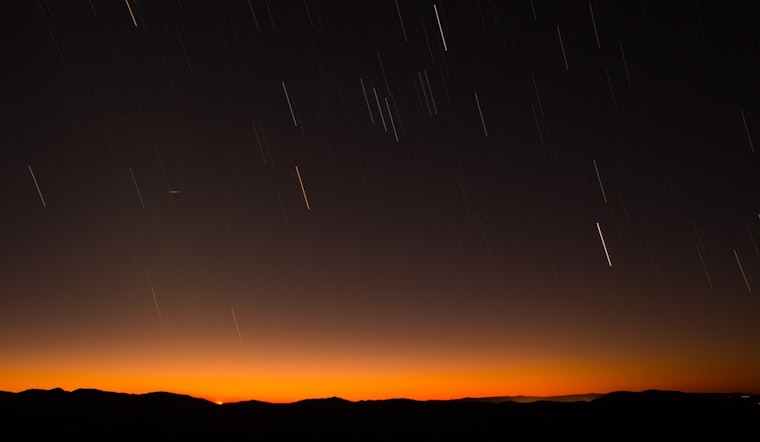
Stargazers across the United States are in for a celestial treat as the Geminid meteor shower is expected to dazzle the night sky this week. According to NBC 5, this astronomical phenomenon, notable for its bright meteors hailing from an asteroid rather than a comet, is predicted to reach its apex tonight. The experts charged with knowledge on the matter suggest the opportune time for viewing is between midnight and 6 a.m. on both Wednesday and Thursday.
Residents of the Chicago area aiming for the best views should head to dark, open skies, away from the urban glow. NBC's meteorologist, Kevin Jeanes, advises allowing your eyes at least 30 minutes to adjust to the night's darkness, and using one's peripheral vision to spot the meteors streaming from the constellation “Gemini”. The Adler Planetarium backs this advice, pointing to the new moon on Dec. 12, which will offer ideal dark skies for observing this cosmic show.
In the Big Apple, expectations for the show are also high, with clearer views anticipated for less urbanized locations. "The forecast looks very favorable, and that is everything," Bart Fried, executive vice president of the Amateur Astronomers Association, told ABC News. Fried emphasizes that this is a naked-eye event, advising viewers to ditch the binoculars or telescopes and relax their eyes to optimize their stargazing experience.
Given the exceptional circumstances of a 1% moon illuminating the sky, prospects for an impressive Geminids display look strong, with up to 120 meteors per hour potentially visible in optimal conditions. For city dwellers hampered by bright lights, Fried estimates around 20 to 30 meteors per hour may still be visible, making every viewing minute potentially thrilling. And for those taking up residence on the eastern seaboard, the National Weather Service predicts mostly clear skies, further enhancing this December's celestial showcase.
Following the Geminids, skywatchers can keep their eyes peeled for the Ursids meteor shower, which will grace our heavens on the mornings of Dec. 22 and Dec. 23. Although expected to be a more modest event, it nonetheless provides an encore to the cosmic performance of the Geminids. Amidst the long nights of winter, the Quadrantids meteor shower will then visit in January, potentially bringing 40 to 100 meteors per hour near the Big Dipper in the early hours before dawn.





