

























































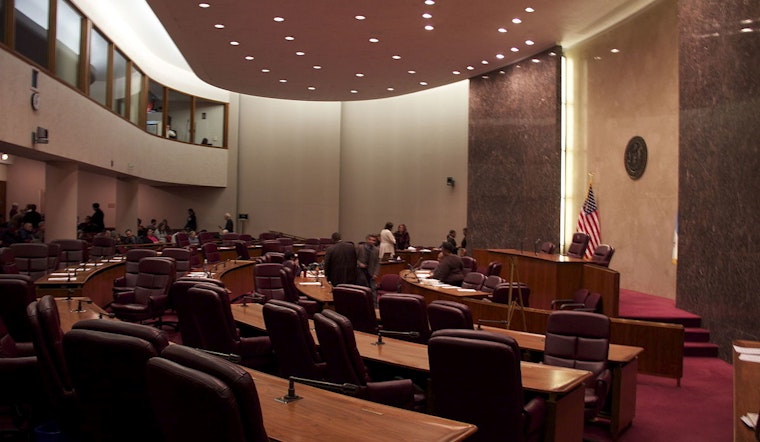
Chicago's City Council members are turning up the heat on Mayor Brandon Johnson over his controversial policy limiting shelter stays for migrants to 60 days. In a united front that saw over a dozen aldermen come together, a letter was sent to the mayor's office calling for an immediate axing of the eviction-limit policy. The signatories, which include some of Johnson’s usual allies such as Aldermen Daniel La Spata and Byron Sigcho-Lopez, as well as more moderate council members like Ald. Matt O’Shea sees the cutoff as a grave threat to the health and safety of the migrants, especially with Chicago's harsh winter in full swing, reported the Chicago Tribune.
Despite the City Council recently showing a streak of independence, they seem to be coalescing on this issue. A proposed ordinance by Ald. Bill Conway aims to give the council more control over federal stimulus dollars and already has the backing of 27 aldermen. This legislation emerges amid discontent over the way the city has handled nearly $95 million from the American Rescue Plan Act for migrant support, according to the Chicago Tribune. The policy in debate forced migrants to submit a new request for shelter after 60 days and has already been extended twice due to severe weather conditions.
The aldermen’s letter also singled out the need for improvement in shelter conditions, including food quality, medical care, and housing stock for Chicagoans at large. The political pressure comes at a time when the mayor's administration is still in the search for a chief homelessness officer, a role created back in October that remains unfulfilled. "We believe this is a matter of important discussion that needs to be had with the council,” Ald. Andre Vasquez, who helped organize the letter, told the Chicago Tribune.
Mutual aid groups that had been assisting migrants were pivotal in rallying support for the aldermen’s initiative. Amid accounts of migrants being treated “like animals” and reports of dismal conditions at shelters, Vasquez admitted that a February eviction could result in about 1,900 people facing homelessness once again. "The 60-day eviction policy poses a significant threat to the health and safety of new arrivals," he elucidated in a statement obtained by the South Side Weekly. The mayor's office, in a late effort to ease mounting concerns, claimed enhancements are being made to shelter services, including the medical screening process and expanded resettlement assistance. "Our plan remains providing dignified care and basic support services for asylum seekers," a mayoral spokesperson said in a statement provided to the South Side Weekly.
With the city in a humanitarian crunch, the aldermen remain steadfast in their appeal to the administration for more compassionate and viable solutions for migrants. Conway's transparency-focused ordinance, which got shuffled to the Rules Committee, appears as yet another testament to the council's ongoing tussle for oversight. As Ald. Johnson balances fiscal responsibility and humanitarian aid, the City Council and mutual aid volunteers join in an urgent chorus, advocating tirelessly for the welfare of those seeking shelter from a world that has often been less than kind. The city's response, moving forward, will be instrumental in defining both its values and its vision for a Chicago where the cries of the voiceless are not only heard but acted upon. Johnson brushed off concerns about his shelter policy after Wednesday's council meeting, redirecting the onus onto the state to do more, emphasizing their capability of constructing shelters outside of Chicago.





