

























































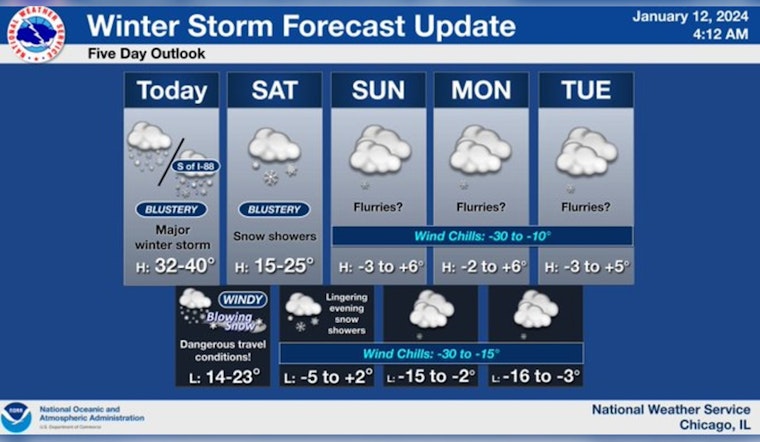
Chicago is bracing for a massive winter blast which is expected to bring treacherous travel conditions and bone-chilling cold, as per reports from local meteorologists. A winter storm warning has been issued, covering all of Northeastern Illinois and Northwest Indiana.
According to the National Weather Service, the city can expect "significant snow and blowing snow risk" today and tonight, with wind chill values plummeting to "30 degrees below zero are expected Saturday night through Wednesday morning." Moreover, transportation is expected to be severely impacted, with "downright dangerous travel conditions" cited by the NWS, reports NBC Chicago.
O'Hare International Airport has responded to the adverse weather by issuing a ground stop, leading to over 700 flight cancellations between O'Hare and Midway airports already. NBC Meteorologist Alicia Roman said, "A snowy 24 hours is expected," with heavy and wet snowfall beginning earlier today, which accumulated rapidly to the west in counties like DuPage and Kendall. With snowfall rates reaching 1-2 inches per hour and wind gusts between 40 to 50 miles per hour, the advice given is to delay travel where possible.
Looking forward to the weekend, the hazardous conditions are expected to continue, with elevated risks of excessive cold from Saturday through to the following Thursday. In addition to the cold, "limited lakeshore flood risk" and "significant freezing spray risk." have been forecasted for the Illinois and Indiana nearshore waters of Lake Michigan, according to the National Weather Service Chicago/Romeoville IL. Chicago-area residents should brace for a period of severe winter weather, marking the coldest days since the end of January 2019.
As the storm system progresses, snow accumulations could reach between 6 to 12 inches in areas under winter storm warning, with even higher amounts possible in some parts. Areas closer to Lake Michigan are expecting slightly lower accumulations due to a potential mix with rain. River ice buildup and possible localized ice jam-related flooding are also concerns as temperatures continue to drop.




