

























































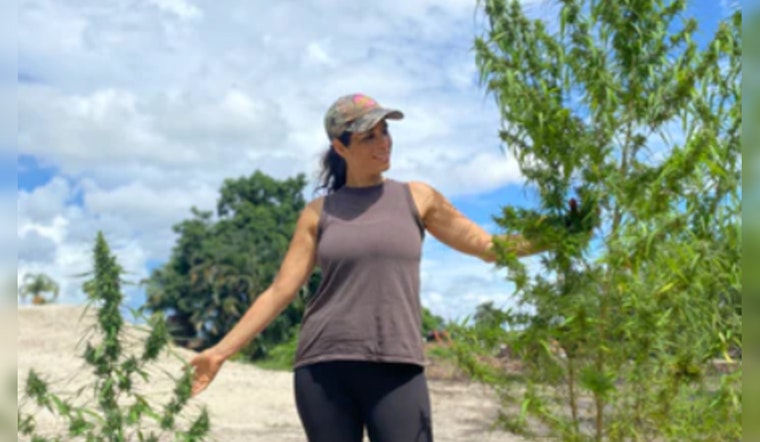
Meet Lanette Sobel, South Florida's "compost queen" who runs the largest commercial composting operation across Miami-Dade, Broward, and Palm Beach counties. Her six-acre farm, Fertile Earth Worm Farm in Homestead, is a hub for climate-friendly waste disposal, transforming hefty loads of food scraps into nutrient-rich soil with the help of an army of dedicated earthworms. According to the Miami Herald, Sobel, whose academic background includes a master's degree in forest pathology and a doctorate in plant medicine, has been steering this eco-friendly ship for the past 15 years.
Despite its significant contributions to carbon sequestration and waste reduction, Fertile Earth's expansion endeavors are tethered in a relentless bind of red tape. Sobel's operation, receiving food waste from major players like the Miami Marlins and Starbucks, has the potential to further reduce greenhouse emissions that are exacerbated when food waste is relegated to landfills. However, the company's growth is thwarted by a lack of government support, highlighted by Miami-Dade's failure to secure a federal grant that could have bolstered countywide composting efforts, as Sobel told the Herald.
Visiting Fertile Earth is an encounter with the unadulterated scent of post-rain soil, a testament to the efficient and surprisingly undisturbing process of composting. Rather than producing the pungent odors one might anticipate from 11,000 pounds of raw meat buried beneath mulch, the farm exudes a pleasant, earthy fragrance. Meanwhile, next door, black vultures circle over decaying matter, unmindful of the sustainable feast occurring within Sobel's compost piles.
It's a sophisticated balance of nature and knowledge at play at Fertile Earth, where the composting process involves microbial bacteria that break down materials in "windrows" - long piles that reach expedient temperatures crucial for killing off diseases and weed seeds. According to experts quoted by the Miami Herald, the resulting soil not only sequesters carbon but also enhances plant growth without the need for chemical fertilizers. Sobel sees the farm as a manifestation of the circular economy, returning all that once lived back to the soil.
The red tape constricting Sobel's operation mirrors the broader struggle for large-scale composting to gain a foothold in South Florida. Sobel's pursuit to get more cities and counties on board with her vision is stymied by puzzling regulations and a tangle of bureaucratic oversight. As Sobel recounted to the Orlando Sentinel on X, the expiration of the federal grant before Miami-Dade could comply with regulatory requirements is but one episode in a longstanding pattern of resistance to green waste-management solutions.
She’s Miami’s compost queen — ruler of climate-friendly, waste-eating worm force https://t.co/W8dJU813hV pic.twitter.com/5DESg0xtlj
— Orlando Sentinel (@orlandosentinel) January 15, 2024
Despite these hurdles, Sobel remains steadfast, her philosophy grounded in environmental stewardship and a belief in nature's capacity to heal itself and aid our communities. She maintains an unwavering dedication to showcasing the efficiency of her wriggling workforce, emphasizing that the path to a sustainable future is available to us, if bureaucratic impediments can be overcome.



