

























































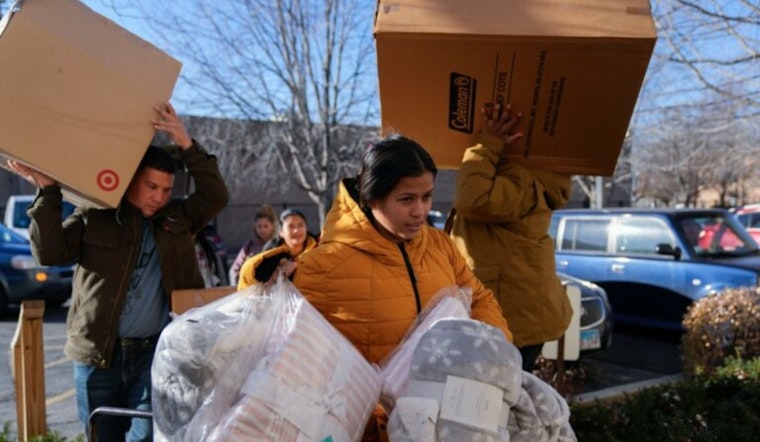
Chicago has initiated the process of evicting migrants from city shelters, enforcing a new 60-day shelter stay limit, although the rollout has been met with resistance and calls for extensions in certain cases. Amidst rising concerns over housing and resources, Mayor Brandon Johnson's administration began the evictions Sunday, yet only three individuals were ultimately removed from shelters, reported the Chicago Sun-Times. In contrast to the stringent policy, 31 migrants obtained stay extensions, primarily owing to ongoing applications for public benefits or medical reasons such as pregnancy or disability.
Johnson's office has defended the new rule as an incentive toward self-sufficiency, suggesting that "By encouraging resettlement, while also providing case-specific extensions with a focus on health and safety, we are advancing a pathway to stability and self-sufficiency," as mentioned in a report by Chicago Sun-Times. However, Ald. Andre Vasquez slammed the notion that evictions support resettlement efforts, stating, "To think that evictions are encouraging resettlement as if people want to live in a shelter, is not accurate," and that such a policy only fosters desperation. In both his public statements and during interviews, he has been advocating for greater transparency in the eviction process.
The city's Office of Emergency Management and Communications tallies fewer than 11,000 migrants still housed in shelters, with an anticipated 2,000 individuals expected to move out by the end of April, as per Chicago Sun-Times. Even though the city stated no family evictions would happen until the summer, the policy has been critically perceived by several advocacy groups and officials, who argue the impracticality of migrants securing housing and employment so hastily.
Individuals impacted by the evictions expressed concerns, struggling with the challenge of obtaining work authorizations and seeking stable, affordable housing. Migrants like Luis from Caracas, Venezuela, echoed this sentiment saying, "If I had my papers to work, I would be doing that and getting a place of my own right away," according to an interview with NBC Chicago, and Nicolet Hernández described her temporary accommodation on a city bus as "super clean and the staff members speak Spanish," showcasing even amidst the chaos of being uprooted from the shelters, there were glints of decency within the harsh confines of city policy.
In response to health concerns, particularly a recent measles outbreak, Chicago now requires migrants to be vaccinated for measles, mumps, rubella, and varicella, depending on age, before entry into any shelters, NBC Chicago reported.





