

























































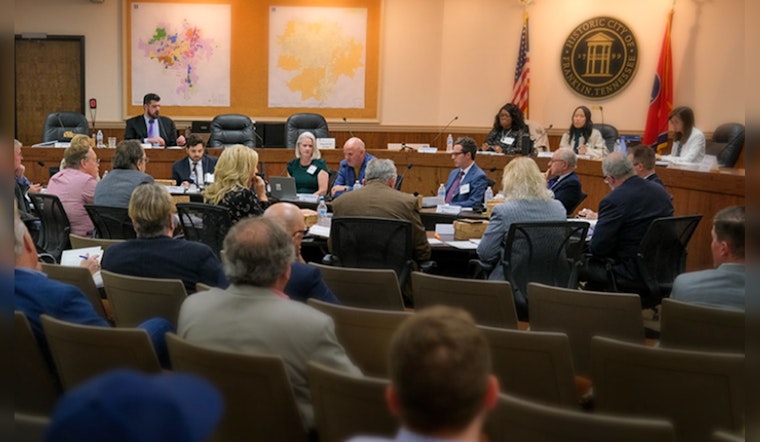
In a bid to combat the opioid crisis riddling Tennessee, the Opioid Abatement Council has announced the release of a hefty $80.9 million in community grants. These funds, earmarked for a variety of programs designed to address opioid addiction, will support the state’s efforts for up to a stretch of three years. During a meeting in Farragut on March 18, the council approved 116 grants from a pool of 396 proposals submitted last fall, according to an announcement on the state's official website.
The substantial sum is divided into six strategies aimed at attacking the problem from different angles: Treatment programs receive the lion's share with over $32.7 million, followed by Recovery Support and Primary Prevention earmarked at $18.9 million and $12.2 million, respectively. Education and Training got over $8.1 million; absolutely needed, Harm Reduction initiatives were allocated $8 million, and Research and Evaluation efforts were granted a modest $752,508. A wide range of initiatives, the 116 projects were developed by 85 different awardees, 30 of which target statewide issues, and roughly $5.7 million designated for capital projects.
Dr. Stephen Loyd, Opioid Abatement Council Chairman, reflected deeply on the milestone and its significance, "When the history of the opioid crisis in our state is written, people will look back at this date as a landmark on the road to healing the unbelievable harm done to so many families and communities." He added, "At every meeting, we pause to 'remember our why,' and I can say that the level of thought and care put into this process truly honors the 'why' for all of our members and the countless families that have been touched by opioid addiction in Tennessee."
The genesis of these grants lies in the hard-fought settlements obtained from the pockets of opioid producers, distributors, pharmacies, and marketers, as pursued by the Tennessee Attorney General. Funds flow into the Opioid Abatement Trust Fund, with local governments getting a 15% slice, the state government another 15%, and a comfortable 70% channeled into the fund. The community grants, benefiting from a 65% share of the fund, are disbursed by the council while the counties receive the remaining 35% for opioid remediation activities. Prior funding to county governments amounted to $31.4 million, released around a year ago.
Tennessee's Attorney General Jonathan Skrmetti proudly acknowledged the commitment behind this financial offensive against the epidemic, saying, "This office has worked hard for years to obtain money for Tennessee’s Opioid Abatement Trust Fund by holding companies accountable for their opioid-related misconduct." He continued, "We are gratified to see that money put to good use by the Council and the grant recipients. We have ensured that settlement money will flow into the trust fund for years to come, and we thank the Opioid Abatement Council and its chairman, Dr. Stephen Loyd, for their wise stewardship of these hard-earned dollars."
Emphasizing the collaborative nature of the undertaking, Mary Shelton, Executive Director of the Opioid Abatement Council, highlighted the extensive efforts leading up to the grant release. "It’s been such a collaborative effort to get to where we are today. From the hard work and long hours of our council members and council staff to the guidance and support from the Department of Mental Health and Substance Abuse Services and Tennessee Attorney General’s Office, there are so many dedicated public servants who have contributed greatly. And now as we release this funding to grantees, the focus turns to ensuring that every dollar makes a difference," she stated.





