

























































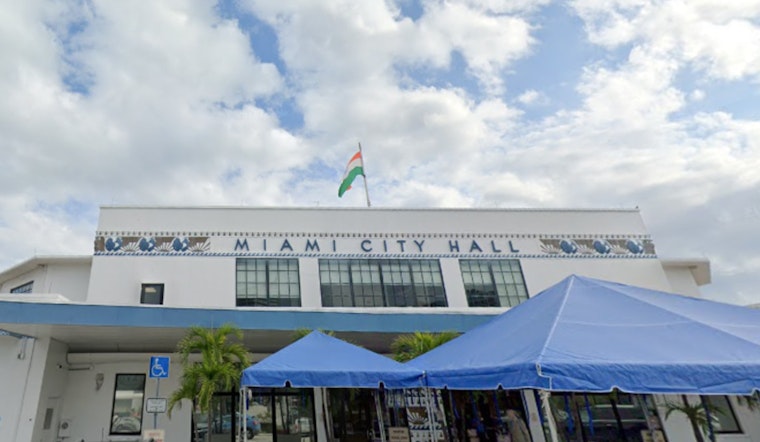
After a legal clash that spanned over a year and cost Miami nearly $3 million, the city has come to terms with voting rights advocates on a redistricted map. The move follows a federal judge's denunciation of the previous map as "racially gerrymandered." Miami taxpayers are on the hook for the city commissioners' persistence on a map accused of being "unconstitutional" by critics, including a hefty total of over $1.5 million in legal fees for the advocates, as detailed in documents acquired by WLRN.
The forthcoming vote on this freshly brokered map, set for May 9 at the city commission's meeting, is expected to stem the tide of gerrymandering by invoking a proposed limit on future redistricting exercises. Moreover, the settlement requires a 'Citizens' Redistricting Committee' to be a future option put forth to Miami voters. The judge's damning findings necessitated that commissioners collaborate with various local advocacy groups, assembled by ACLU of Florida and law firm Dechert LLP, with the goal of creating a map that adheres to the principles of the 14th Amendment, reports The Miami Herald.
Modifications to the existing districts aim to reunite communities once surgically divided by past redistricting processes. Historical neighborhoods such as Coconut Grove, pivotal in the tapestry of Miami's cultural and social history, are now restored under this new blueprint to a single district. At the same time, District 5 has embraced Overtown, symbolizing the reconnection of one of the city's major historically-Black neighborhoods wholly within its bounds, according to statements obtained by both The Miami Herald and WLRN.
Daniella Pierre, the president of the Miami-Dade NAACP branch, hailed the new map for its ability to prioritize residents over politicians. "Our new map unites Historic Overtown to District 5 and ensures Black residents have an equal voice in local government, as the Voting Rights Act requires," she told The Miami Herald. Moving forward, commissioners retaining their office through the conclusion of their term will not be altered by new district lines under the terms of this settlement. However, it won't shield incumbent city commissioners from broader changes in demographics or political tides. One commissioner, Joe Carollo, will not have his seat threatened by the redrawn districts, despite his home in Coconut Grove moving out of his district, both sources reveal.
If the city commission votes in favor, the citizens of Miami will be looking at a more tautly drawn political landscape, one in which $1.6 million in attorneys’ fees get paid to the plaintiffs, yet without any "admission of liability" from the city. This new district map reflects the city's acquiescence in the face of a collective voice that refused to be fragmented by the line-drawing of political convenience. The voting map that emerged battered from the gavels of the judiciary, now strives to mend what was once torn asunder and chart a course that favors fairness over partisanship, as required by both the letter and spirit of the law. The effective date hovers merely seven days post judicial approval, setting the stage for a 2025 municipal election comprised of bonds reforged and districts redrawn, as described by WLRN.





