

























































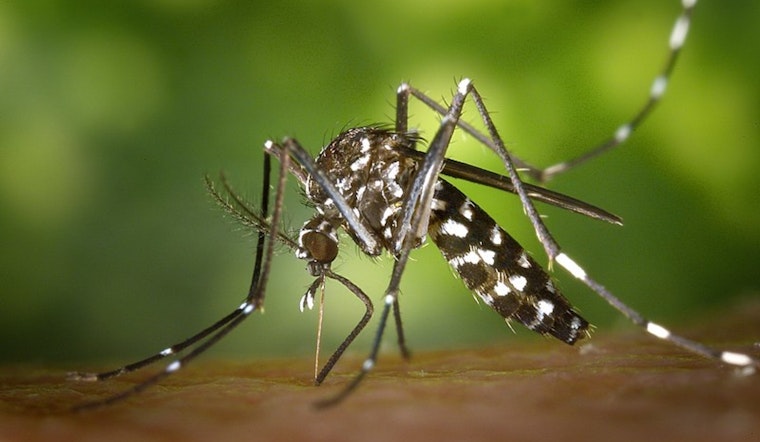
As mosquito-borne diseases continue to spread their reach throughout various parts of the United States, health officials are ramping up efforts to contain and prevent outbreaks. In the Chicago area, concerns over the West Nile virus have prompted significant mosquito spraying efforts. The Cook County Department of Public Health has classified the risk level for the West Nile virus as high, signaling a potential increase in the virus's prevalence. "West Nile is a virus just like a cold is virus, or a flu is a virus. But this is a virus that is spread from mosquitoes; mosquito bites," said Dr. Scott Goldstein, a pediatrician with Northwestern Children's Practice, in a statement obtained by CBS News Chicago.
The gravity of the situation is further illustrated by Dr. Anthony Fauci's recent six-day hospitalization due to the West Nile virus. Spraying efforts are not only localized to Illinois. From the East Coast to the Midwest, vehicles rigged with tanks and sprayers have been dispersing insecticides to drastically reduce mosquito populations and, by extension, limit the spread of the virus. Despite the urgency, "Nine is a pretty small number," Dr. Goldstein told CBS News Chicago, referring to the state's currently reported West Nile cases.
Massachusetts too has raised alarms after a rare case of eastern equine encephalitis (EEE) was discovered, provoking warnings for residents to stay indoors during peak mosquito activity hours. Meanwhile, the West Nile virus is surging with the Illinois Department of Public Health documenting 216 cases so far this year. According to NBC Chicago, this infectious disease landscape is not to be taken lightly, with simple mosquito bites potentially leading to severe health consequences.





