

























































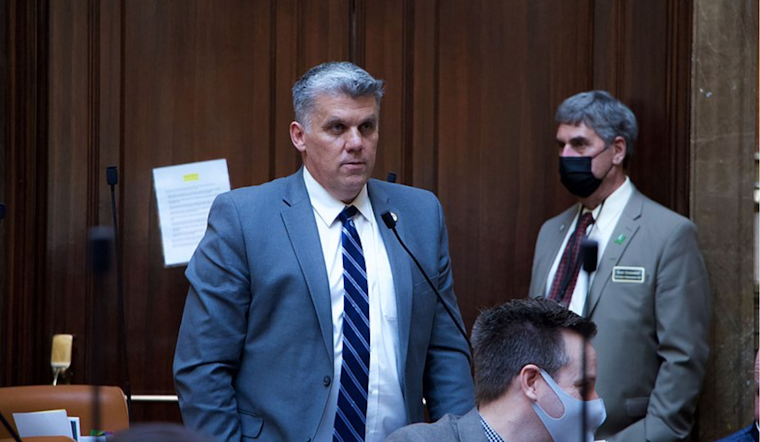
In an escalating political maneuver, Utah Rep. Phil Lyman has petitioned the U.S. Supreme Court to intervene in the aftermath of the state's Republican primary election, an appeal filed after the Utah Supreme Court dismissed his prior petition to nullify the results, as reported by ABC4. Lyman, who secured 67.54% of votes at the Republican convention, contends that Gov. Spencer Cox should not have been eligible to run against him in the subsequent primary, which Cox won.
Lyman's case hinges on a reading of a 2014 Utah Senate Bill that supposedly established the Republican party could decide its nominee through a caucus and convention system, meaning primary elections are unnecessary if a candidate achieves a 60% delegate vote, yet Cox and Lieutenant Gov. Deidre Henderson qualified for the primary ballot by collecting necessary signatures, further complicating the issue. A representative for Cox's reelection campaign conveyed respect for the electorates' decision, implying an acceptance of the primary's outcome, as detailed by KSL.
Lyman's appeal comes amid accusations against the Cox campaign of falling short of the 28,000 signatures required for primary ballot qualification, accusations based in part on a legislative audit that allegedly identified errors in signature verification, according to KSL. Despite these assertions, the audit concluded that Cox, along with Senate candidate John Curtis and Attorney General candidate Derek Brown, did satisfy the ballot access prerequisites.
However, Utah law stipulates candidates may also secure a spot in the primary through signature gathering, a point underscored by the state Republican Party Chair Rob Axson who stated that the party had fulfilled its role by forwarding Lyman's name as required by law, but emphasizing that state law, rather than party rules, govern primary election processes, as cited by The Salt Lake Tribune. The crux of Lyman's argument against Cox's candidacy now sits with the justices of the U.S. Supreme Court, who have yet to determine this potentially precedent-setting case.





