

























































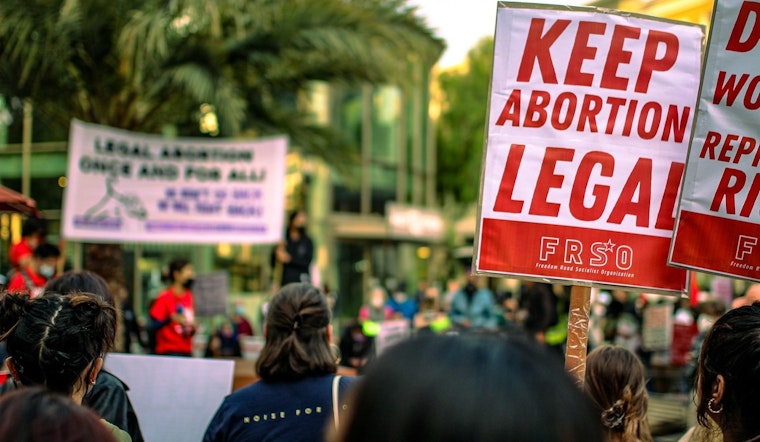
Arizona has marked a significant move in favor of abortion rights as state officials verified a voter-approved provision that embeds the protection of abortion access within its constitution. The ballot measured, which passed during the general election, extends the right to an abortion up to the point of fetal viability—effectively overturning a prior 15-week cutoff that included exceptions only to protect the mother's life. This shift, noted by the Associated Press, is a clear win for reproductive rights groups in the state.
The caveat, however, is that existing restrictive laws still stand unless they are repealed by lawmakers or struck down by the courts. At a news conference, Attorney General Kris Mayes said, "The position of the state of Arizona will be that we agree that abortion is legal in our state," signaling the administration's backing of the newly minted constitutional right, as shared with the Associated Press. Yet, the stage is set for probable impending legal confrontations, with opponents of the amendment readying their defense.
Abortion, charged with political contention in the nation, especially since the Supreme Court's 2022 reversal of Roe v. Wade, has led to an increase in state-level actions dictating abortion access. With Arizona's move, it joins the bandwagon of states where voters have asserted their stance through ballot measures, enshrining abortion rights directly into state constitutions. Chris Love, a spokesperson for Arizona for Abortion Access, captured the sentiment, stating, "We’re so excited to see that this is finally coming to fruition,” and declared, "It’s a lovely day," in a statement obtained by the Associated Press.
Despite the clear statement made by voters, legal nuances promise a complex road ahead. Laws such as the compulsory 24-hour ultrasound prior to the procedure stand. Cathi Herrod, president of the socially conservative Center for Arizona Policy, noted to the Associated Press, the firm's anticipation for judicial disputes against what they view as formidable current regulations. Conversely, the American Civil Liberties Union of Arizona's policy director Darrell Hill voiced potential challenges to the standing laws, reinforcing the notion that Arizona's narrative on abortion is continuously unfolding.
Governor Katie Hobbs highlighted the contrast between the current election's aftereffects and those marred by controversy four years prior. In her reflection of a peaceful conduct, Hobbs expressed gratitude that the certification went without the specter of conspiracy that led to events like the Jan. 6 insurrection. Furthermore, Secretary of State Adrian Fontes announced an uptick in the total ballots cast in 2024—3,428,011, according to an official count, marking a slight increase from the 2020 election despite voter turnout hovering just below 80%.





