

























































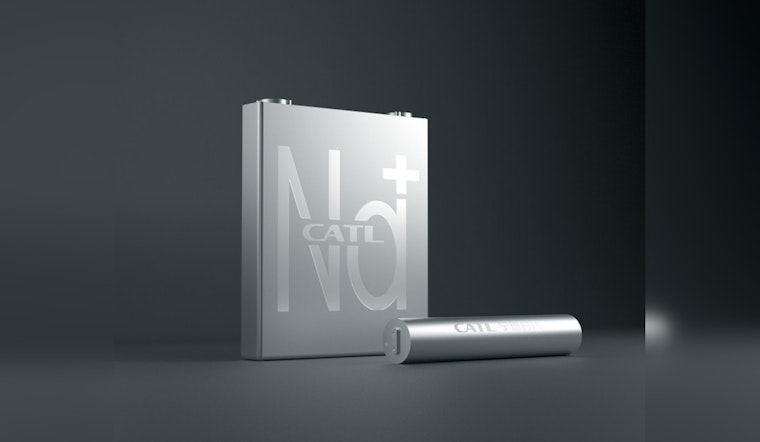
In a move toward more sustainable and cost-effective electric vehicle technology, Argonne National Laboratory is leading a $50 million initiative to advance sodium-ion battery development, in collaboration with seven U.S. national laboratories. The project aims to address supply chain challenges linked to the surging demand for lithium-ion batteries, according to the Chicago Sun-Times.
While sodium-ion batteries are yet to power passenger vehicles in the U.S., they are gaining traction globally. China has already introduced sodium-ion-powered vehicles, and the world’s largest battery producer, CATL, plans to mass-produce an upgraded version by 2027. These next-generation batteries boast an energy density of 200 watt-hours per kilogram, a significant improvement over earlier models, as reported by Ars Technica.
The collective draw towards sodium-ion technology is not without substance. Argonne's battery scientist Venkat Srinivasan outlined some compelling reasons in a statement obtained by the Chicago Sun-Times, "The reason we’re pursuing this is very simple. It’s because the huge demand in lithium-ion batteries has meant that we have a supply-chain constraint." He further highlighted the environmental and geopolitical concerns tied to the metals such as cobalt and nickel currently used in lithium-ion batteries. Significantly, sodium offers an abundant and less contentious alternative, available in common table salt and oceans.
The benefits of sodium-ion batteries include their enhanced performance in extreme cold and an inherently lower fire risk. However, there's a trade-off, as Srinivasan remarked, "That is just what nature has given us. From a physics perspective, sodium batteries inherently have lower energy density than lithium batteries." Despite this drawback, they could serve a crucial role for low-cost EVs targeted at urbanites who do not demand extensive driving ranges. Expected to grow to 140 gigawatt-hours by 2030, the market for sodium-ion batteries is on the rise, fulfilling a niche that could complement, rather than compete with, emerging technologies like solid-state batteries.
Cost competitiveness remains a wild card in the sodium-ion battery game. While current lithium prices are notably low, the long-term outlook suggests a potential for sodium-ion cells to undercut lithium-ion by up to 20 percent, a projection echoed by both McKinsey and Co. and Srinivasan. Ultimately, as both the Chicago Sun-Times and Ars Technica illuminate, the push towards diversifying the battery landscape indicates an industry bracing for transformative growth amid environmental and economic upheavals.




