

























































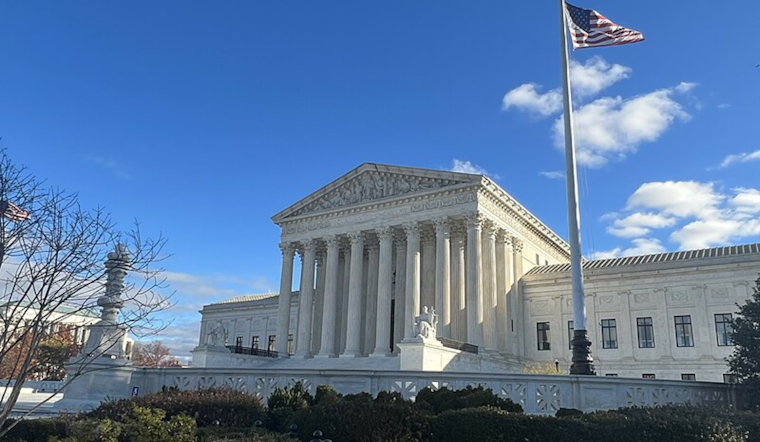
The cascade of events that often resemble a perpetual battle for political primacy has culminated yet again with the U.S. Supreme Court opting to stay its hand. This Monday, the Supreme Court refused to hear the case of Phil Lyman, a Republican write-in candidate who sought to invalidate Utah Governor Spencer Cox's eligibility in the 2024 gubernatorial primary election. This decision effectively leaves in place the ruling from the Utah Supreme Court, which found earlier that Lyman had failed to make a cogent legal argument for his claim against Cox and his lieutenant governor, Deidre Henderson.
Lyman's belief that his victory in the Republican caucus should have been converted directly into a nomination for the general election was a contention point. He catapulted this argument into the broader electoral conversation after losing the Republican primary, which Gov. Cox won with 54% of the vote despite being forced into a secondary contest via signature-gathering. According to ABC4, this challenge was embarked upon despite the Utah Supreme Court's stern dismissal, which underscored the precedence of state election law over internal party rules.
The denial by the nation's high court came without commentary, adding to a pattern of rejections Lyman faced in his quest to reverse his electoral fortune. In his appeal, Lyman accused the Utah Supreme Court's decision as "frivolous and misconstrued," evoking the history of litigations around the Utah bill, SB54, that enabled candidates to appear on the ballot via signature-gathering. Despite this setback, which ABC4 noted as nearly three months in waiting, the Supreme Court's silence on the petition has reverberated as a resonant full stop on the matter.
Meanwhile, the U.S. Supreme Court has also denied Utah's petition in a separate lands lawsuit, aimed at claiming millions of acres of public land, in a terse one-sentence order. As obtained by FOX 13, state leaders including Governor Cox expressed disappointment but reiterated their readiness to protect Utah's interests regarding land management issues, emphasizing their right to contest under the principle of "multiple use" and commitment to public stewardship over the lands.
These legal developments mark a series of contestations that have gripped Utah politics, elements of a struggle layered within and without courtrooms. As reported by the Salt Lake Tribune, with the Supreme Court's refusal to entertain Lyman's case, the validity of the primary's result remains intact. Governor Cox's victory continues to be recognized, and his presence on the ballot is uncontested, reaffirming the legal frameworks that shape Utah's electoral landscape, and indeed the democracy at its core.





.jpg)