

























































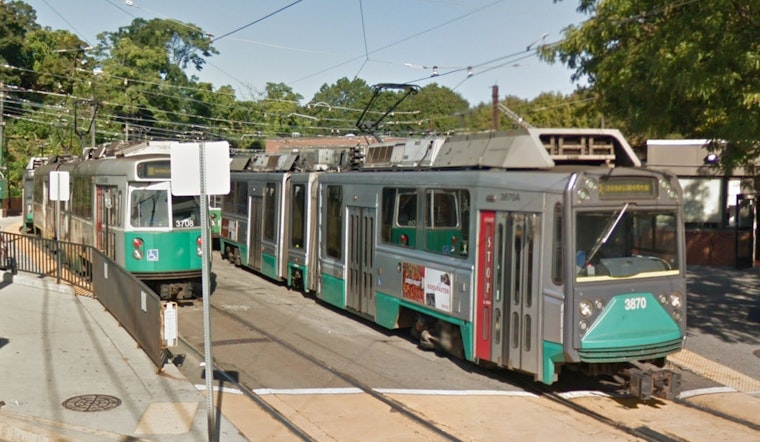
In a push to bolster safety on the Green Line following a recent trolley crash, the MBTA board has approved a substantial investment in new collision prevention technology. Awarding a contract to California-based Piper Networks, the transit system is set to enhance operator alerts and eventually automate interventions against speed and signal violations. "This is a system that is needed for us to ensure safety, to give our operators the opportunity to be more successful," MBTA General Manager Phil Eng told the Boston Globe.
A recent Green Line crash, which saw an operating train collide with a stationary one, escalated the urgency for this upgrade. The National Transportation Safety Board is currently investigating this incident, and an WCVB report cited MBTA's Chief Safety Officer Tim Lesniak, who stated, "NTSB's investigation does not limit MBTA's ability to take post-accident safety actions and we will be looking to develop corrective actions as potential issues are identified through the investigation that will help prevent recurrence."
The nearly $113 million contract is the latest step after a 2008 federal recommendation for such a system, coming in the wake of multiple past accidents. Initial implementations will feature visual and audible alarms for excessive speeds and impending collisions. Eventually, a fully automated component will be rolled out, forcefully slowing or halting trains if the initial warnings are ignored. Aiming to have the older Type 7 and Type 8 models equipped with the warning system before they retire, the MBTA plans to integrate the comprehensive system primarily into the newer Type 9 and upcoming Type 10 trains, as The Boston Globe illuminates.
Prior to approving the Piper Networks contract, the MBTA terminated a less fruitful agreement with German firm BBR stemming from delays and lack of progress. With the new contract finally in place, the total project budget has been set at over $219 million, details of which were disclosed during Tuesday's board meeting by MBTA's chief procurement officer Raymond Wise. "There was a lot of pressure on them to try to adhere to a schedule. But unfortunately, our system and the slow zones made it almost impossible to adhere that schedule," Eng explained, discussing challenges faced by Green Line operators and as outlined in the The Boston Globe report.
In a visual demonstration, MBTA officials showed a video to the board where an operator received alerts when exceeding the speed limit and closing in on another train, a test that showcased the system's potential effectiveness as per details from WCVB's account. "Seeing this system work was an extreme pleasure for me," William Wolfgang, MBTA's senior director of vehicle engineering, conveyed with optimism. As the system progresses toward completion, MBTA riders are poised to see significant safety improvements on one of Boston's busiest light rail lines.


