

























































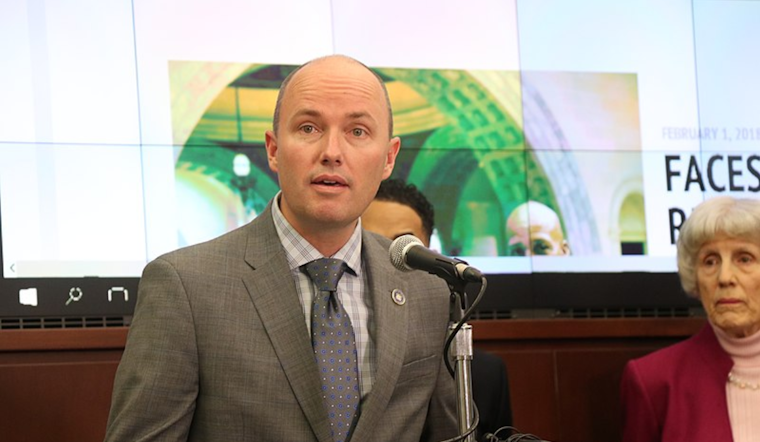
Today marks a significant moment in Utah's legislative progress, as Governor Spencer Cox took decisive action on a plethora of bills that landed on his desk from the 2025 General Legislative Session. Among the substantial list of bills, Gov. Cox decided to veto one particular piece of legislation that has been a topic of conversation among lawmakers and constituents alike, S.B. 37, Minimum Basic Tax Rate Amendments. On the flip side, Cox has approved 75 other bills, showcasing a mosaic of policy movements that span various aspects of governance and Utah life.
Among the bills receiving the governor's stamp of approval are measures on voting precincts, environmental permitting, water rights, and healthcare amendments. However, it's the veto of S.B. 37 that has taken center stage, given its potential repercussions on the state's tax landscape. The governor's office has provided insight into this action with a detailed explanation of the veto's reasoning consistent, with Cox's broader agenda and vision for the state's fiscal policy.
Highlighting the legislative achievements, Gov. Cox specifically drew attention to two education-related bills that signal a commitment to fostering civic awareness and engagement amongst students. "H.B. 381, Civics Education Amendments (Rep. Welton) and S.B. 334, Center for Civics Excellence at Utah State (Sen. Johnson) are two of the most important bills of the 2025 legislative session," Cox stated. He further elaborated on the imperative nature of such education in maintaining a well-informed citizenry capable of participating effectively in American democracy.
According to the Utah Governor's Office, the Center for Civic Excellence at Utah State University is set to play a pivotal role in revising general education to include a strong emphasis on viewpoint diversity and civil discourse. Cox expressed enthusiasm over Utah State University spearheading this initiative that aims to equip students with the critical analytical skills required to engage constructively in public discourse, potentially serving as a blueprint for educational institutions in Utah and beyond.
While the governor's veto of S.B. 37 casts a shadow for some who supported the tax rate amendments, the bulk of legislation passed under Cox's pen signals a robust and multifaceted approach to tackling the challenges ahead for Utah. For those interested in the specifics of the veto, documents explaining Gov. Cox's position have been made publicly available, providing transparency and insight into the legislative process. Civic duty, education, and the stewardship of Utah's natural resources and social systems weigh heavily on the minds of the state's legislators and executive alike.





.jpg)