

























































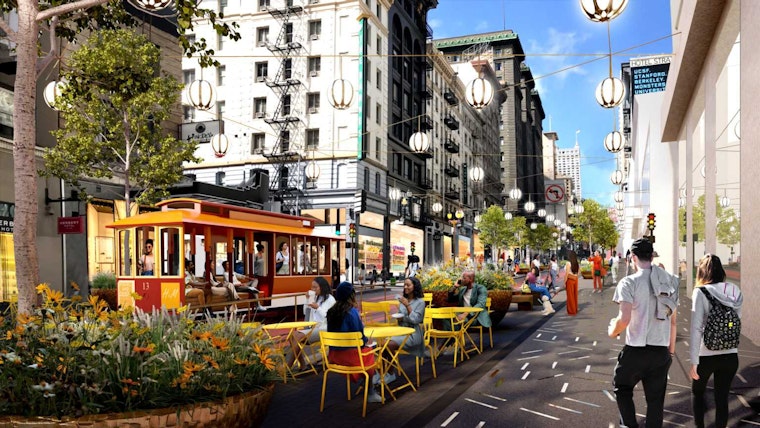
The tired stretch of Powell Street that greets millions of cable car riders each year just got approval for a dramatic transformation—one that promises to replace "For Lease" signs with floating golden lanterns and sidewalk café culture by 2027.
The San Francisco Arts Commission unanimously approved the $40 million redesign on Monday, clearing the path for what could be the most ambitious overhaul of the three-block corridor between Market Street and Union Square since BART opened in 1973. The centerpiece? A massive programmable "golden lantern" suspended above the cable car turntable, capable of changing colors to celebrate everything from Pride to the Warriors' championship runs.
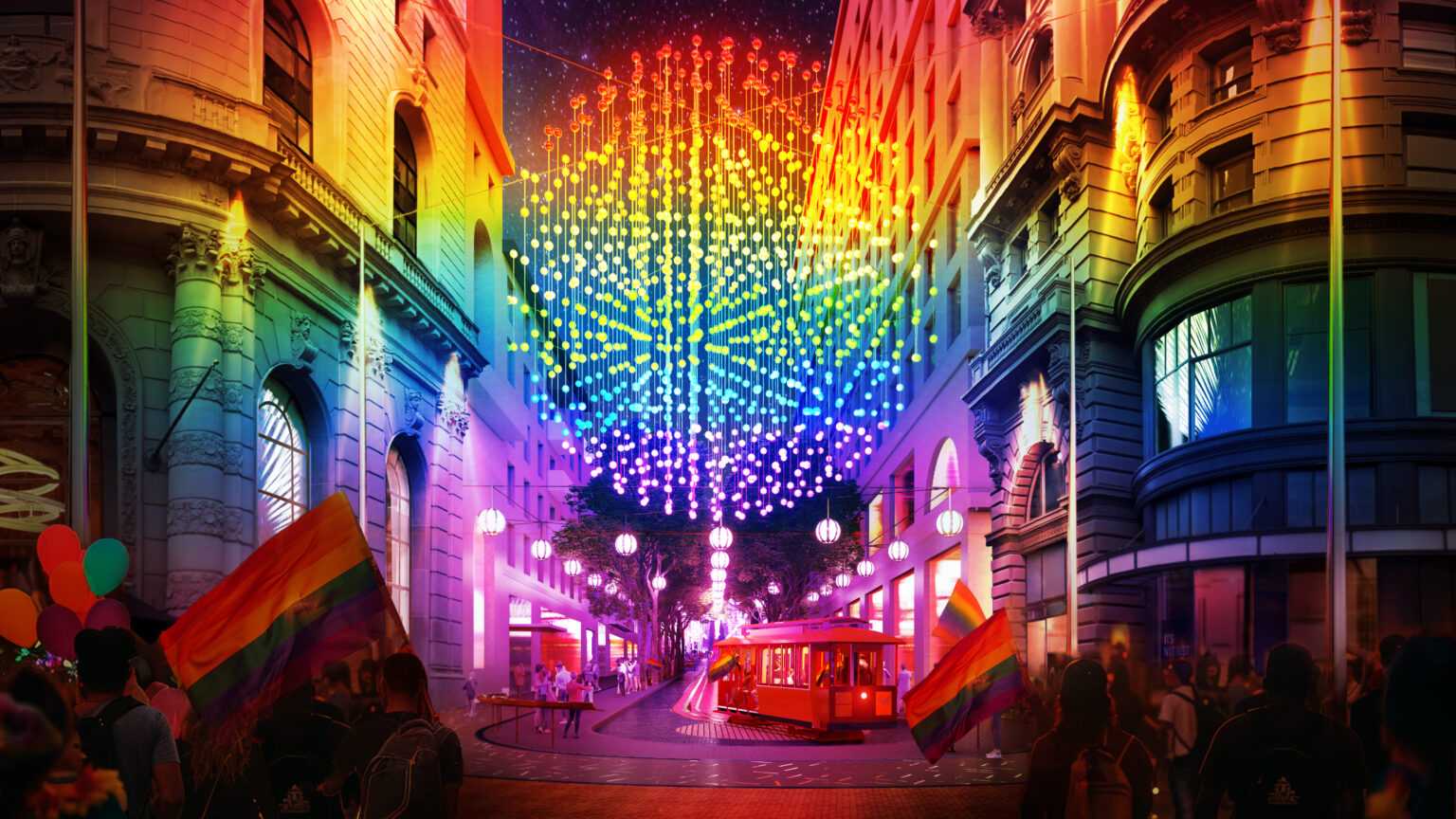
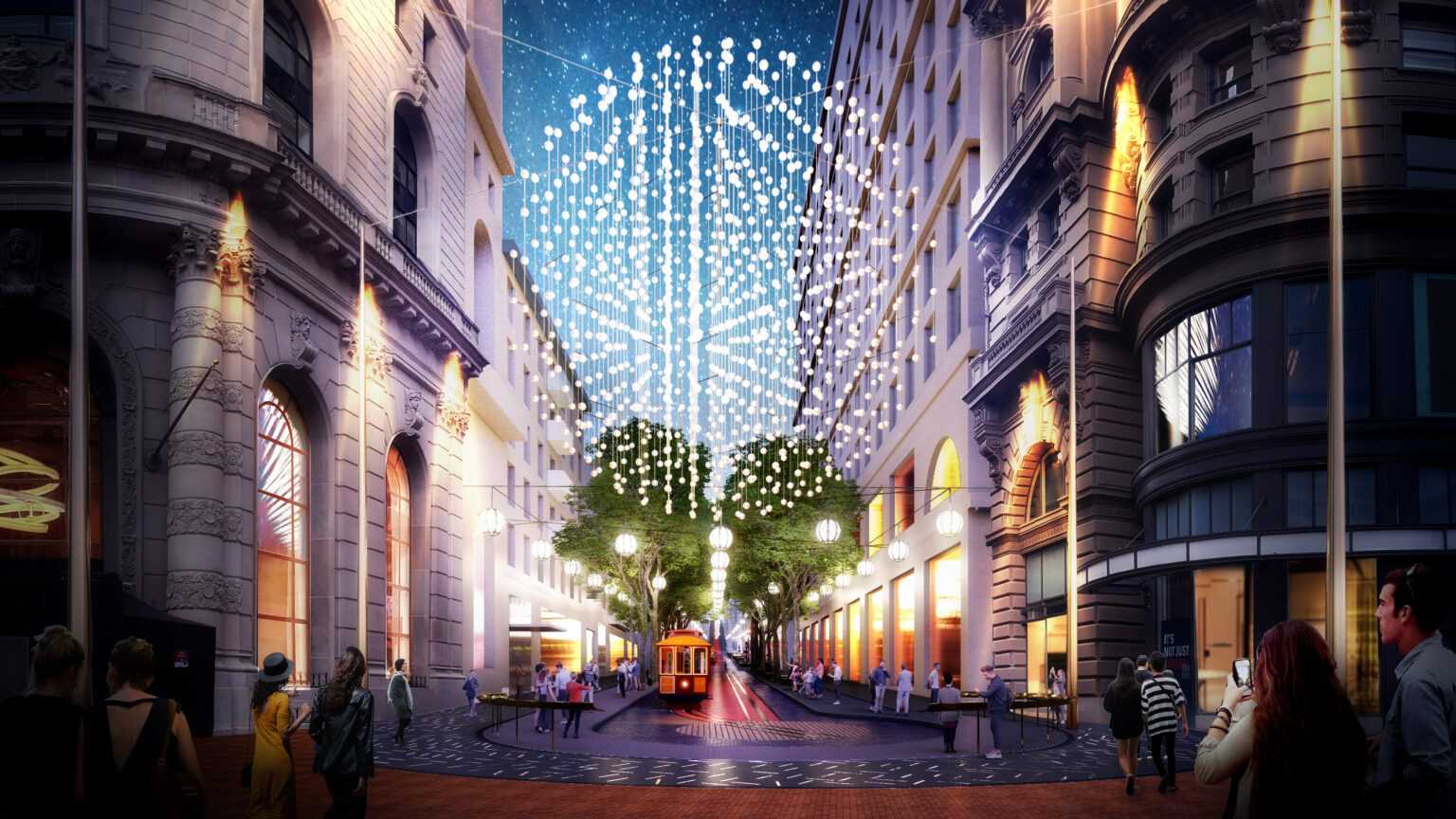
Promotional renderings from the Union Square Alliance reveal an almost fantastical vision: cables of illuminated white globes creating a luminous canopy overhead, like something between a high-end shopping district and a Harry Potter film set. The daytime images show bright yellow café chairs spilling onto widened sidewalks alongside the cable cars, with lush plantings and overhead lanterns creating an almost European café vibe. It's an undeniably ambitious aesthetic—the question is whether San Francisco's gritty reality can live up to these polished architectural fantasies.
From Forlorn to Lit
The design, crafted by Field Operations—the firm behind both the High Line in New York and the Presidio's wildly popular Tunnel Tops—transforms what SF Chronicle calls a "forlorn three-block stretch" into what locals hope will become, as the kids say, lit. Illuminated milky white metal globes will zigzag overhead on cables, while cable car tokens might be embedded in the lanterns themselves.
"Just imagine having a drink or a snack and watching the cable cars sitting under the beautiful lanterns," Field Operations associate Xiaoye Zhang told the Arts Commission. According to SF Chronicle, the plan includes widened sidewalks, gold-colored benches, café tables and chairs, and a continuous red brick roadway stretching all three blocks—replacing the current "mish-mash of different street surfaces."
The Vacancy Problem
The ambitious vision comes as Powell Street struggles with persistent retail vacancies that have turned the tourist gateway into what some describe as a "consumerist graveyard." Recent casualties include Uniqlo, H&M, Walgreens, and Gap, leaving behind a corridor where The Standard counted 21 empty storefronts out of 45 on a recent walk from Market to Sutter.
Union Square as a whole faces a 23% retail vacancy rate—roughly 750,000 square feet of empty space—compared to just 6.4% citywide when the neighborhood is excluded, according to The Real Deal. The area's struggles reflect broader pandemic-era challenges: remote work decimated foot traffic, and fast-fashion retailers that once thrived on volume couldn't survive without crowds.
Signs of Life
Yet recent months have brought encouraging developments. Nintendo opened its second U.S. store at 331 Powell in May, regularly drawing long lines of shoppers. Pop Mart debuted at 200 Powell this week, adding to what Union Square Alliance CEO Marisa Rodriguez describes as growing investor interest spurred by the makeover plans.
"The energy is palpable right now—it's markedly different," Rodriguez told The Standard. "People are taking risks, because they know Powell Street is coming back."
The Funding Reality
The challenge? Only half of the $40 million has been secured. The project currently has $3.5 million remaining from an initial $4 million allocation by Mayor London Breed and Board President Aaron Peskin in 2023. Rodriguez expressed confidence that full funding will materialize in time for construction to begin in fall 2026, telling SF Chronicle, "We will be cutting that ribbon in 2027."
The initiative reflects broader efforts to reimagine downtown San Francisco's public realm. Field Operations, which also manages nearby Salesforce Park, has positioned the project as both practical infrastructure improvement and symbolic statement about the city's commitment to its most visible tourist gateway.
Critical Context
The makeover arrives as Powell Street faces multiple simultaneous challenges. Cable car operator Eddie, who has worked the route for over three decades, told The Standard the current conditions represent "the worst I've seen it, ever." The corridor's struggles mirror broader questions about whether aesthetic improvements alone can address the complex economic forces reshaping downtown retail.
However, the project coincides with San Francisco's expanded Vacant to Vibrant program, which is bringing free-rent pop-ups to Union Square with nearly $3 million in new funding. The Real Deal reports that seven of nine original program participants have signed long-term leases, suggesting pop-up strategies can generate sustainable business activity.
The golden lantern symbolizes "good fortune, optimism and the prospect of revitalizing and bringing back business" while "bringing charm and elegance back to Powell Street," according to the design team. Whether programmable LED displays can restore the economic vitality of San Francisco's most iconic tourist corridor remains to be seen—but for the first time in years, there's a concrete plan and unanimous official approval to try.





