

























































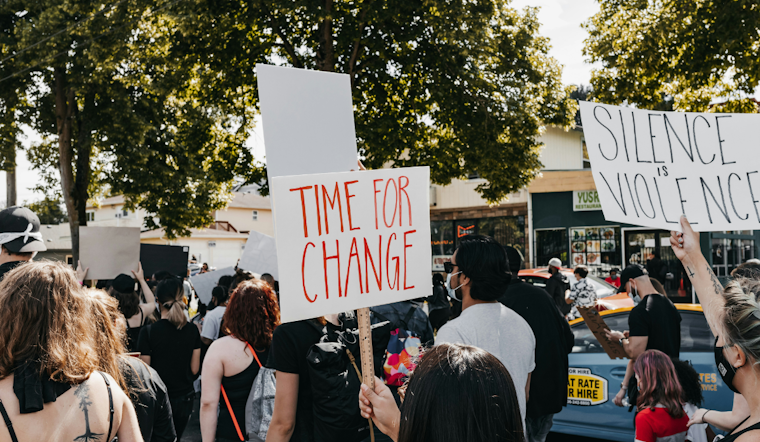
Labor Day this year became a platform for dissent across the nation, with San Francisco and multiple other U.S. cities witnessing large-scale protests against policies under President Donald Trump. In San Francisco, demonstrators gave voice to their opposition to Trump's cutting of the federal workforce and his stance on immigration, healthcare, and environmental regulations, as detailed by a report from the San Francisco Chronicle. These protests appeared to unite a variety of groups, including unions, community organizations, and individual activists concerned about the direction of national policy.
Thousands gathered in the Mission District, shutting down Mission Street to express their discontent with what they describe as attacks on workers and marginalized communities. The crowds were looking to visibly demonstrate their commitment to opposing the administration's actions, echoing the sentiment of past protests that have occurred since Trump's tenure began. The May Day Strong Coalition, responsible for organizing these rallies, noted the significance of San Francisco as a "labor town" through the words of Rosa Shields, political director with the San Francisco Labor Council, who told the San Francisco Chronicle, "We are not going to be compliant."
Coordination among cities was evident, with reports surfacing of protests in Chicago and New York, intently focused on issues like wages and worker exploitation. In these gatherings, attendees not only criticized Trump but also sought to draw attention to laborers' struggles, where the minimum wage remains stagnant in the face of inflation and increasing costs of living. The chant "Trump must go now!" underlined the urgency felt by participants who took to the streets outside landmarks such as the former president's New York residential tower, according to coverage by ABC7 News.
Significantly, rallies were not exclusive to a single demographic but saw a convergence of community members, activists, and labor representatives. This broader participation hints at a deepening concern over national issues and a strong desire to promote change through collective action. As SEIU Local 1021 organizer Theresa Rutherford characterized the San Francisco rally, in a statement obtained by the San Francisco Chronicle, "This is a diverse crowd that is different from the norm." The reports further highlighted the involvement of political figures, such as Daniel Biss, the mayor of Evanston, Illinois, who urged people to stand up for workers in Chicago, and King County Councilmember Teresa Mosqueda, who echoed a similar stance at Seattle's Cascade Playground, as per an interview with ABC7 News.





