

























































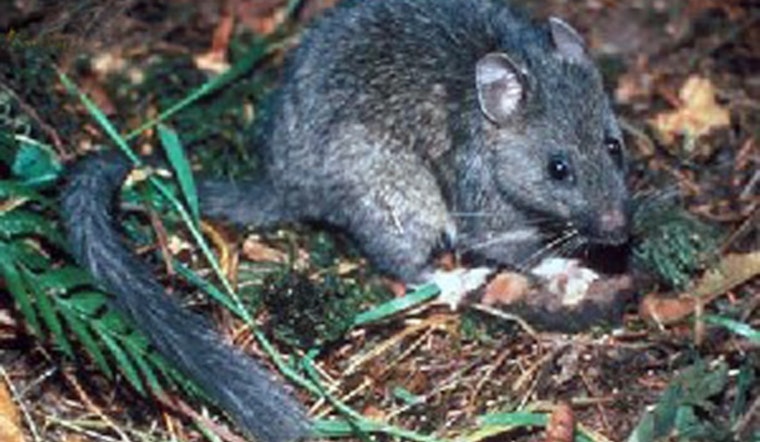
While most of us think twice before biting into bitter greens, it seems woodrats don't have the luxury of preference when their survival is at stake. In a study that might change how we look at the diet of wild herbivores, researchers from Utah State University, alongside colleagues from various academic institutions, have shed light on the dietary habits of woodrats using DNA analysis to unlock the secrets of these critters' eating patterns across North America, as reported by USU Today.
Underscoring the importance of diet diversity or the lack thereof for the animals' resilience, lead author and Utah State University assistant professor Sara Weinstein together with a team of scientists have put nearly eight years into surveying various woodrat populations, their study made possible thanks to funding from the National Science Foundation, and just published their findings in the Proceedings of the American Academy of Sciences. This research, spanning 13 species, 57 populations, and insight gained from more than 500 individual woodrats, reveals a fascinating mix of dietary strategies among these small mammals, some hoard like generalists, yet even within their varied diets particularities emerge where some foods are consistently chosen over others.
Woodrats, according to Weinstein, are "surprisingly perfect" subjects for such a study due to their large populations, diverse habitats, and particularly, their ability to consume a range of plants, even those laden with chemical defenses like alkaloids and terpenes, with stalwarts like the creosote bush, mesquite, and juniper on their menu. But it's not all about just having a cast-iron stomach. Weinstein noted, "Most woodrats are generalists, but at the individual level, these generalists’ diets may not be as broad as we previously assumed," a point of intrigue being that generalist woodrats continue munching on toxic creosote even when less toxic options are on the table suggesting maybe sticking to the devil you know is easier than adapting to something potentially less devilish, as obtained by USU Today.





.jpg)