

























































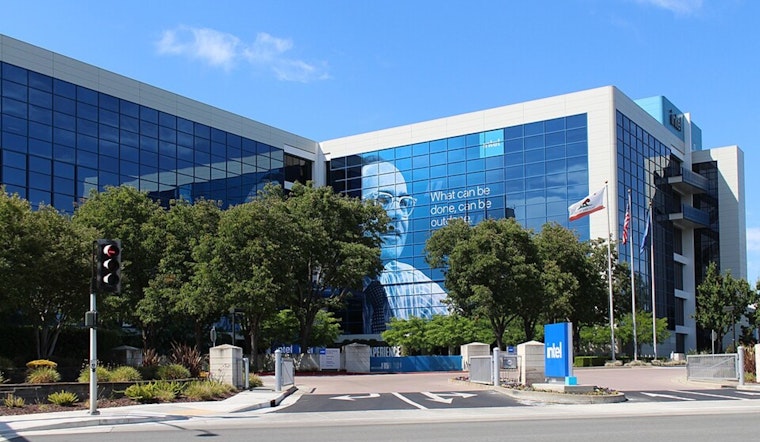
Marking a significant pivot towards bolstering American semiconductor prowess, Intel Corporation has commenced commercial operations at its state-of-the-art Fab 52 in Chandler, Arizona. This facility is at the forefront, ready to churn out the company's most sophisticated chip technology to date—the 18A process node. As reported by the ABC15, Intel's Panther Lake processors, which will power a new generation of personal computers and other devices, are slated to start high-volume production later this year at this location.
Intel's advances are set to comprehensively overhaul the computing landscape. The upcoming Core Ultra series 3 (Panther Lake) processors stake to offer an increase of over 50% in CPU and GPU performance compared to previous generations, as per details from a statement obtained by Manufacturing Today India. These chips focus on cognitively enriching the sphere of AI PCs, gaming devices, and edge systems. Furthermore, expectations are set for wide availability of these chips by January 2026, making the current year a prelude to Intel's tangible impact on technology markets.
Alongside the leap in PC chips, Intel has also teased the next frontier in server processing power. Dubbed the Xeon 6+ (Clearwater Forest), these server processors are engineered on the same 18A node and are geared towards the relentless demands of hyperscale data centers, expansive cloud workloads, and the ever-expanding telecommunication sector. According to the same Manufacturing Today India piece, these chips tout up to 288 efficient cores, achieving approximately a 17% increase in instructions per cycle (IPC) over their predecessors.
The significance of Fab 52 extends beyond immediate production; it demonstrates a concrete shift in the semiconductor industry back to American soil. With its RibbonFET and PowerVia architectural innovations—touted to notably improve performance per watt by up to 15% and density by around 30% over Intel's previous processes—the 18A node sets out to redefine chip architecture, as explained in the ABC15 article. Kevin O’Buckley, senior vice president and general manager of foundry services at Intel, emphasized the strategic role of the new facility, remarking, "In Arizona, it’s the beating heart of Fab 52. The new fab that we've built here is all about enabling capacity for that new technology."
With the operationalization of Fab 52, Intel stands poised to reclaim a competitive edge in the global semiconductor market. Its commitment to American manufacturing underpins a broader strategy to decentralize foundry capacity, increase domestic production, and secure the chip supply chain within the U.S. In doing so, Intel is not just responding to a market demand but is shaping the very fabric of next-generation computing technology.





