

























































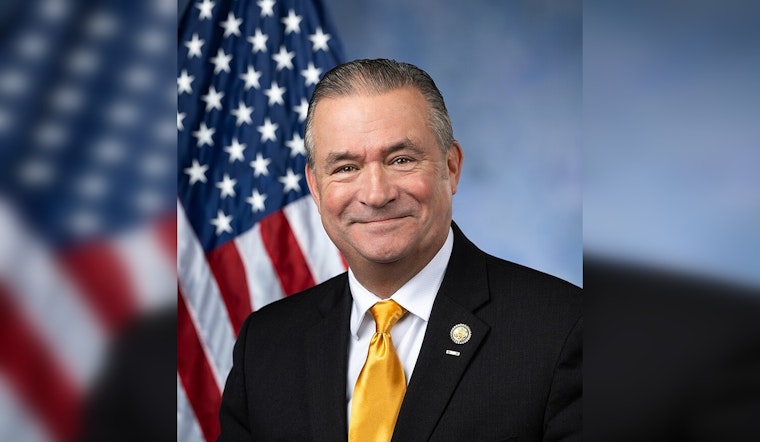
In the wake of an astringent political deadlock, Nebraska Representative Don Bacon broadcast a critique aimed squarely at Democrat Leadership, accusing them of intransigence over the passing of a clean Continuing Resolution (CR). The resolution, which lacked partisan embellishments save for security funding for government figures, failed to secure passage, thus precipitating a government shutdown. "Republicans passed a clean, short-term CR with no additional funding except for security for Members of Congress and Federal office holders such as judges," Bacon said in a statement obtained by his press office. He added, "Schumer and Jeffries catered to their far-left base by opposing a clean CR."
Bacon's reproach highlighted a desire among Republicans to address the impasse over ACA tax credits through standard appropriations discourse that necessitates cross-party collaboration – a customary practice according to the Congressman. Contrary to the current stall, Bacon recounted a history of bipartisan cooperation under the Biden Administration, where a clean CR was enacted 13 times. Despite the impasse, he expressed gratitude to certain cross-aisle legislators, including Democratic Senators Catherine Cortez Masto of Nevada and John Fetterman of Pennsylvania, as well as Senator Angus King of Maine, an Independent who sides with Democrats, for prioritizing American needs over a partisan agenda.
The government shutdown has been a recurring theme in recent political narratives, with pivotal services and operations coming to an abrupt halt as lawmakers grapple over budget allocations and policy disagreements. The clean CR, often a placeholder to keep the government running while a more detailed budget is negotiated, has become a flashpoint for ideological contention, reflecting a polarized Congress where common ground seems increasingly scarce.
As constituents grapple with the ramifications of a closed government, attention turns to Capitol Hill for a resolution to the impasse. With each shutdown, the already tenuous faith in the nation's legislators erodes, lending weight to critics who argue that the budget process, as it currently stands, is fraught with inefficiencies and vulnerable to political play. Bacon, standing amidst the turmoil, beckons his colleagues towards a path of constructive negotiation, though it remains to be seen if his call will shepherd a return to normalcy or merely echo unanswered in the halls of power.





