

























































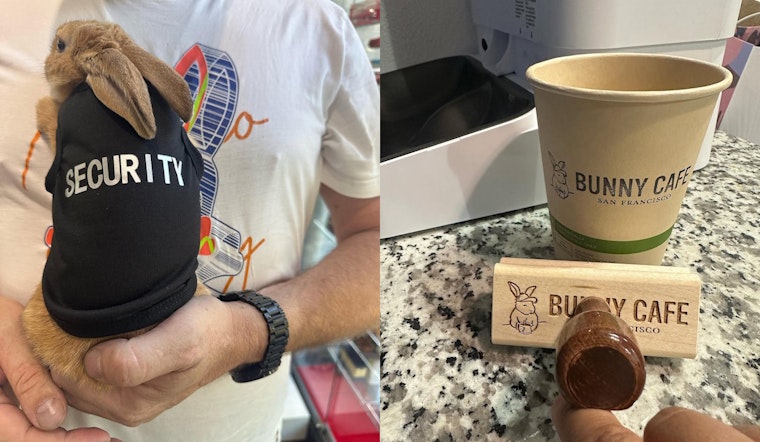
San Francisco is set to welcome an unusual new addition to its dining scene: Bunny Cafe SF, the city's first rabbit cafe, slated to open in November at Ghirardelli Square. The concept promises an experience where customers can sip lattes while surrounded by adoptable rescue rabbits—a therapeutic twist on the animal cafe trend that's been sweeping Japan and made inroads across the United States as long as a decade ago, when Hoodline first broke the news that San Francisco would be getting its first cat cafe.
The venture is the vision of Josh Row and Kei Kato, who are channeling their grief into purpose. The couple became local celebrities as the owners of Alex the Great, the beloved 30-pound Flemish Giant rabbit who served as the San Francisco Giants' "Rally Rabbit" before passing away from cancer complications in July 2025. According to the San Francisco Chronicle, Row and Kato are in the process of signing a lease for a storefront at Ghirardelli Square where they'll rescue bunnies from kill shelters, offering customers "bunny comfort" alongside food and drinks.
"I don't know if we can ever have another bunny the way that we love Alex," Kato told reporters, her voice cracking. "But at least we can help other bunnies out there."
Unfortunately Alex has crossed the rainbow 🌈 this morning at 7:50am PST. This is the hardest news. The pain is unbearable. We will have more information later just know he had complications from the cancer treatments that took his life. Let his legend continue he was very loved pic.twitter.com/bXKUGMTKyf
— Alex The Great - ATG (@AThegreat100) July 21, 2025
Still Finalizing Safety Details
While excitement is building on social media, the cafe's operators are taking a measured approach to their launch. In response to media coverage on Live 105 FM's Instagram, the official Bunny Cafe San Francisco account clarified that they're "still working on some details to ensure the safety and wellness of the bunnies" and will release full information by the end of October.
A teaser video posted to the cafe's Instagram reveals some operational details: customers will receive specially designed non-slip socks with the cafe's logo as souvenirs, and must sign a detailed waiver before entering the rabbit interaction area. The video was originally created a month prior but held back "to get everyone more excited."
Rabbit Advocates Sound the Alarm
But not everyone is celebrating the announcement. Rabbit welfare advocates are raising pointed concerns about whether the cafe will prioritize animal wellbeing over Instagram appeal. "Public cafes are a horrible environment for prey animals," says House Rabbit Society of Chicago. Their critique is blunt: "The folks who are opening it carted their poor rabbit all over the place and exploited him until he died so I don't think they're really prioritizing welfare."
The criticism centers on fundamental rabbit biology and behavior. "Rabbits sleep during the day and this forces them to be awake and interacting with the public when they're usually sleeping," the organization noted. "Incredibly cruel." Even some Giants fans who admired Alex from afar are conflicted. "Every time these humans brought Alex the Great to a game it made me so sad for the bun and so angry with the humans," Debbie Degutis admitted.
The concerns aren't purely theoretical. Sally Williams points to a cautionary tale from Los Angeles, where a bunny cafe operator obtained unfixed rabbits from shelters, kept them in inadequate housing without proper hay, and operated without working with legitimate rescue organizations—or even a health department permit. "We shut it down," says Michelle Kelly. "Petting zoos exploit the animals."
Animal Cafes Face Regulatory Complexity
The bunny cafe concept will need to navigate California's strict health codes. According to California Health and Safety Code § 114259.5, live animals are generally prohibited in food facilities, with limited exceptions for service animals and dogs in outdoor dining areas under specific conditions.
However, as noted by restaurant industry analysis, animal cafes operate under different regulatory frameworks than traditional restaurants, with establishments subjected to rigorous health inspections to ensure both food safety and animal welfare. The federal Animal Welfare Act classifies rabbits as covered animals when used for exhibition purposes, requiring facilities to meet USDA standards for humane care and treatment.
Riding the Animal Cafe Wave
Bunny Cafe SF is entering a booming market. According to That Cat Life, there are over 290 cat cafes operating in the United States as of August 2025, with 2024 marking the biggest year yet for animal cafe openings. The U.S. has now overtaken Japan as the leading country for cat cafes worldwide.
While cat cafes dominate the American market, rabbit cafes remain relatively rare in the United States. According to Wikipedia, rabbit cafes are more common in Japan and Poland, where they typically keep rabbits in cages with occasional opportunities for customers to walk them outdoors—a model that differs from the free-roaming therapeutic environment Row and Kato appear to be planning.
The concept has drawn scrutiny from animal welfare advocates. As documented in international cases, concerns include whether animals receive adequate rest, proper housing conditions, and freedom from stress in environments with revolving populations of strangers. The stricter Animal Protection Laws enacted in Japan following such concerns now restrict trading hours and mandate appropriate care standards for animal cafes.
A Legacy of Comfort—or Exploitation?
Row and Kato bring unique credentials to the venture. As KRON4 reported, Alex the Great was the only certified therapy rabbit in the country, providing comfort to hospice patients, travelers at San Francisco International Airport, and children undergoing treatment at UCSF Benioff Children's Hospital. The rabbit amassed over 55,000 Instagram followers and served as a brand ambassador for companies including Purple Mattress and Psycho Bunny apparel.
Can It Be Done Ethically?
The debate isn't entirely one-sided. Some rabbit advocates note that Vancouver operates a bunny cafe that partners with rescues, limits guest numbers, and provides deep hiding spots for rabbits who don't want to socialize. "They even have lots of very cozy deep hides for the bunnies who don't feel like socializing to rest away from people but most seem to really love the attention," says Ren Latos, who argues that some—though not all—rabbits could thrive in such environments with proper management.
SaveABunny, a local rabbit rescue, has offered cautious optimism, noting they've been "cautiously talking with the owners to outline a rescue group's win-win solution" and asking for the opportunity to work with the cafe "to follow best rabbit care before final judgement."
According to the San Francisco Chronicle, the cafe will rescue bunnies from kill shelters, with all adoption proceeds donated to foundations dedicated to rabbit rescue and care. It's a model that positions the cafe as part animal sanctuary, part therapeutic space, and part adoption center—assuming they can successfully navigate both the regulatory maze and the rabbit welfare community's legitimate concerns.
The cafe's website currently lists only an email address for inquiries: [email protected]. As Row and Kato work through final details, San Franciscans will be watching to see whether this unconventional tribute to a beloved bunny can hop over the hurdles facing animal cafes in California.



