

























































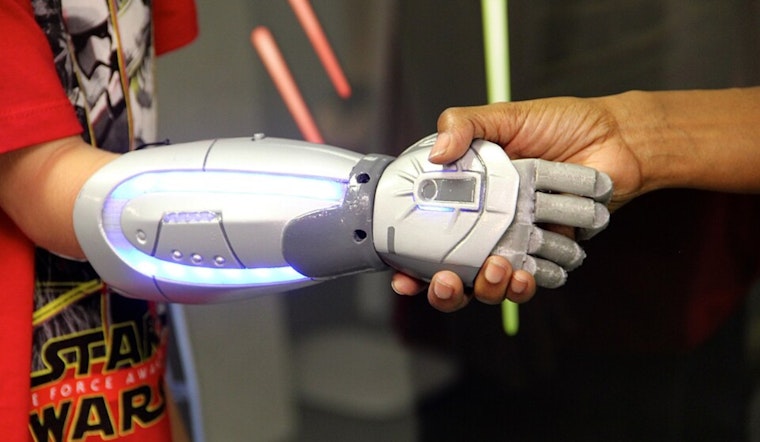
Researchers at the University of Utah are making waves in the field of prosthetics, as they've developed a bionic hand that simplifies the complex process of grabbing and holding objects. Described in a recent article from At The U, the hand uses a combination of artificial intelligence, proximity sensors, and pressure sensors to mimic the intuitive grip of a human hand. This advancement could significantly reduce the cognitive load on users of prosthetic arms and hands.
According to At The U, participants in the study, which appears in Nature Communications, showcased improved grip security, precision, and reported exerting less mental effort during use. Normally, when we reach for an object, we don't think about how to articulate our fingers. Yet for amputees, this simple action involves a significant amount of concentration and often leads to frustration and abandonment of prosthetic devices.
Professor Jacob A. George and postdoctoral researcher Marshall Trout have been tackling this issue by equipping a TASKA Prosthetics hand with high-tech custom fingertips. These make use of optical sensors which allow the fingers to respond to their environment like never before – capable even of detecting the nearly weightless touch of a cotton ball. George, holding the Solzbacher-Chen Endowed Chair position in Electrical & Computer Engineering and Physical Medicine & Rehabilitation, spoke to the intricacies of the research. "As lifelike as bionic arms are becoming, controlling them is still not easy or intuitive," said Marshall Trout, as per At The U, articulating the struggle many amputees face.
The system's smarts don't just stop at sensory feedback, however; an artificial neural network was trained to predict ideal finger positioning for various objects, allowing the hand to adjust its grip as necessary. But, as the researchers point out, what happens when the user wants to release or alter their grip? They answered this by implementing a control-sharing mechanism between the AI and the user, ensuring that neither the machine nor the user has to fight for dominance. "What we don't want is the user fighting the machine for control. In contrast, here the machine improved the precision of the user while also making the tasks easier," Trout explained, as obtained by At The U.





