

























































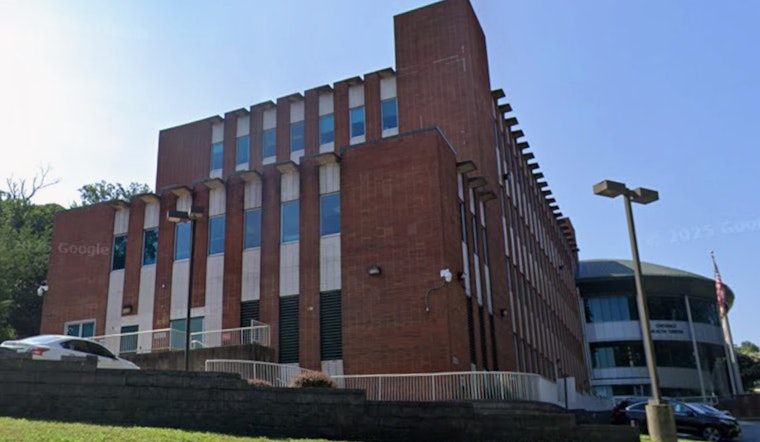
After years of starts, stops and political drama, the long-talked-about Cheverly Hill redevelopment is finally looking at a real construction date. Developers say a key approval this week has them eyeing a 2027 groundbreaking for the roughly $550 million mixed-use project that would transform the former Prince George’s County hospital site into more than 1,300 homes with ground-floor shops, offices and a small hotel.
The hilltop property, within walking distance of the Cheverly Metro, is slated to get a central green and a public town square, turning what used to be a medical campus into a new neighborhood hub for nearby residents.
Project Clears Big Hurdle As Half-Billion Price Tag Holds
As reported by the Washington Business Journal, the development team says the plan just cleared a pivotal hurdle that keeps the 2027 construction target in play. The Prince George’s County Economic Development Corporation pegs the project at about $550 million and underscores its importance as a regional anchor rather than just another suburban infill.
What’s Planned For The Site And What Is Already Underway
The Prince George’s County Redevelopment Authority’s project page identifies the Cheverly Hill site as the 44-acre property at 3001 Hospital Drive and notes that demolition and abatement work are already in motion. According to the RDA, the current plan calls for more than 1,300 residential units, a 70-room hotel, roughly 70,000 square feet of office and medical space and about 40,000 square feet of neighborhood retail.
The agency says entitlement work will move forward alongside environmental cleanup and other remediation, so the paperwork and the physical prep work unfold together instead of one after the other.
Annexation Fight Nearly Knocked The Schedule Off The Rails
For months, the project was overshadowed by an unusually public tug-of-war over who gets to claim the hill. The town of Bladensburg moved to annex the former hospital parcel, triggering sharp pushback and even threats of litigation, according to WTOP.
Bladensburg ultimately hit pause on its annexation effort and later backed off, a shift that cut through a major legal cloud hanging over the redevelopment. The Washington Informer covered the town’s withdrawal and the political fallout that followed, as local leaders tried to cool tensions and keep the project from stalling out.
State Cash And A Local Equity Angle
State support has helped keep the predevelopment work moving even while the politics played out. The Maryland Department of Housing and Community Development notes that Gov. Wes Moore announced $7.5 million in State Revitalization Program funds to back design and predevelopment on the Hospital Hill site.
On top of that, the developer has promoted a minority-investment program on its project website that would let MBE and WBE contractors convert part of what they are owed into equity stakes in the project. The team says that structure is meant to deepen local participation and give small firms a longer-term stake instead of just a one-and-done construction contract.
2027 Target, But Plenty Of Open Questions
With entitlements and environmental work moving ahead, developers told the Washington Business Journal they are still aiming to start construction in 2027. Officials are quick to note that permitting timelines and broader market conditions will ultimately dictate whether that date sticks.
The Redevelopment Authority says the entitlement process will run in tandem with remediation and infrastructure work, and that residents should expect more studies and public meetings as the design gets refined.
If the current schedule holds, Cheverly Hill would inject hundreds of new homes and fresh regional retail into a neighborhood that has waited years for a clear reuse plan. How quickly that hilltop is reshaped will depend on what comes out of upcoming community input, traffic analysis and the still-sensitive municipal politics left over from the annexation fight.





