

























































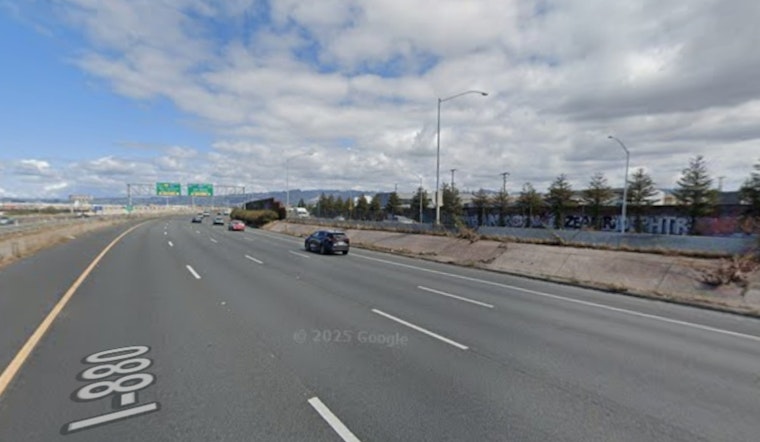
Come March 2026, crews are slated to start lining West Oakland’s Frontage Road with a thick band of trees and shrubs, a green buffer designed to snag pollution rolling off I‑880 and nearby port traffic before it reaches neighboring apartments. The Prescott Greening pilot will kick off with dozens of 10‑ to 12‑foot trees and a dense understory that organizers say should eventually grow into roughly 40‑foot canopies. They expect this first construction and planting phase to take about five months.
The project is being led by the West Oakland Environmental Indicators Project, with design work from Hyphae Design Laboratory and local partners, and uses advanced modeling to position vegetation where it can deliver the most harm reduction, according to the West Oakland Environmental Indicators Project. WOEIP says the effort pairs community air sensors with nature-based engineering to target black carbon and ultrafine particles in the Prescott neighborhood.
Plant palette and care
According to The Oaklandside, the plan calls for fern pines, long leaf yellowwoods and Japanese blueberry trees, layered over an understory of California lilacs, manzanitas and bottlebrushes. Organizers expect the new trees to reach about 40 feet in height once they mature. Before planting, crews will remove older trees where necessary, upgrade irrigation infrastructure and regrade existing beds.
Funding for the pilot has been provided by the Metropolitan Transportation Commission, the Alameda County Transportation Commission, the Port of Oakland, and the Sustainable Transportation Equity Project. The plan also includes a three-year maintenance program with Wood Street Commons, including weekly volunteer cleanups to help keep the new plantings healthy and the corridor in better shape than drivers see there now.
Why Frontage Road?
Frontage Road hugs the eastern edge of I‑880 and has long been flagged in city planning documents as a truck-heavy corridor that channels diesel exhaust and brake wear pollution toward nearby homes, according to the City of Oakland. It has already been the subject of truck route reviews and road diet proposals. Prescott Greening is framed as a near-term, nature-based mitigation that can move ahead while those bigger transportation planning debates continue.
How much pollution could trees cut?
Brent Bucknum of Hyphae told The Oaklandside that when trees are planted in a tight, carefully modeled pattern, roadside pollution can drop by roughly 20 to 40 percent. He pointed to Hyphae projects in Louisville that saw about a 25 percent reduction in measured pollutants and said the firm is preparing a report arguing that roughly $20 million in investment could extend similar green buffers across additional neighborhoods. Organizers see Prescott Greening as a pilot that could be copied in other highly polluted parts of Oakland and in nearby San Leandro if on-the-ground monitoring supports the modeled benefits.
What comes next
Once the trees and shrubs are in the ground, Hyphae and WOEIP plan to compare their modeled pollution reductions with readings from neighborhood air monitors to see whether the buffer performs as expected, according to the West Oakland Environmental Indicators Project. If monitoring shows meaningful drops in ultrafine particles, advocates say this kind of vegetation barrier could become one tool among many, alongside truck management and port emissions controls, to clean up the air where West Oakland residents are most exposed.





